
When I think of my grandfather, I think of boots.
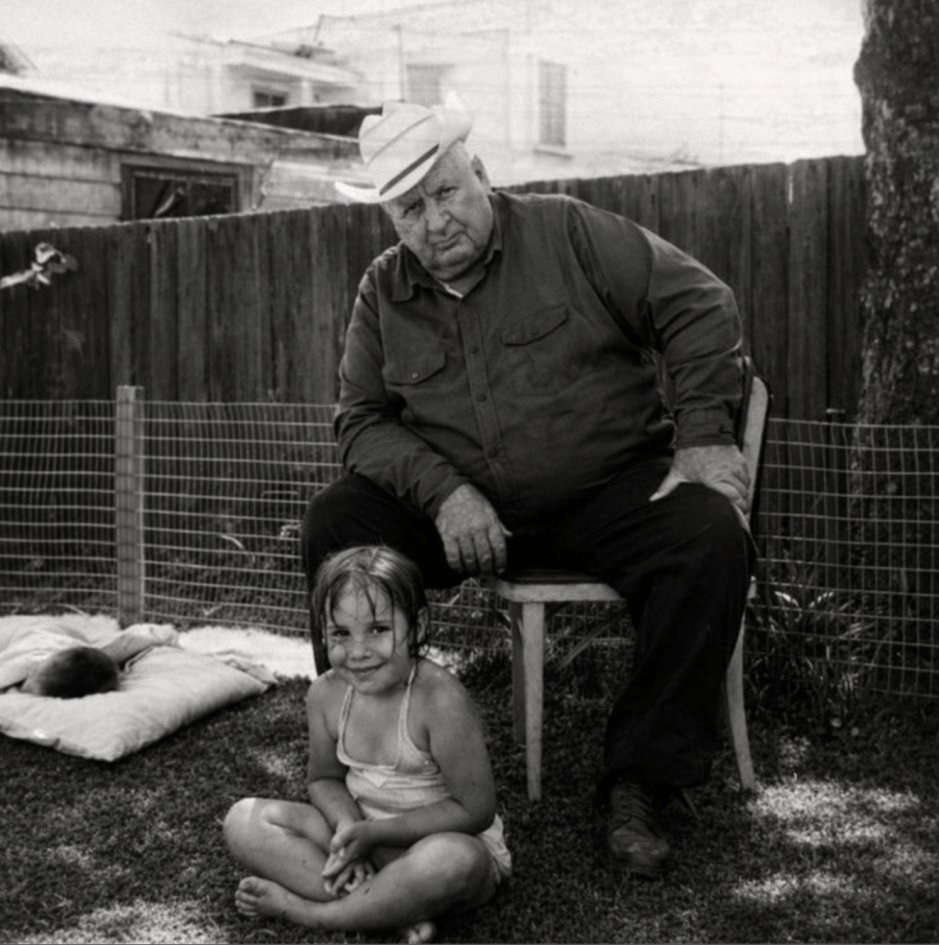
I hear them before I see him, that unmistakable, heavy rhythm of cowboy boots crossing a floor, steady and sure, followed by the deep rumble of his voice rolling through the house like distant thunder. Even now, all these years later, I can still summon him in an instant: the broad-brimmed straw hat, the crisp western shirt, and the worn boots that seemed as permanent a part of him as his hands or his laugh. Before I remember that he died when I was fourteen, I remember how fully he lived in a room.
By the time my grandfather passed away, our family and my grandparents were living in Alameda, California, a long way from Hotchkiss, Colorado, the place he thought of as home, no matter what address appeared on an envelope. California may have held him captive, but Colorado held his heart. He carried it all with him, his family, the ranch country, the sheep, the horses, the hard weather, the wide-open spaces, and the stories that rose from that land as naturally as dust from a dry road. Through him, Hotchkiss never felt far away. He brought it to life every time he spoke.
He was a large man in every way that mattered. As a child, I thought he was six feet or more in all directions—broad-shouldered, big-chested, thick-handed, the sort of man who seemed carved out of something sturdier than ordinary flesh. His hands looked capable of moving mountains or lifting fence posts or steadying a frightened child with equal ease. His voice was deep and booming, the kind that could command attention without ever asking for it. Even his silence had weight.
To me, he was the very definition of a cowboy. Not a polished, movie screen cowboy, but the real thing, rough around the edges, sunbaked, practical, and a little intimidating until he smiled. He dressed in cowboy clothes every single day because that was simply who he was. There was no costume to it, no performance. The hat, the Western shirt, and the boots, those things were as natural on him as skin. He did not put them on to become a cowboy. He wore them because he had never been anything else.
And oh, I adored him.
For all his size and gruffness, Grandpa had the softest heart for babies and grandkids. He was not sentimental in the syrupy sort of way. He did not fuss. He did not coo. But love lived plainly in him, tucked beneath all that bluster. When we were small, he sometimes watched us for my mother, Dotty. There was, however, one task he met with visible suspicion, diaper changes.
The dirty diaper itself was not the problem. He could remove that offensive thing with determination and only a measure of disgust. It was the clean diaper that brought him to a standstill. In those days, diapers were fastened with pins, and the very idea of jabbing a squirming baby with one was enough to unnerve him. So, rather than risk injury, he devised his own solution. He would layer two or three pairs of training pants on the baby and then pull plastic pants over the whole operation, as if engineering some kind of fortress against disaster.
Problem solved.
That was Grandpa’s way. He did not always do things the conventional way, but he nearly always found a way that made sense to him. Looking back, I think that was one of his gifts: he met the world on his own terms and expected the rest of us to keep up.
Visits to Grandma and Grandpa’s house followed their own sweet, dependable ritual. He greeted us with tight hugs, scratchy whisker kisses, and that great booming laugh that made you feel as though you had entered a place where joy was allowed to take up space. And there was always money. Somehow, before we left, he made sure there was change jingling in our pockets or a folded bill pressed into our hands. Love, according to Grandpa, ought to send a child home with a little spending money.
Then came the moment we both dreaded and loved.
In a raspy, exaggerated baby voice that was half teasing and half tender, he would grin and say, “You’re a damn cute kid.”
That was our warning.
Because right after those words came the cheek pinch.
Not a gentle tap. Not a fond little pat. A real pinch. The kind that made you squeal and twist away and laugh even while you protested. We learned to anticipate it. We ducked and dodged and tried to escape, but Grandpa was fast, faster than a man his size had any right to be. He almost always got us. To this day, I maintain that if any of us grew up with chipmunk cheeks, it was because Grandpa stretched them that way one affectionate pinch at a time.
Then there was the Jeep.
For a while, Grandpa owned an old green Jeep, and he drove it like a man who believed speed limits were merely suggestions made for lesser souls. My parents warned us repeatedly: never go anywhere with Grandpa if he were driving. Never, ever. The instruction was clear, serious, and often repeated, which of course only gave it the electric appeal that forbidden things have for children.
By then, we already understood one of the central truths of childhood: what happens at Grandma and Grandpa’s stays at Grandma and Grandpa’s.
So yes, we rode in the Jeep.
I can still imagine the jolt of it, the way my stomach leapt as he tore out of the driveway, the wild swing of a turn taken too fast, the thrilling terror of tearing through a parking lot as though it were part racetrack, part rodeo arena. Riding with Grandpa felt like trusting a storm with a steering wheel. It was reckless and hilarious and a little bit glorious. We held on and hollered and lived to tell the tale, though not, of course, to our parents.
My sweet grandmother worried over those escapades far more than we did. She feared my parents would find out and put an end to our sleepovers, as though those overnight visits were something fragile that might be snatched away. But nothing could have kept us from that house for long. It was one of the anchoring places of my childhood, full of stories and teasing and warmth, where love wore cowboy boots and laughed loudly and pinched your cheeks hard enough to leave a mark, on our hearts anyway.
What I miss most now are the ordinary wonders of him. I miss the booming way he told stories about the ranch, the family, the horses, the sheep. He could make a memory sound like legend. He could take the raw material of daily life and shape it into something worth leaning in to hear. In his telling, Hotchkiss was not just a town. It was a world. The ranch was not just land. It was inheritance, labor, identity, and love. Through his stories, he handed that world down to us.
As a child, I thought he would always be there, always filling a doorway, always laughing too loud, always wearing that hat, always ready with a coin, a story, or a pinch to the cheek. I did not yet understand how quickly the people who seem larger than life can become memory.
He died when I was fourteen, which now seems far too young an age to lose a grandfather like him. At fourteen, you still believe there will be more time. Another visit. Another story. Another chance to hear his boots coming across the floor. You do not yet know how suddenly a voice can vanish from the world and still echo inside you for the rest of your life.
I would give so much to hear him one more time. To hear that deep voice soften into that raspy little baby talk. To see the grin spread across his face before he said, “You’re a damn cute kid.” To brace myself for the pinch I once tried so hard to avoid.
Funny thing is, I think I understand now what I never understood then. The cheek pinch, the Jeep rides, the coins in our pockets, the stories, the laughter—those were his ways of loving us. Big, unruly, unforgettable ways.
And maybe that is why I have come to love my chipmunk cheeks after all.
They are not just mine.
They are where my grandfather left his fingerprints.
 Tales of a Family
An excellent memoir Ann Marie! I feel like I knew the man.
We too had cowboys in our family, but for my generation, they were our great-grand parents. For reasons that didn’t creep out until I was in high school and then only in drips – we didn’t see much of them. It was much later when finally an aunt explained how my grand mother had been dismissed from the family for marrying an Italian rather than someone from Denmark. My great grand parents never treated me like there was a problem but I knew something was off because grandma’s brothers were all heirs to the large family ranching business while the one daughter, my grandma, was never seen at the ranch nor was she ever invited to the occasional get-together that included us kids. Some like my mom tried to knit some of the family back together, but her successes were limited and when my great-grand cow-parents from Denmark died, I was at their funerals – but regretted how I barely knew them.
The nurture you got from your grandfather was similar to my own. The Italian man that grandma married proved to be made of the same material and radiated a true endless love for us, his grandkids as did yours.
But his boots were basic work boots. We still talk about and miss him.
LikeLiked by 1 person
We have some heartaches in my family too. Wouldn’t it be lovely if love conquered all? I am glad your grandfather brought you love and sweet memories.
Fifty years later, I still miss my grandpa more than words could ever express.
LikeLiked by 1 person
What a beautiful tribute to your grandfather! He came alive through your words.
LikeLike
Thank you; He was quite the character, and I miss him still, all these decades later.
LikeLiked by 1 person