The distant ringing of the phone brought her out of her slumber. She rubbed the sleep from her eyes and slowly sat up in her bed. Yawning, she looked at the bedside clock. It was almost time to get up anyway. She reached over, picked up the alarm clock, and switched it off. It was probably someone calling for the donut shop again. The two phone numbers were so annoyingly similar, and she received calls from the shop more times than she could count. She made her way to the kitchen to start her coffee. Just as the coffee began to perk, the phone rang again. She grabbed her notepad and pen. She said hello, and the guy on the other end asked, “Is this the donut shop Continue reading “Number, Please”→
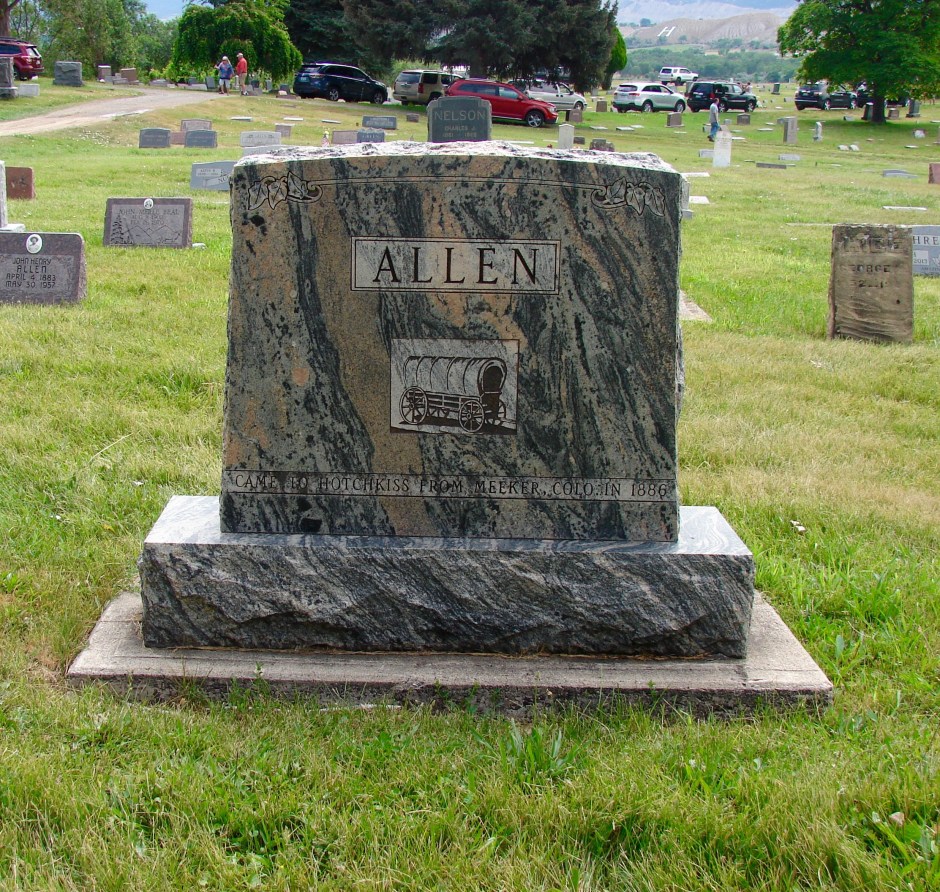
I have a strange fascination for cemeteries and tombstones. I know. I know. It’s sounds morbid, but as a history buff and an amateur genealogist, it’s not as bizarre as it sounds. If you look closely, each stone tells a story. Recently, I’ve been checking out some funny, strange, and unusual headstones, and I wanted to take a peek at some of my ancestors’ grave sites to see what I could “dig up.” Continue reading “Family Tombstones”→
As a child, I was blessed to have my maternal grandparents live on the same little island in California. Their sweet presence made a positive impact on my life, and I enjoyed spending time with them, especially when I could spend the night.
Early mornings I would wake up and hear my grandparents talking while preparing breakfast. The front door was usually open, and the sounds of birds chirping could often be heard along with the clinking of cups as spoons stirred the mixture of milk and sugar into their morning coffee.
Although they always had all the fixins, I usually only had coffee and toast. When I was younger, I wasn’t big on breakfast. We would visit as we ate, and afterward, I would gather the plates, take them to the pantry and wash the dishes. Grandma’s cottage kitchen had the sink tucked into the pantry. Grandma would clean the kitchen while I did the dishes. Grandpa would leave the cottage, walk down the long driveway, past the larger Victorian home that sat on the front of the property and sit on the rock ledge in the front yard, smoke a cigarette and watch the cars drive along the road.
Sometimes I would help grandma with her garden. On one side of her home, she grew rhubarb. In front on either side of her front porch, strawberries, Johnny Jump Ups, and pansies filled her pint-sized yard. We would visit and share stories, while I pulled weeds. She would often share family stories, and from her, I discovered my love for storytelling. Like her, I wanted my grandchildren to know where their stories began.
My enthusiasm for gardening also came from her. Although I did not have her gardening skills, I have tried my hand at landscaping. My desert garden has witnessed better days. After a gopher invasion, it has forlornly resembled something out of a barren western, and I often have battled tumbleweeds as I try to wrangle my yard back into looking respectful once again. From now on, rock gardens and flower pots filled with pansies and Johnny Jump Ups will only be viewed from my plot of land! No more free meals for rodent freeloaders!
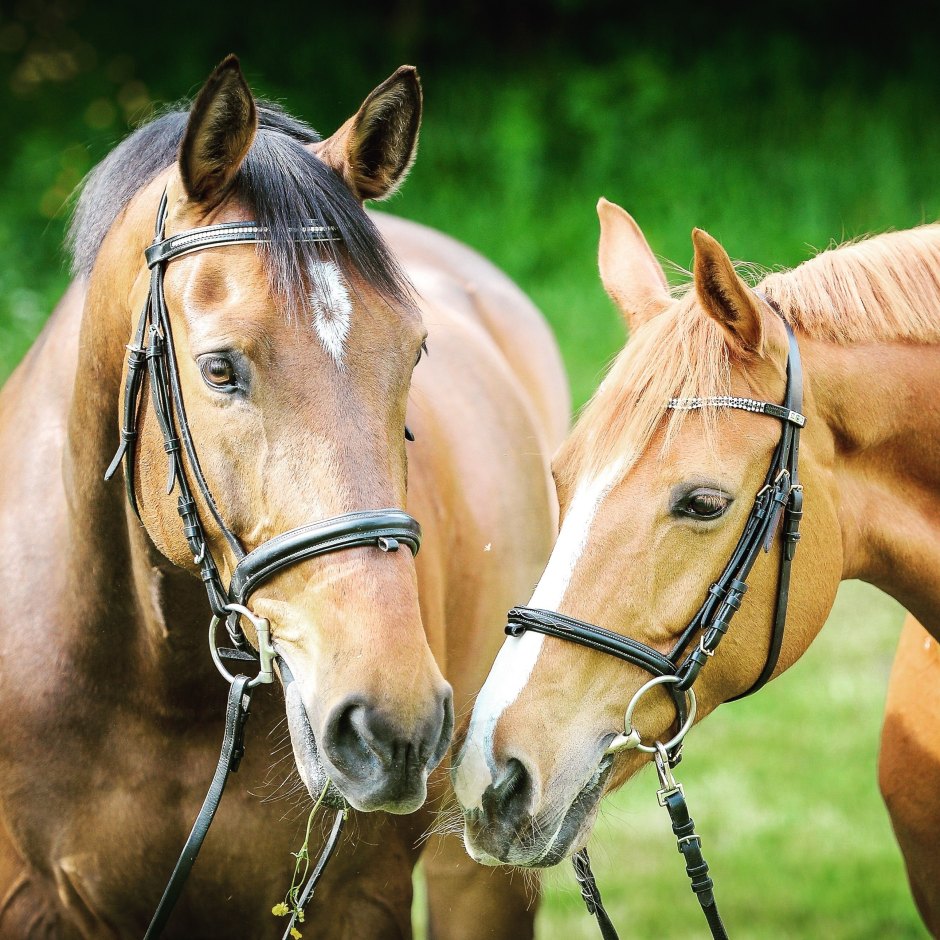
When I chatted with my grandpa, we always talked about horses and life on the ranch. I loved the adventurous romance of it all. We shared that common bond, the desire to live in the country, and a love for horses. I often pleaded with my parents to return to Colorado, but my mama used to tell me that ranch life was tough, and a lot of hard work. She would often smile at my childish pleas and recite the following poem:
I’m not an Eastern beauty.
I’m not a Southern rose.
I’m just a little cowgirl
With freckles on my nose.
Eventually, I made my way back home to Colorado. Today, this cowgirl has happily resided in her favorite Rocky Mountain state. On my own little patch of land, I still live alongside freeloading gophers, but now I have two pups that have chased them from at least the backyard. Still, we share stunning mountain views and spectacular sunsets, and at night the distant city lights and endless stars fill the skies with a magical sparkle. And at the end of the day, it doesn’t get much sweeter than that!
At the age of four, my family moved to Alameda, California. This little island tucked away in the San Francisco Bay showcased many Victorian homes. These beauties included everything from quaint cottages to astounding mansions and varying sizes in between. While living on the island, children that lived in these houses, often told wild tales about secret rooms or spoke of hidden treasure. My brothers and I would often search for hidden rooms and fortune too. When I was five or six, I did find a prize, an antique teapot from Holland. Continue reading “My Island Home”→
I slipped downstairs with a small shovel and started digging under the stairwell.
When I was a child, my childhood home was a three-story Victorian beauty nestled on an island in the San Francisco Bay. It was the perfect place for a child with an active imagination. The first level of the home housed two garages, a bar, a laundry room, a pottery room, and an extra room that we used as a playroom. Continue reading “Buried Treasure”→
When I was thirteen, I had my first real crush. His name was Ben. Not his real name, of course. I’m protecting the guilty. Also myself.
I first met Ben when I was about eleven or twelve, long before I developed any romantic delusions about him. Back then, he was just another Boy Scout with sunburned ears, a cocky grin, and the full confidence of a boy who had not yet been knocked down enough by life. I was a Girl Scout, and because the universe enjoys irony, our troops sometimes ended up on camping trips together.
My dad was a Webelos leader and got involved with Ben’s troop through their Scoutmaster, Mr. Lewis. From time to time, Mr. Lewis invited my dad’s boys to join the older scouts on camping trips. And somehow, I often got swept along for the adventure.
One weekend, we camped at Lake Chabot in Castro Valley, California. It was beautiful with rolling hills, sparkling water, tall trees, the whole postcard package. Some of the older boys had built homemade kayaks and paddled to the campsite like miniature mountain men. The rest of us hiked in carrying sleeping bags, gear, and enough supplies to survive a minor apocalypse.
By the time we got there, the kayak boys were already lounging around, proud of themselves and ready to swim. My father shut that down immediately.
“Set up camp first,” he said.
Nothing kills a teenage boy’s joy faster than a responsible adult.
So everyone started unloading gear and picking spots. I was setting up my own sleeping area when Ben and one of his friends wandered over. Ben dropped his sleeping bag and backpack at my feet like I was hired help.
“Since you’re the only girl,” he said with a grin, “you should set up our stuff.”
I smiled sweetly and said, “Sure.”
My tone should have warned them.
But without the brains that the Good Lord gave them, the two boys swaggered off toward the lake, cackling like two fools who thought they’d just won the Primetime Emmy Award for Outstanding Comedy Series.
My dad raised an eyebrow but said nothing, busy helping the younger scouts get settled
Now, earlier that day, I had noticed a giant anthill near our campsite. Not a cute little anthill. A full-scale ant subdivision. Busy. Organized. Motivated.
So I decided to honor Ben’s request and perform my “womanly duties.”
With great care and a servant’s heart, I laid out his tarp directly over the anthill. I spread out the sleeping bags, arranged their gear, and made the whole setup look downright cozy. It was the most thoughtful act of revenge I had ever committed. No one would have suspected a thing.
Well, almost no one.
My dad glanced over at me with that look parents get when they know exactly what you are capable of but don’t yet have enough evidence to stop you.
Still, he said nothing.
After camp was set up, we all went swimming. For a little while, the afternoon was peaceful. Sun on the water. Boys splashing around. Me enjoying the calm before the insect uprising.
Then I heard it.
“Ann Marie!”
That one sentence told me everything. I hurried back, trying—and failing—not to laugh.
I came running back to camp and found the two Neanderthals in absolute chaos. They were shaking out sleeping bags, flinging ants off their packs, slapping at their legs, and hollering like they had been attacked by tiny, furious outlaws. Mr. Lewis was laughing so hard he could barely stand up. A couple of the other boys had collapsed onto logs. Even my dad, who was trying to maintain parental authority, looked like he was one second away from losing it since the twitch at the corners of his mouth gave him away.
Turns out, ants get downright hostile when you bulldoze their neighborhood.
Ben glared at me.
I gave him my most innocent face, which has never once fooled anyone.
The boys had to strip down their campsite, shake out every piece of gear, and try to evict the legions of ants that had made themselves perfectly at home. My father told me to help, though the boys wanted no part of my assistance by then. Even Mr. Lewis, between laughs, said, “They had it coming.”
He wasn’t wrong.
The cleanup took forever, and even then they never got every last ant out. All night long, the campsite echoed with startled yelps and muttered curses each time one of those tiny, determined invaders found a fresh place to bite. My dad and I tried to keep quiet, but every now and then I’d hear another shout in the darkness and have to bury my laughter in my sleeping bag.
That should have been the end of my story with Ben. In a sensible world, a boy whose bedroll you had booby-trapped with an anthill might not become your first crush. But life, especially at thirteen, is rarely sensible, and you would be underestimating adolescence.
Somewhere between that camping trip and the summer before my freshman year of high school, Ben and I started liking each other. I was nearly fourteen; he was fifteen. And somehow, the same boy who had once treated me like unpaid labor had become very interesting. That is the sort of bad judgment that makes adolescence so dangerous. Good judgment simply flees.
By the summer, Ben had become my first real crush. He started coming by the house to see me. We rode our bikes around the island, hung out at the beach, and sat on my front stoop talking for hours about absolutely everything and absolutely nothing. It was easy and sweet and innocent, right up until it wasn’t.
One afternoon, Ben showed up at my house with his best friend, and we joined a group of neighborhood boys already hanging around in the yard. Everybody was laughing and carrying on, enjoying the lazy ease of a summer day. Then, without warning, Ben leaned against my dad’s car, pulled me close, and kissed me.
The boys went wild, laughing, hollering, and teasing us without mercy.
I froze. My face went hot. In one awful second, I could already hear the jokes that would follow me for weeks. I knew I would never hear the end of it unless I did something immediately.
So I did the only thing my flustered thirteen-year-old self could think of.
I punched him square in the jaw.
It was not a heroic punch. It was not a movie punch. It was more of a panicked, reputation-saving jab. Still, it landed.
Ben stepped back, rubbing his jaw, and then—to his credit—he laughed. “I’ll see you later,” he said, before climbing on his bike and riding off with his friend.
But I never really did.
Just like that, my first little summer romance ended almost as quickly as it had begun with one stolen kiss, one dignity-saving punch, and a yard full of witnesses.
Looking back now, I can smile at the whole thing: the anthill revenge, the bike rides, the stolen kiss, and the dramatic defense of my reputation. At thirteen, I was only beginning to understand the complicated, embarrassing, tender business of growing up. Boys and romance seemed baffling. And that summer taught me something I would spend years learning again and again: the heart doesn’t always glide in soft and sweet. Sometimes it crashes into your life laughing, leaves you blushing in front of the whole neighborhood, and rides away before you’ve even figured out why you liked it in the first place.
After the death of her parents, my 9x great-grandmother left her French homeland behind and traveled across rough waters to make a new life in Canada. While researching this adventurous grandmother, I often wondered if she had any inkling about her new life. Although this woman knew that she was to marry once she reached her destination, did she worry about her future mate? Did she wonder about the life they would share? Did she fear the unknown frontier? Continue reading “Jeanne Fressel: A King’s Daughter in New France”→
One of my favorite old-time photos shows my great, great grandfather, William Strassburg, crossing a river on a wagon with a pair of horses. No name or date appears on the back. However, I know my grandfather lived in Gunnison, Colorado for many years, and the scenery does resemble the Western Slope of Colorado. The boys in the wagon are a mystery, and no one in the family knew who the children were. Continue reading “Crossing the River”→
In the summer of 1956, my mother stood at a bus stop in Delta, Colorado, trying not to cry.
Back then, the town was small—a quiet farming place surrounded by fields, orchards, and a wide sky that could make you feel safe and vulnerable at the same time. Dust swirled along the road. The sun felt warm on the platform. Other travelers stood nearby with their suitcases, each one thinking about where they were headed. But my mother, Dotty Allen, wasn’t focused on her destination. She was thinking about what she was leaving behind.
She had come home for a visit, back to her parents, her little sister, and the familiar routines of Western Colorado. Home meant the smell of warm earth, voices she knew by heart, her mother in the kitchen, and her father in his old cowboy shirt. It was a place where she felt understood, where love showed up in everyday things. But the visit ended too soon. Now she was going back to California, to Oakland, and to her job as a telephone operator—connecting other people’s voices while feeling the distance in her own life.
She tried to be brave. That’s what women did back then. They hid their feelings and kept going. Still, tears filled her eyes as she stood with her parents, holding onto those last moments before leaving, wishing she could make time slow down.
Then the bus came.
You could hear the bus before you saw it—a low rumble that grew louder, then the hiss of brakes and the heavy sound as it stopped at the curb. Dust rose around its wheels. The doors opened. It was time.
My grandmother, Elva, touched Dotty’s arm and pointed toward the line of passengers beginning to gather. Among them stood several young soldiers in dress greens, their uniforms pressed, their shoes polished, their faces still carrying that mixture of youth and duty.
“Oh, I would sit by that one,” she said, nodding toward a tall young soldier with dark hair and warm brown eyes.
My mother, in no mood for matchmaking and even less in the mood to be told where to sit, wrinkled her nose. “Umm… no, not that one. I think I’ll sit by that one,” she said, gesturing toward someone else entirely.
My grandfather chuckled softly. “Your mother’s right,” he told her. “I believe you ought to sit by that fella.”
This is one of those family stories we’ve told so often it’s almost become a legend—shaped by memory and retelling, but still holding its original spark. I can picture it clearly: my mother, stubborn and sad in the summer sun; my grandmother, quietly sure of herself; my grandfather, amused. All of them standing at the edge of a moment they didn’t yet understand.
Passengers started to board. Tickets were collected. Suitcases were lifted. My mother waited as long as she could, not wanting to leave just yet. She hugged her father and breathed in the clean, sun-warmed smell of his shirt. She looked at her mother, trying to remember her face. She glanced at her little sister, wanting to keep even that small, toothy grin in her memory. Then she picked up her bag and got on the bus.
The bus door closed behind her with a final sound that can break your heart a little.
Inside, she wiped her eyes and looked for a seat. Before she could lift her suitcase, one of the soldiers stood up and took it, placing it easily in the overhead rack.
“You can have the window seat,” he said.
His voice was gentle. Kind.
My mother sat down, still wiping her eyes. Once she was settled, she looked up and, to her surprise, saw she was sitting next to the very young man her mother had pointed out—the handsome one with dark hair and warm brown eyes.
Then, as if that wasn’t enough, he reached into his pocket, took out a handkerchief, and gave it to her so she could dry her tears.
Out on the platform, my grandparents saw it all. My grandfather smiled. My grandmother probably tried not to look too pleased with herself.
As the bus left, my mother turned for one last wave. Delta faded behind her, and her family grew smaller in the window until they disappeared. She sat quietly for a while, trying to pull herself together. The young soldier next to her waited patiently. He spoke softly, giving her space to talk if she wanted. After a while, she replied.
His name was Harold Reeder.
He was also going back to California, returning to his military base. Somewhere between Delta and Oakland, between sadness and small talk, between what was familiar and what was new, something started. It didn’t happen all at once or with any big moment—just a spark, a gentle shift, the quiet start of a story.
Later, the couple exchanged letters.
During the day, my mother worked at the telephone company, connecting calls, then came home to read my father’s words. My father was far away, busy with his military duties, but he still found time to write to the girl he’d met on a bus leaving Delta. With each letter, their feelings grew. Pictures exchanged with written messages, beginning with the word “Darling.” What started as a random seat choice turned into courtship, then a promise.
A year later, Harold asked her to marry him.
He couldn’t afford a diamond ring then, but love doesn’t need money to be real. Instead, he gave her something simple and unforgettable—a copper charm made from a flattened penny, shaped into an oval and stamped with the Lord’s Prayer. It looked plain, but to my mother, it was priceless. It held his proposal, his faith, his creativity, and his devotion. He gave it to her before leaving for Anchorage, Alaska, and she kept it close while she waited for him.
Four years after that summer bus ride, on May 27, 1960, my parents were married in Alameda, California.
Later, my father bought her the engagement ring he couldn’t afford before, along with a matching diamond band. She loved those rings, but the little copper charm was different. It carried the memories of those early years—the waiting, the letters, the promise, and the beginning.
Their life together was like many others—full of moves, distance, duty, sacrifice, and everyday joys. They lived in Alameda, then Fort Lewis near Seattle, then Colorado Springs and Hotchkiss, Colorado, before coming back to Alameda. Along the way, they started a family and made a home wherever they went. They always remembered that first meeting, as if our whole family grew from one bus ride and a mother’s hunch.
Of all the keepsakes in our family, two mean the most to me: the copper charm and my father’s dog tags. Time has darkened them and worn down their edges. They don’t shine like they used to, but maybe that’s how it should be. Love isn’t more valuable because it stays perfect. It’s the marks of living that give it meaning.
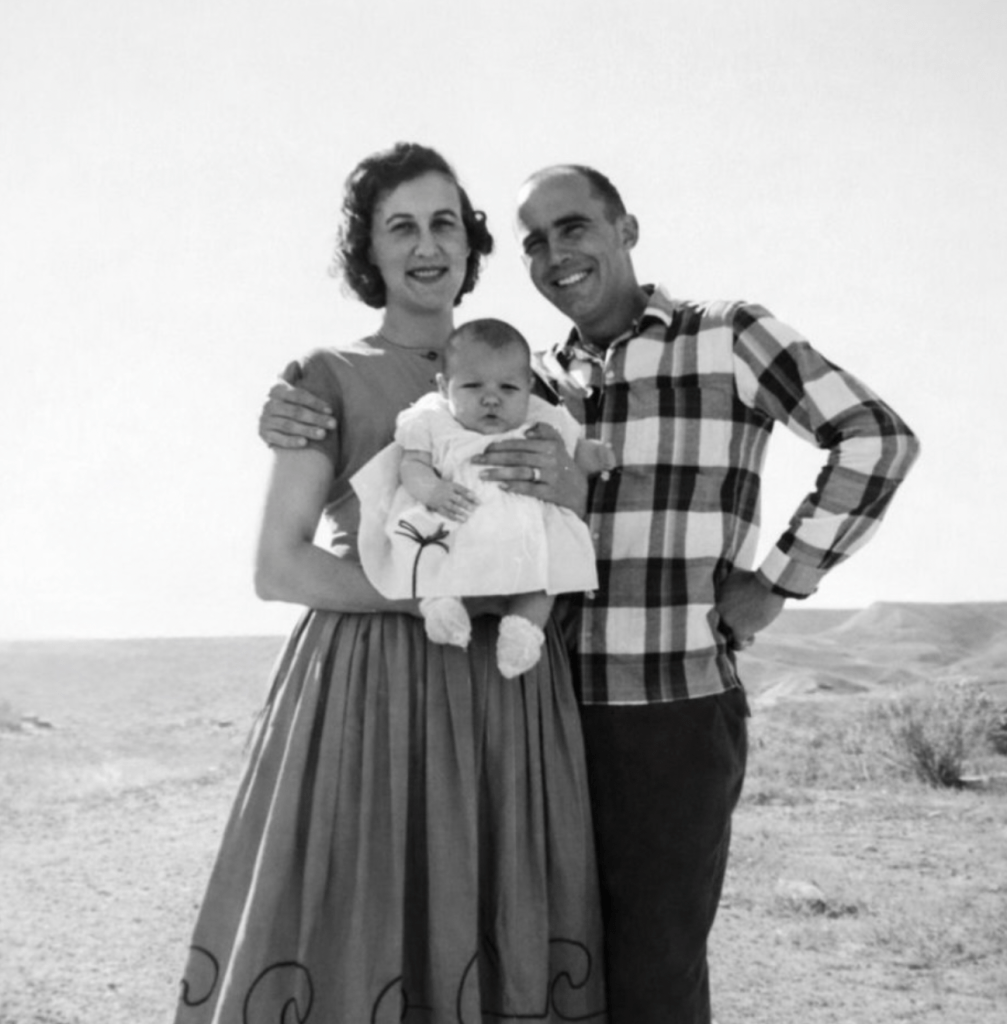
There’s a photo of my parents and me on Rogers Mesa at my grandparents’ ranch. I was just a baby. Two months after I was born, we moved to Colorado Springs when my father was sent to Fort Carson. In that picture, they’re already a family, already living the life that started with that summer meeting. When I look at it, I see more than my parents; I see the bus station, my grandmother pointing, my mother hesitating, and my father offering the window seat and a handkerchief.
And I think about how quickly a life can change.
A mother’s gentle push. A seat on a bus. A small kindness at just the right time.
And from that, everything else followed.
And I think how easily a life can turn.
A nudge from a mother. A seat on a bus. A kindness extended at just the right moment.
Earlier this week, I read a blog from a cherished fellow blogger, Jeanne Bryan Insalaco. On her site, Everyone Has a Story, she included a year end review of her writing experiences for 2017. She included the information from another genealogist that invited readers to write about their discoveries. Once I read the two blogs, I wanted to share my adventures too. I have provided the original link from Jill Ball.
“There are two lasting bequests we can give our children: One is roots, the other is wings.” Teaching children values and giving them the opportunity to excel is essential to good parenting. However, I feel I must also provide my children (and myself) insight into the ones who came before us: our ancestors whose lives and stories have shaped us into who we are. This is my journey; these are their stories…

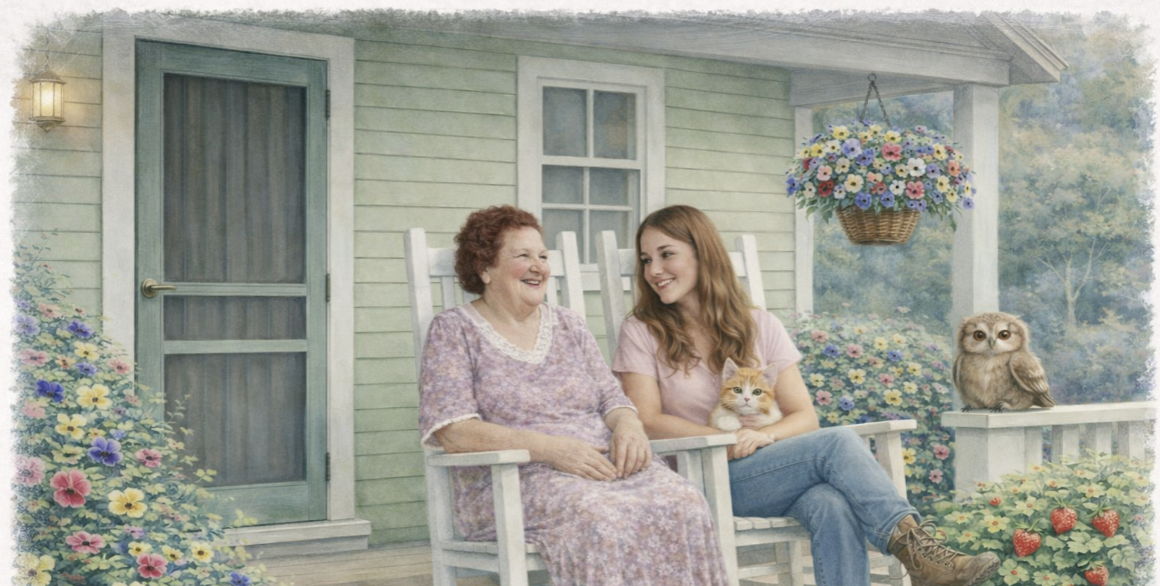

 Sometimes I would help grandma with her garden. On one side of her home, she grew rhubarb. In front on either side of her front porch, strawberries, Johnny Jump Ups, and pansies filled her pint-sized yard. We would visit and share stories, while I pulled weeds. She would often share family stories, and from her, I discovered my love for storytelling. Like her, I wanted my grandchildren to know where their stories began.
 When I chatted with my grandpa, we always talked about horses and life on the ranch. I loved the adventurous romance of it all. We shared that common bond, the desire to live in the country, and a love for horses. I often pleaded with my parents to return to Colorado, but my mama used to tell me that ranch life was tough, and a lot of hard work. She would often smile at my childish pleas and recite the following poem:






 Tales of a Family