The Night We Thought We Were Possessed

In 1973, The Exorcist thundered across the screen, frightening people across the country. Moviegoers had never witnessed anything quite like it. They whispered about it in the aisles of grocery stores, on city buses, and at school, as if talking out loud about this film might just conjure unexpected and unwanted evil forces. Some believed the movie was cursed; others thought it was real. And naturally, as a reasonable twelve-year-old, I decided I needed to see it.

At school, the movie had taken on a life of its own.

“I didn’t even get scared,” one boy bragged, which was code for he was absolutely terrified by the fast-paced film.

Another leaned and whispered, “Her head spins all the way around.”

Now, I didn’t know anything about possession, but I was fairly certain that it defied anything humans were designed to do. Still, I was mesmerized by the school banter and the press.​

My friend Tammy and I listened to every dramatic rendering, eyes wide and, in turn, wonderfully horrified by each event. As our curiosity grew, so did a dogged determination. We were committed; we were going to see that movie. There was only one obstacle – my mother.

“Absolutely not! I will not allow you to see this film.”  

She used HER voice. The one who would never allow her middle-school daughter to watch the most dreaded movie of all time. She had also witnessed the publicity on TV.

Still, I pushed, “But, Mom.”

She turned around and gave me “the look,” which I was pretty sure was even scarier than the scene where Linda Blair’s head rotated around her shoulders. I remember thinking, whatever was in that movie, I was now facing something much stronger.

Still, the wanting did not go away.

The next day after school, Tammy and I sprawled across her twin beds, plotting like two girls who had watched zero spy movies but felt very qualified anyway.

“What if you spend the night?” Her voice was giddy with excitement. “I’ll just tell my mom you have permission, and she’ll take us.”

But I had questions that rapidly fired in my twelve-year-old brain.

“What if we got caught?”

“What if someone saw us?”

‘What if my mom’s uncanny ability, the one that always seemed to sense the exact moment one of her chicks was about to step out of line, suddenly shifted into overdrive?”

“What if she somehow pieced it all together, guided by that eerie intuition and those sharp, almost unsettling maternal instincts?”

All sensible concerns. But then Tammy smiled. And I made the decision that every middle schooler makes at least once. With my heart pounding, I recklessly ventured, “Let’s do it.”

Early Friday evening arrived, and it was official. I was now living a double life. My dad dropped me off at Tammy’s place, completely unaware that his only daughter was defying orders and going rogue.

“Have fun,” he said.

Oh, I planned to. I leaned into the car window, kissed him on the cheek, and felt just enough of a pang of guilt to know I should confess every sin, but not enough to rethink my questionable plans for the evening.

Later, that evening, we found a parking spot near the theater. The dimly lit streets provided the perfect cover for our covert operations. And the soft lighting inside aided in our deceit. I held my breath, worrying that at any moment, one of my mother’s friends would discover my deception. To be safe, I kept my head down as we walked into the auditorium. When we found our seats, I sighed with relief.

And then it started; we tried to act brave. Calm. Mature, even.

But then the bed started shaking, and we became extremely still, grasping the armrests with all of our might as if some evil force might tear us out of our seats at any moment. We didn’t talk; we held our breath. And we certainly did not eat the snacks purchased before we entered.

By the time the movie ended, I wasn’t sure what was more frightening: the movie or my questionable life choices.

The ride back to Tammy’s house was quiet–not a peaceful quiet either. More like we both witnessed something we weren’t quite prepared for-quiet. That moment when you realize you should have listened to your mother – quiet.

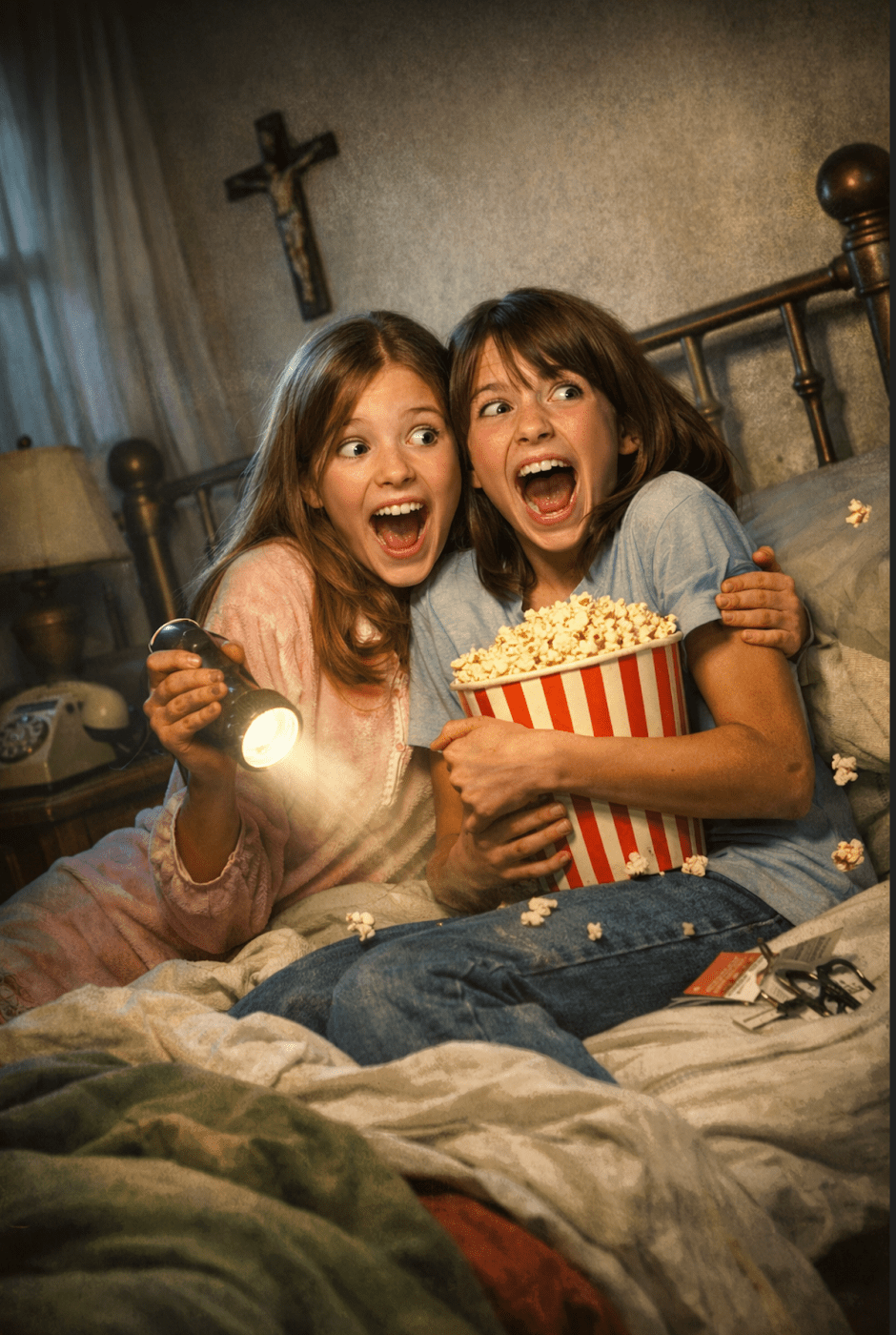
When we settled into her room, each of us tucked into the matching twin beds; we whispered like survivors.

“Were you scared?” Tammy asked.

“Yes. You?”

“Yes,” she slowly replied.

Without speaking again, we both knew we had made some questionable decisions, but eventually we fell asleep, with the lights on.

Sometime in the middle of the night, I woke up to the terrible realization that my bed was shaking. It was sliding across the floor like it had somewhere to be. And at that exact moment, every single scene from the movie flashed in front of me. I sat up, convinced I had crossed a line and was now facing the horrifying consequences.

Tammy woke up, too, and we both screamed as if the devil himself, along with his goon squad, were on the verge of attacking us. Horrified, we could see the terror on each other’s faces since the lamp, now shaking on the nightstand, was still turned on. We had refused to fall asleep in the dark.

Suddenly, the door flew open, and the overhead lights flashed as Tammy’s mom scrambled into the room. Her mother took one look at us and the errant twin bed and tried not to laugh.

“Girls, we just had an earthquake,” she explained.

Of course, an earthquake. Not possession. Not consequences. Not the beginning of a very terrifying tale. Just seismic activity.

Tammy and I looked at each other and started nervously laughing, a little shaky at first. Because honestly, when you’ve spent a moment believing hell had unleashed its fury, there’s really nowhere to go but laughter. That unhinged release of knowing that you are somehow still here and okay, well, for at least the moment.

The next day, I went home and told my mom everything. All of it. The deceit. The movie. The sleepover, and how the earthquake convinced me I needed to come clean.

She listened. She smiled, and then she began laughing uncontrollably.

I stared at her in utter disbelief. My mother was laughing at my harrowing confession. It was not just easy, carefree laughter, but a deep guttural belly laugh that made tears run from my mother’s eyes. It was the kind of laugh that held a moment of clarity. This would be one story I would hear about for years, even decades.

When she finally gained her composure, which took some time, I asked, “That’s it? You’re not mad, and I’m not grounded for life?”

On the verge of another fit of hysterics, she took a deep breath and smiled.

“Well,” she remarked, you did disobey.”

I waited.

“But, I think you were already punished.”

Then she added to make sure the lesson stayed with me, she raised an eyebrow and stated, “See what happens when you defy your Mother? God will get you.”

And with that, she started laughing again; tears and all.

That night I didn’t sleep well, not because of the movie, not even because of the earthquake. But because somewhere deep down, I wasn’t entirely convinced she was joking.

Even now, I can’t say what frightened me most, but I learned that night that some warnings are worth listening to… especially when they come from your mother.
The Storytellers

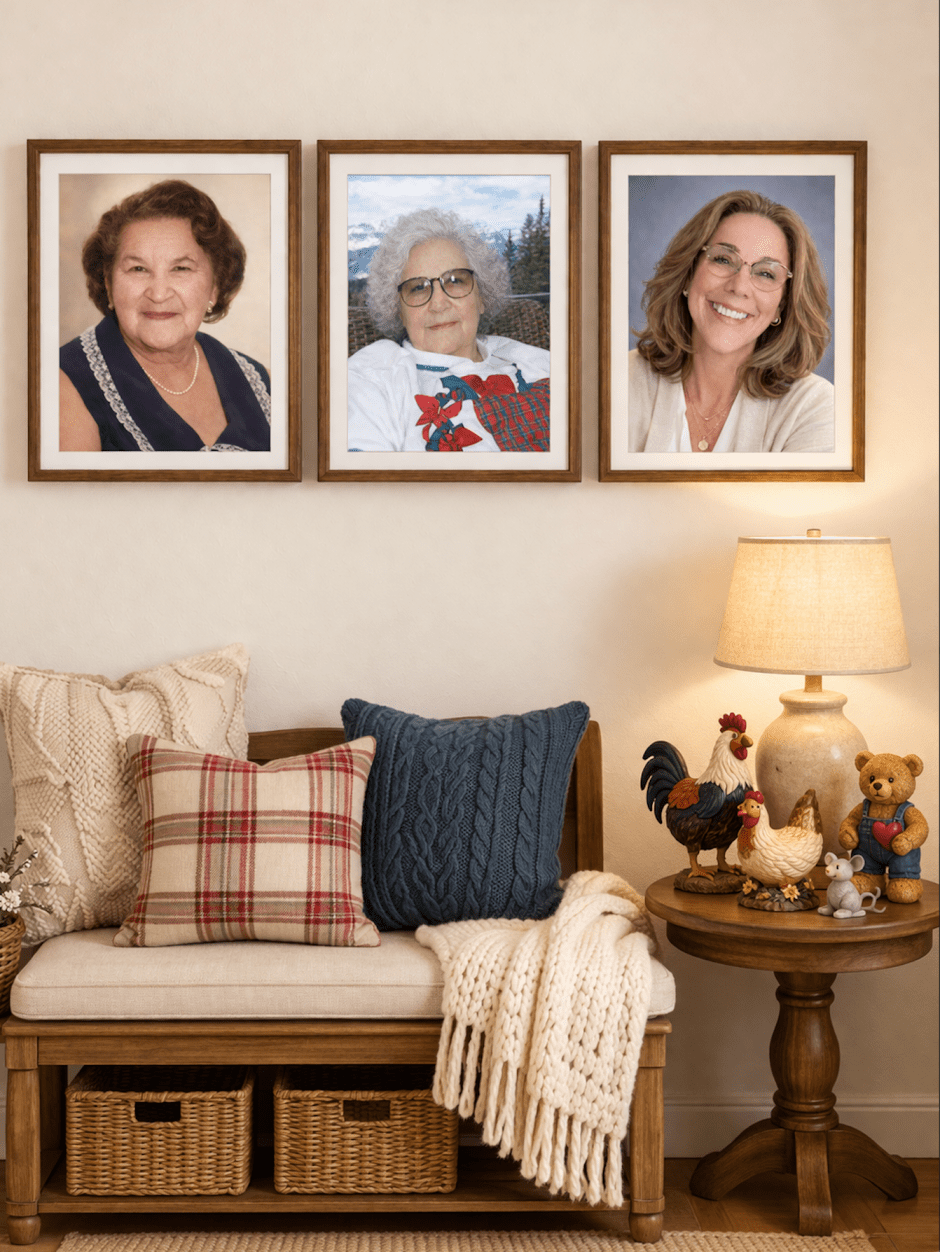
My two favorite storytellers began with with my grandmother, Elva Marie and and my mother, Dotty Marie. Their sweet voices carried the past into the present and held our family’s stories with love and grace.

Some of my earliest memories emerged in the shelter of your arms, with the softest hands wrapped around me, and the tender rise and fall of your voices as narratives unfolded. Those moments proved safe, wrapped in your warmth, as if the world began and ended with you.

As I grew, your stories were woven into the fabric of everyday moments, and they lingered in simple moments: coffee at the kitchen table, the gentle clatter of dishes being washed and dried, and long, lazy afternoons with nothing to do but share stories, memories, and favorite tales. Time slowed in those moments. Those occasions brought the past close, a gift waiting to be remembered.

And I loved those days.

Your voice and your stories were my gift; hours spent with my favorite storytellers, tales told again and again. You gave life to the families, names stitched together like the music and cheer from the past. Through you, I could hear the footsteps of boots on wooden floors, the laughter of families gathered together, music playing, and suppers shared. You offered a heartbeat to generations I never encountered but somehow knew.

You nurtured that rhythm of life built on steady hands and strong hearts, resilience rooted deeply in the land and the hearts of its people. Even as a child, I understood that something cherished stirred in those moments: a deep love, a quiet strength, and a gentle knowledge of belonging that reached far beyond generations.

You answered every question, even when asked dozens of times. You smiled at my wonder and laughed at my questions. You welcomed my curiosity. You made our history real, close enough to carry with me.

And I hope I can gather and tell our stories the way you did, lovingly and carefully, with the same warmth and joy. And more than anything, I hope someone will say, “Tell it again.”

My Ornery Cowboy Grandpa

When I think of my grandfather, I think of boots.

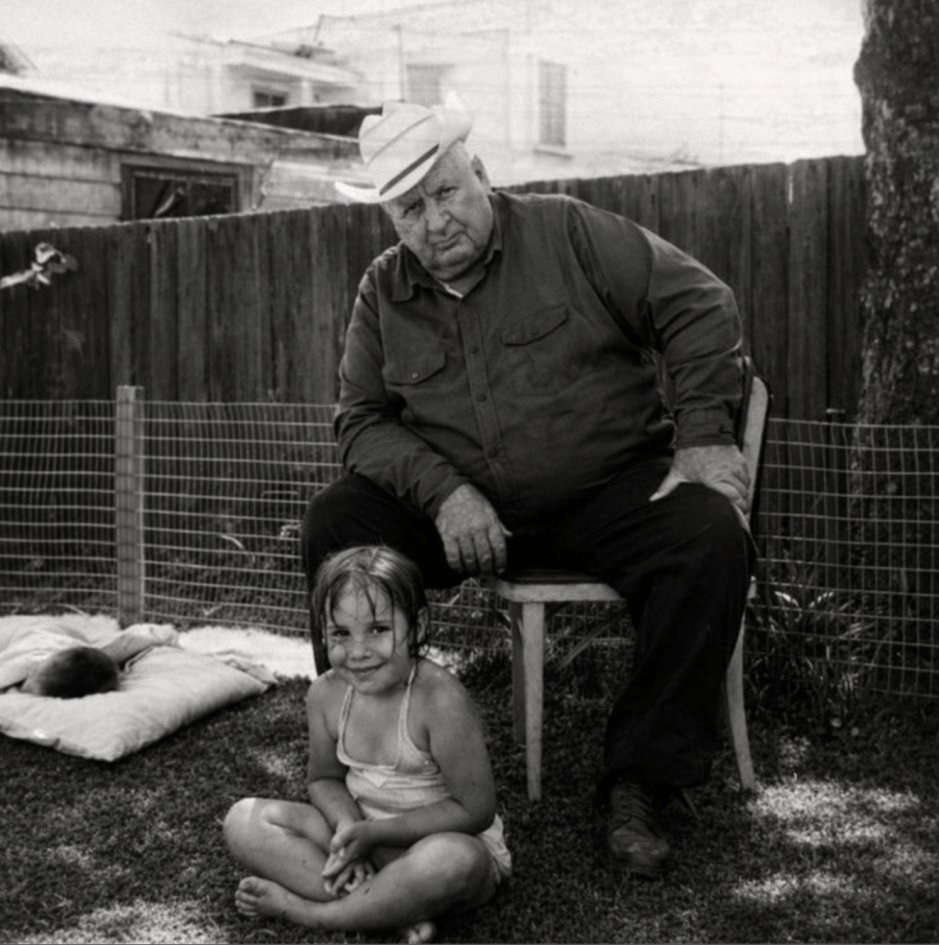
I hear them before I see him, that unmistakable, heavy rhythm of cowboy boots crossing a floor, steady and sure, followed by the deep rumble of his voice rolling through the house like distant thunder. Even now, all these years later, I can still summon him in an instant: the broad-brimmed straw hat, the crisp western shirt, and the worn boots that seemed as permanent a part of him as his hands or his laugh. Before I remember that he died when I was fourteen, I remember how fully he lived in a room.

By the time my grandfather passed away, our family and my grandparents were living in Alameda, California, a long way from Hotchkiss, Colorado, the place he thought of as home, no matter what address appeared on an envelope. California may have held him captive, but Colorado held his heart. He carried it all with him, his family, the ranch country, the sheep, the horses, the hard weather, the wide-open spaces, and the stories that rose from that land as naturally as dust from a dry road. Through him, Hotchkiss never felt far away. He brought it to life every time he spoke.

He was a large man in every way that mattered. As a child, I thought he was six feet or more in all directions—broad-shouldered, big-chested, thick-handed, the sort of man who seemed carved out of something sturdier than ordinary flesh. His hands looked capable of moving mountains or lifting fence posts or steadying a frightened child with equal ease. His voice was deep and booming, the kind that could command attention without ever asking for it. Even his silence had weight.

To me, he was the very definition of a cowboy. Not a polished, movie screen cowboy, but the real thing, rough around the edges, sunbaked, practical, and a little intimidating until he smiled. He dressed in cowboy clothes every single day because that was simply who he was. There was no costume to it, no performance. The hat, the Western shirt, and the boots, those things were as natural on him as skin. He did not put them on to become a cowboy. He wore them because he had never been anything else.

And oh, I adored him.

For all his size and gruffness, Grandpa had the softest heart for babies and grandkids. He was not sentimental in the syrupy sort of way. He did not fuss. He did not coo. But love lived plainly in him, tucked beneath all that bluster. When we were small, he sometimes watched us for my mother, Dotty. There was, however, one task he met with visible suspicion, diaper changes.

The dirty diaper itself was not the problem. He could remove that offensive thing with determination and only a measure of disgust. It was the clean diaper that brought him to a standstill. In those days, diapers were fastened with pins, and the very idea of jabbing a squirming baby with one was enough to unnerve him. So, rather than risk injury, he devised his own solution. He would layer two or three pairs of training pants on the baby and then pull plastic pants over the whole operation, as if engineering some kind of fortress against disaster.

Problem solved.

That was Grandpa’s way. He did not always do things the conventional way, but he nearly always found a way that made sense to him. Looking back, I think that was one of his gifts: he met the world on his own terms and expected the rest of us to keep up.

Visits to Grandma and Grandpa’s house followed their own sweet, dependable ritual. He greeted us with tight hugs, scratchy whisker kisses, and that great booming laugh that made you feel as though you had entered a place where joy was allowed to take up space. And there was always money. Somehow, before we left, he made sure there was change jingling in our pockets or a folded bill pressed into our hands. Love, according to Grandpa, ought to send a child home with a little spending money.

Then came the moment we both dreaded and loved.

In a raspy, exaggerated baby voice that was half teasing and half tender, he would grin and say, “You’re a damn cute kid.”

That was our warning.

Because right after those words came the cheek pinch.

Not a gentle tap. Not a fond little pat. A real pinch. The kind that made you squeal and twist away and laugh even while you protested. We learned to anticipate it. We ducked and dodged and tried to escape, but Grandpa was fast, faster than a man his size had any right to be. He almost always got us. To this day, I maintain that if any of us grew up with chipmunk cheeks, it was because Grandpa stretched them that way one affectionate pinch at a time.

Then there was the Jeep.

For a while, Grandpa owned an old green Jeep, and he drove it like a man who believed speed limits were merely suggestions made for lesser souls. My parents warned us repeatedly: never go anywhere with Grandpa if he were driving. Never, ever. The instruction was clear, serious, and often repeated, which of course only gave it the electric appeal that forbidden things have for children.

By then, we already understood one of the central truths of childhood: what happens at Grandma and Grandpa’s stays at Grandma and Grandpa’s.

So yes, we rode in the Jeep.

I can still imagine the jolt of it, the way my stomach leapt as he tore out of the driveway, the wild swing of a turn taken too fast, the thrilling terror of tearing through a parking lot as though it were part racetrack, part rodeo arena. Riding with Grandpa felt like trusting a storm with a steering wheel. It was reckless and hilarious and a little bit glorious. We held on and hollered and lived to tell the tale, though not, of course, to our parents.

My sweet grandmother worried over those escapades far more than we did. She feared my parents would find out and put an end to our sleepovers, as though those overnight visits were something fragile that might be snatched away. But nothing could have kept us from that house for long. It was one of the anchoring places of my childhood, full of stories and teasing and warmth, where love wore cowboy boots and laughed loudly and pinched your cheeks hard enough to leave a mark, on our hearts anyway.

What I miss most now are the ordinary wonders of him. I miss the booming way he told stories about the ranch, the family, the horses, the sheep. He could make a memory sound like legend. He could take the raw material of daily life and shape it into something worth leaning in to hear. In his telling, Hotchkiss was not just a town. It was a world. The ranch was not just land. It was inheritance, labor, identity, and love. Through his stories, he handed that world down to us.

As a child, I thought he would always be there, always filling a doorway, always laughing too loud, always wearing that hat, always ready with a coin, a story, or a pinch to the cheek. I did not yet understand how quickly the people who seem larger than life can become memory.

He died when I was fourteen, which now seems far too young an age to lose a grandfather like him. At fourteen, you still believe there will be more time. Another visit. Another story. Another chance to hear his boots coming across the floor. You do not yet know how suddenly a voice can vanish from the world and still echo inside you for the rest of your life.

I would give so much to hear him one more time. To hear that deep voice soften into that raspy little baby talk. To see the grin spread across his face before he said, “You’re a damn cute kid.” To brace myself for the pinch I once tried so hard to avoid.

Funny thing is, I think I understand now what I never understood then. The cheek pinch, the Jeep rides, the coins in our pockets, the stories, the laughter—those were his ways of loving us. Big, unruly, unforgettable ways.

And maybe that is why I have come to love my chipmunk cheeks after all.

They are not just mine.

They are where my grandfather left his fingerprints.

A Family Name

Daily writing prompt
What is your middle name? Does it carry any special meaning/significance?

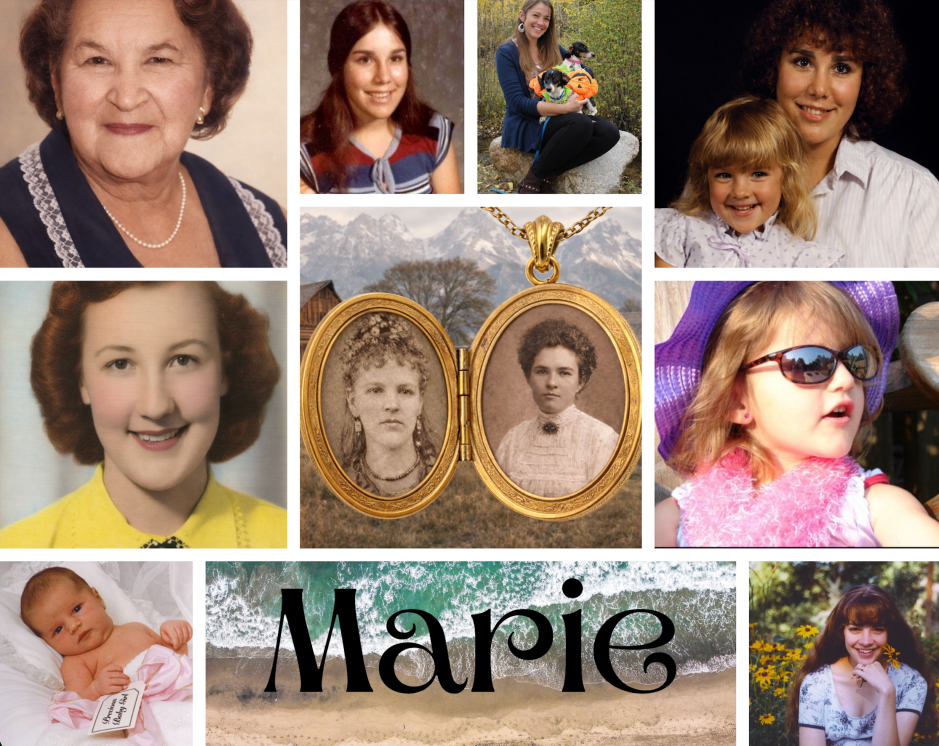
The tradition of the middle name Marie started with my grandmother, Elva Marie. Her name was passed down to the women who came after her. My mother, Dorothy Marie, carried the name with an inner strength that stayed with her throughout her days. When I was born, she gave me the same middle name, and I became Ann Marie. As a child, my mother shared the meaning and importance of my name, two words that held part of my family’s story.

Years later, when I carried my baby daughter, I understood the meaning of tradition. I knew if I had a daughter, her middle name would be Marie. My daughter, Leslie Marie, continued the tradition. It didn’t feel like a decision, but more like honoring something that belonged to us. The name moved from grandmother to mother to daughter, and now it was my daughter’s turn.

Today, the tradition lives on with my granddaughter, Sierra Marie. Her name echoes the names of the women before her. Five generations have shared the same middle name; each quietly linked to the others.

My own name bears even more family history. I was named after my two maternal great-grandmothers, Tamar Anna Peyton and Anna Strassburg. I never met them, but their names are part of mine. It’s a small way to honor the women who shaped our family.

Names can hold history and meaning. They carry memories, identity, and a sense of belonging. In our family, Marie is more than merely a tradition. It reminds us that we are members of something greater. We belong to a line of women whose lives span generations, each granting something for the next to remember.

Chronic Pain: I Should Have Been a Mermaid

Water has always been my refuge. From the time I was a child growing up in Alameda, California—an island nestled in the heart of the San Francisco Bay—I felt an undeniable connection to the sea. Most days, you could find me near the shore, my toes buried in the cool, wet sand, or at the local swimming pool, diving beneath the surface and imagining a world where I never had to come up for air.

My mother recognized this love early on, enrolling me in swimming lessons after catching me in a child’s pool, twirling through the water with a long skirt billowing around me. I wasn’t just playing—I was becoming a mermaid. Some of my fondest childhood memories revolve around the water, the rhythmic crashing of waves, and the beaches I still miss with all my heart.

The Currents Shift

Years later, I found myself in the water again, but for very different reasons. This time, it wasn’t for play but for healing. Life has a way of changing course in an instant—one wrong moment, one unexpected turn, and everything shifts. For me, it was a car that crossed my path at the worst possible time. And then, years later, lightning flashed, my horse reared, and I was thrown to the ground. At the time, I brushed off the incidents, not realizing the toll they had taken. The damage remained dormant for years until, one day, the pain became a constant companion—one I could no longer ignore.

Chronic pain is a thief. It sneaks in and steals the life you once knew, leaving you to navigate a new reality. The activities I once loved—hiking, biking, riding horses, camping—slowly became impossible. Even the simplest of tasks, like washing dishes or vacuuming, became battles I didn’t always have the strength to fight.

For years, I tried different pain medications, searching for relief. Some dulled the pain but left me in a fog, while others only created more problems. Eventually, I stepped away from them, choosing to face the pain head-on, though the exhaustion it brought was relentless.

Drifting Between Two Worlds

Before the pain, my life was spectacular. I was active, always moving, always pushing forward. Year-round, I lifted weights four days a week. Summers were spent swimming daily, my body strong and free. In the fall and spring, I rode my mountain bike, and in the winter, I trained on the treadmill. I thrived in the outdoors, finding adventure in every season.

After the pain, my world shrank. Gardening became difficult. Photography—one of my great passions—was now a struggle, as my body no longer allowed me to trek deep into nature for the perfect shot. My social life dwindled; after long days at work, I was too exhausted to go out, and weekends became a time for rest rather than adventure.

I had always been a social butterfly, fluttering from one event to the next, but pain forced me to slow down. At first, I resented it. But in time, I began to see the gift in the stillness.

A New Tide

Though my world looks different now, I have discovered something profound: the unwavering love of those who remain. Family and friends who see me beyond the pain. Those who offer kindness and understanding, who stand by my side through the hard days and celebrate the good ones. Their support is a lifeline, keeping me afloat even when the waves threaten to pull me under.

And despite it all, I still have more good days than bad.

I still find joy in the water.

My young grandson, Connor, once looked at me with wide, innocent eyes and declared, “You play good in the water.” His simple observation was a reminder that while pain has changed parts of my life, it has not taken everything. I may not be able to hike or ride like I once did, but in the water, I am free.

If only all activities could take place in the pool.

Perhaps, in another life, I really was a mermaid!

The Heart of a Thursday Morning

Some days are just meant for remembering, and today was one of those days.

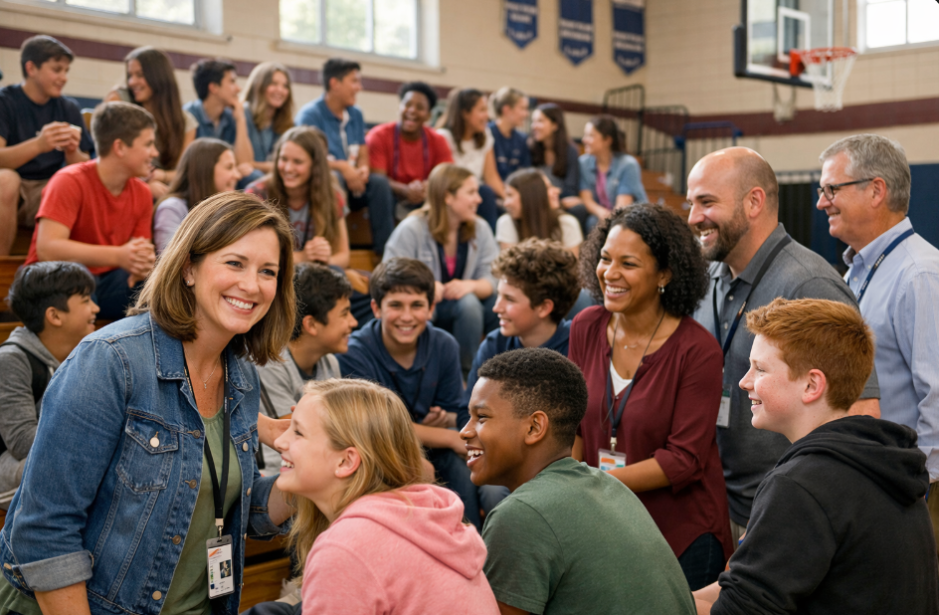
It started as a typical Thursday at the end of the month. My eighth-grade homeroom class met in the gym for our monthly meetings.  During this time, we make class announcements, give class reminders, name a student of the month, and give shout-outs to students, recognizing them for various accomplishments or acts of kindness.

This morning, as I walked into the gym, we had the usual chatter and laughter, along with the endless energy of middle school students. As the kids quieted, and a hush settled over the auditorium, one teacher reminded students that if their grades were not passing, they would not be able to walk in the eighth-grade graduation.  Another teacher, in fun to lighten the mood, said, “Don’t disappoint all the MeeMaws.”

Since I stood in front of the bleachers and am known as the granny at the school, I smiled and pointed to myself. Right away, several of the boys laughed and shouted, “We got you, Ms. B!” Their words were playful, but I knew they meant it. That small gesture touched me. One sweet moment, just a few seconds in a normal school day, meant the world to me.

It reminded me how quickly this year has flown by and how much my students mean to me. Months ago, these students walked into eighth grade, unsure and wide-eyed, and now they are about to start high school, standing a little taller and a little more confident. Moments like these remind me of the importance and the joy of building relationships with these youngsters. While lessons, grades, and standards all matter, it’s the connections that truly last.

As the years fly by and retirement approaches, my heart and mind wrestle with this decision. Teaching has always been the most difficult job I have ever had. It takes patience, resilience, compassion, and lots of humor. But it’s also been the most rewarding job I have ever had.

When I look at all these faces, so full of personality and potential,  I know I have been blessed to work with some incredible students.  I love their hearts. I love their stubborn determination. I love how they support each other, even when they act like they don’t care. And I especially love their hopes and dreams for their futures.  Hopes and dreams that will shape our future, too.

If mornings like this are any sign, our future is in good hands.

Aging Gracefully…Well Almost

Wearing her new eyewear that conveniently turned dark in sunlight, Mandy briefly admired herself in the rear view mirror. “Not bad, ole gal,” she said, turning her head first to the left and then to the right. Smiling, she rolled down the windows and opened the moonroof. Before leaving the parking lot, Mandy turned on her playlist. Once she hit the open road, she began belting out the tunes, which currently featured one of her all-time favorites, Fleetwood Mac’s “Dreams.”

Like a heartbeat drives you mad

In the stillness of remembering what you had

And what you lost

And what you had

Ooh, what you lost..

Single by choice, the woman enjoyed her life. She had distinguished experience, or as she liked to say, she was “chronologically gifted.” She still felt youthful in all the ways that mattered. She still danced while vacuuming, believed stretchy pants were athletic wear, and could still keep up with the grandkids—well, on most days anyway. In her mind, she was about thirty-two on a good day and maybe thirty-five on a tired one. Still, she avoided mirrors strategically—not intentionally, just…well, selectively.

She was on her way home from picking up her new prescription glasses, which she purchased after noticing that restaurant menus were now printed in “ant font.” Reading had become a chore as she held books at arm’s length, although that didn’t help at all. Reading the daily news was next to impossible, and driving had also become a challenge when she couldn’t make out exit or street signs. She knew it was time to give up readers and invest in prescription eyewear. Her optometrist cheerfully announced that her new glasses would make everything clearer. Mandy felt optimistic and enlightened—and still thirty-two. On the way home, she stopped at her favorite café for lunch, thrilled she could actually read the menu. To celebrate her newfound eyesight, she also ordered a chocolate mousse, promising herself she would swim extra laps tomorrow.

Once she arrived home and pulled into the driveway, she rushed inside. Her newfound eyesight felt invigorating. She grabbed a book that she had shoved aside because it was too difficult to read. Settling into her favorite chair, she sighed happily as the words came into focus. Oh, how she had missed this luxury! The hours flew by, and she began to yawn. Laughing, she told herself she could read some more tomorrow as she scurried into her bedroom to change into her PJs for the night.

Walking into the bathroom, she took off her glasses to wash her face and begin her nighttime care routine. Once she lathered on the night cream, she put on her glasses, looked in the mirror, and froze. She leaned in closer, pulled back, and then leaned in again. Her thoughts racing, she blurted out, “Who is that woman? Why does she look tired? What happened to my neck? Those aren’t laugh lines. Those are full comedy specials!

Her concern shifted immediately to the glasses. Clearly, they were defective or, at the very least, evil. Sighing, she removed them, and instantly, she looked ten years younger. When she put them back on, she screamed, “Oh no, she’s back!”

She hurried from the bathroom with her hand held to the mirror. Sitting slowly on her bed, bathed in soft lamplight, she noticed her features looked less tragic in this light. Next, she pulled a lighter from the nightstand, lit a candle, and turned off the lamp. In candlelight, she even looked acceptable. “Great,” she muttered, “I will now live the life of a vampire, only leaving the house once the sun sets.”

Suddenly, she didn’t even feel like thirty-five; depressed, she felt more like fifty.

Stumbling into the kitchen, she pulled a bottle of peachcato from the fridge and her favorite wine glass from the cabinet, pouring herself a hefty drink. Walking to the living room, she turned on a lamp by her favorite chair, placed the glass on a coaster on the end table, and walked to the fireplace. Once she switched on the glowing fire, she stared at it sadly, wondering exactly where all the years had gone. It didn’t seem that long ago when her daughter was small. Sighing, she returned to her chair, reclined, and sipped her wine as her thoughts wandered.

When did life change? When did she start warming up to just go dancing? When was the last night she slept without risking injury? “Hmm. Those years didn’t just disappear; they accumulated quietly while you were busy living.” Her realization didn’t ease her frustrations. “So much for aging gracefully,” she whined.

Standing up from her chair, she rushed to her room, grabbed her hand mirror, and then settled back into her chair. She wanted to inspect the “old” woman again. Holding the mirror, she studied her face and decided to be easy on herself and find some good. She noticed she had kind eyes and a great smile. Those laugh lines proved she enjoyed her life. She lived and had great stories. “Well…she’s not so bad.”

Finally, reality settled in, and she found a compromise. She would wear those darn glasses but remove them when she unexpectedly passed a mirror. She would still sing in the car and dance while vacuuming. She decided she still felt like she was thirty-two on the inside. After she smiled at her reflection, she slowly replied, “You may have aged, old woman, but fortunately, I have not!”

Writing Prompt: Today’s prompt is to write about someone looking into a mirror.

Graduate School

In 2004, I began teaching sixth-grade language arts, a major shift after teaching at the prison. The work was more demanding, with lesson plans to create, papers to grade for over 200 students, and the challenge of managing more than 30 rambunctious middle school students in each class. I won’t lie; some days I missed my comfortable teaching job at the prison, where I had smaller class sizes, paraprofessionals to assist with paperwork and grading, and adults who quietly and respectfully engaged with their assignments. While the prison system had its moments, nothing was quite as daunting as preteens filled with bottled-up energy, classroom hijinks, while mixing in attitude swings and sass.

In my early days, I struggled to manage large classrooms, spending late nights grading papers and tweaking lesson plans to make my writing and grammar lessons more appealing for my clamorous crew. I still chuckle at some of the sentences we created for our grammar lessons. Of course, the boys always had to feature something disgusting, but it worked; most of them remembered their subjects and verbs.

After two years of teaching at the middle school, our district received a grant to fund teachers’ attendance in the Adams State Culturally and Linguistically Diverse gradute program. Our nation faced a shortage of teachers trained to support English Language Learners (ELL), and our school district felt the impact. As an instructor, I had ELL students in my classroom, many of whom spoke Spanish, Korean, Chinese, or Polish as their first languages. These students often struggled as they were still acquiring language skills.

Fortunately, the prison allowed me to take some English as a Second Language (ESL) books that were being removed from circulation. These books became priceless resources for all my students, especially for struggling readers. However, I knew I needed to learn more strategies to assist my English Language Learners.

When the district offered a graduate program for its teachers, I wrestled over the idea of returning to school. I hadn’t forgotten the long hours and sleepless nights I endured while working on my English degree, all while only working part-time. How could I manage returning to school with such a demanding full-time job? Self-doubt entered; I was no spring chicken. What if I couldn’t juggle my job and graduate school?

Ultimately, a coworker, Louise, and I decided to pursue the program together and started in the summer of 2006. We would support each other along the way, united through our common desire to keep learning and find ways to help our students. Together, we signed up for the linguistics graduate degree through Adams State. It was convenient that most of our classes met in Pueblo County. Louise and I spent many hours together, both in and out of the classroom, working on projects and assignments, and we often stopped at Starbucks on our way to weekend classes. Our 18-month program was intense, and her support and friendship kept me motivated.

My days remained busy as I taught students, attended staff meetings, and participated in parent-teacher conferences. Yet, I had it easier than most. As a single woman with a married daughter, I didn’t have the additional responsibilities of cooking dinner or handling family obligations. When I was home, I could focus my energy on lesson plans and graduate school. My heart went out to classmates who juggled extra responsibilities, especially since I felt overloaded with work and worry.

The after-hours studying at the kitchen table, powered by coffee and endless articles, was exhausting. At times, this new challenge felt intense; I was tired, and self-doubt returned. I felt as if I were starting over after so many years away from school. However, I soon began making important discoveries and realized how overwhelmed my ELL students were in the classroom. They were not only trying to learn but also translating all day! It had to be exhausting! This realization humbled me.

Over time, I gradually witnessed a change in my classroom. Quiet students began participating and raising their hands. They asked questions and engaged in discussions. My students gained confidence and became more interested in their studies. This program changed my perspective, and the skills I acquired benefited all of my students.

In 2007, I earned my degree from Adams State with a 4.0 GPA. I was proud of my accomplishments and steadfastness. This degree represented validation, improved skills, and, most importantly, the ability to reach struggling students. Through my studies, I felt increasingly confident as both a teacher and a learner, and I realized that teaching is a lifelong journey of learning. This experience changed my teaching philosophy. I discerned that teaching is not exclusively about delivering information; it is about removing barriers. Every student can succeed when given the proper tools.

And most importantly, I didn’t just earn a degree; I learned to become the teacher my students needed. That year, I discovered teaching wasn’t just about lessons; it was about relationships. What I gained was more than a degree; it was the ability to open doors for students who once felt invisible.

One More Ride

Stroking Beau’s head, I whispered to my best friend, “The day is all ours.” I inhaled his warm, musky scent, which blended with earth and hay, and finally relaxed, hoping moments like this could last forever. My responsibilities suddenly found their way to the back burner. This morning, I would enjoy a ride with my incredible beauty.

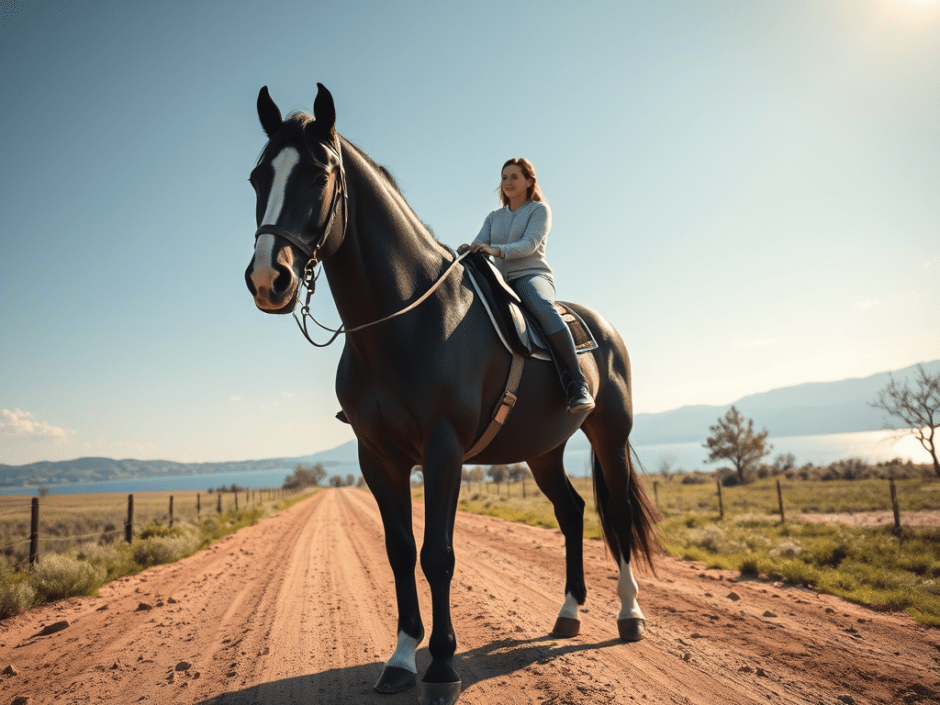
Beau, a breathtaking combination of Arabian and Quarter horse, glistened in the morning sun. He was all black, including his long mane and tail, except for the white blaze on his nose and his four white socks. He pawed the ground, and I laughed. He was ready to hit the country roads and backtrails, too. It was a short ride to Brush Hollow, and we had the whole day to ourselves.

I gathered the reins and quickly placed one foot in the stirrup and swung myself into the saddle, my body moving without hesitation, without pain, without thought. Beau knew where we were heading and turned out of the yard and onto the road. His strength and calm always gave me the right amount of confidence.  Life always felt right when moving along in the saddle with my favorite companion. Even on those days I worked in the garden, Beau would snicker, letting me know he wanted out of his corral.  He followed me around like a puppy, enjoying our closeness as much as I did. I never worried about him running off; he always stayed close, even when I happened to fall off and needed him to wait. We had an unspoken trust. Beau was more than just a horse; he was my anchor, my friend, and my sense of freedom.

As the asphalt turned into dirt roads, we began to canter towards the lake. The spring day offered a cloudless blue sky, and the smell of pinyon and juniper trees and sun-warmed earth filled the air. Cows grazed in green pastures, and occasional moo drifted near us. Spring calves jumped and ran, and made me smile at their antics.

Once we passed the cows, I nudged Beau into a run, wanting to get to Brush Hollow as quickly as possible. The wind whipped my hair, his mane, and tail. It felt like we were flying along that dusty road.

Time slowed and stretched before us, almost standing still as we galloped towards the lake. Dust kicked up behind us while Beau ran as if he could not arrive at our trails soon enough. All thoughts of work and bills dissolved; no future, no past, just this one perfect moment with Beau, a moment I didn’t yet know I would return to again and again. It was quiet understanding, knowing that this day was precious, and I was full of gratitude.

Once we arrived at our familiar path, Beau naturally slowed to a walk, the rhythm of his hooves softening along the trail. The leaves of the cottonwood trees rustled in the wind. A stillness and peace settled in as we began our trek along the path. This rider felt whole, unbroken, and untouched by time. Silence ended when we disturbed a flock of Pinyon Jays. Their cries warned others of our arrival, as if the land itself needed to speak before everything changed. The peace felt too complete, too perfect, the kind that only exists when memory takes over.

And then it happened. The weight of this body refused to move as it once did. Pain returned, along with the heartache and realization that Beau was gone. Opening my eyes, I blinked.  My cane rested next to my nightstand. Slowly, I realized I dreamed of him again.  Sitting up in bed, I winced as pain spread through my back. Grief rested for a moment, as a single tear moved down my cheek. For one lone moment, I allowed the emotional ache of knowing what was lost and could never be again. But I quickly pushed it away, only allowing the pain to last for an instant. For I had lived those perfect moments with Beau, and for that, I would always be grateful.

Prompt: For the first prompt of the 2025 challenge (drum roll, please!): Write a story based on the idea “if you could have just one more.”

I Hated Ants!

When I was a toddler, I lived in Hotchkiss, Colorado, my Momma’s hometown. It was a close-knit little town where everyone knew each other, and neighbors weren’t strangers; they were part of daily life.

During that time, we lived on Bridge Street, one of the town’s main thoroughfares, next door to a mechanic. Most weekends, he and his friends could be found in his garage, working on cars, swapping stories, and filling the air with the sounds of engines and laughter. But it also had a dark side. Soon,that garage became the unlikely ground zero for some of my earliest toddler mischief.

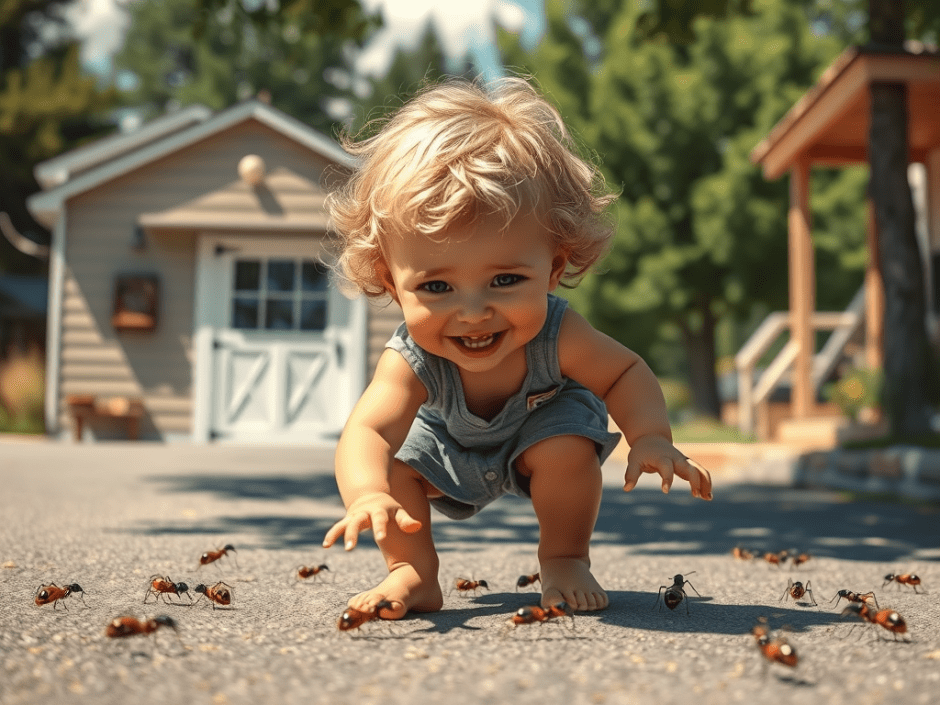
For reasons no one could quite explain, his garage attracted ants; legions of them. It was probably due to spilled soda, leftover lunches, or some mysterious automotive potion that lured the insects inside. Each day, the ants formed a formidable marching line, streaming up the driveway and straight into the open garage like a tiny invading army. Every day, the mechanic and his friends could be seen stomping on the relentless invasion, swatting and muttering their exasperated war cry: “Damn ants.”

According to Momma, it didn’t take long for me to follow suit.

My parents and grandparents often witnessed their curly-haired girl out on the sidewalk, stomping and jumping with fierce determination, pointing at the pavement, and screaming at the top of her lungs, “Damn ants!” My conviction and my performance caught the attention of passing neighbors and the men in the garage. My audience laughed, amused by my antics. The passing admiration only fueled my enthusiasm. My daily performances grew louder, more dramatic, and more frequent. While slightly amused, my parents didn’t want their oldest child loudly cursing in front of all the neighbors, so they tried to make light of the situation. Hoping against hope, my loud hijinks and daily productions would quickly disappear. I can’t really blame them; my first curse words weren’t exactly a milestone they wanted to celebrate.

As if that weren’t enough, I soon developed another “dirty” habit: I liked to eat soil.

The moment Momma turned her back, I would find a corner of ground, dig in with my little hands, and satisfy my strange new craving. She would scoop me up, carry me inside, wash my face, and carefully clean my mouth with a wet washcloth, an experience I did not enjoy. Still, as moms everywhere do, she found a simple and brilliant solution. Calmly, she told me that ants lived in the dirt.

Her story worked.

Momma said my reaction was instantaneous and theatrical. My face, she said, showed shock and total revulsion. Once I knew that ants lived in the dirt, my hankering for all things earth and loam disappeared. My deep-rooted disgust for ants crushed my cravings and cured my strange fondness for soil, and just like that, the dirt-munching phase ended.

Time passed, and as Christmas approached, a package arrived from my mom’s sister, Barb. She had wrapped a gift for her niece and topped it with an adorable tag featuring a rosy-cheeked Santa.

But there was a problem. She signed it: Love Aunt Barb.

To a toddler who hated ants with an absolute passion, “aunt” and “ant” sounded like the same repulsive critter.

Momma said that when she told me the present was from my aunt, I made a disgusted face, hurled the package across the room, and shouted with full conviction, “Damn ants!” It took a great deal of convincing to get me to finally open my Christmas present, and even more effort to explain the difference between an aunt and an ant, a concept that took time to fully understand.

Now, remembering those stories still makes me smile. I always loved the tales Momma shared about my early years, especially the ones filled with humor and just the right amount of shenanigans. She even saved that little Santa gift tag, now safely tucked away in a box of Christmas treasures. It’s a sweet keepsake and a reminder of family stories, childhood misunderstandings, and how the smallest moments often become the most beloved memories.