Some days are just meant for remembering, and today was one of those days.
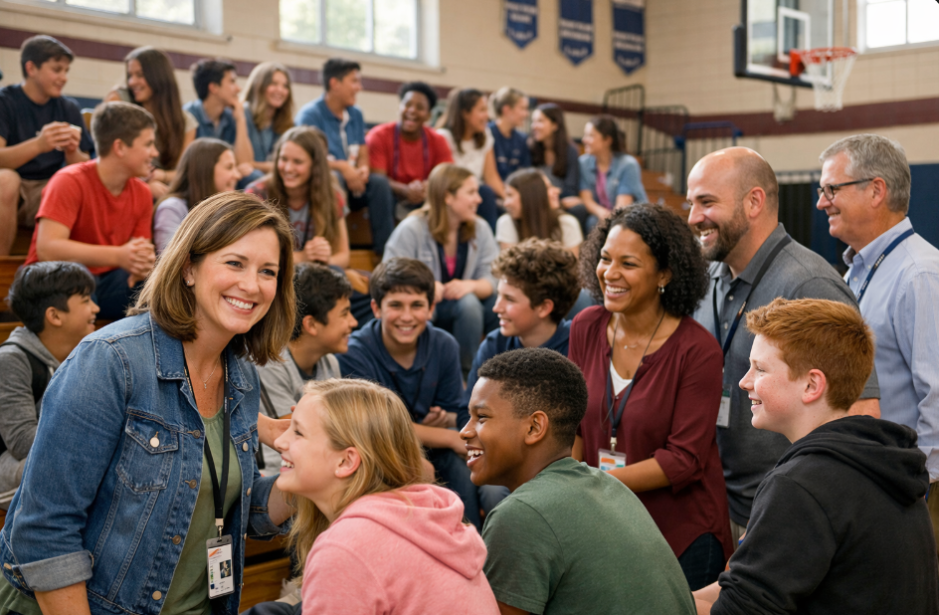
It started as a typical Thursday at the end of the month. My eighth-grade homeroom class met in the gym for our monthly meetings. During this time, we make class announcements, give class reminders, name a student of the month, and give shout-outs to students, recognizing them for various accomplishments or acts of kindness.
This morning, as I walked into the gym, we had the usual chatter and laughter, along with the endless energy of middle school students. As the kids quieted, and a hush settled over the auditorium, one teacher reminded students that if their grades were not passing, they would not be able to walk in the eighth-grade graduation. Another teacher, in fun to lighten the mood, said, “Don’t disappoint all the MeeMaws.”
Since I stood in front of the bleachers and am known as the granny at the school, I smiled and pointed to myself. Right away, several of the boys laughed and shouted, “We got you, Ms. B!” Their words were playful, but I knew they meant it. That small gesture touched me. One sweet moment, just a few seconds in a normal school day, meant the world to me.
It reminded me how quickly this year has flown by and how much my students mean to me. Months ago, these students walked into eighth grade, unsure and wide-eyed, and now they are about to start high school, standing a little taller and a little more confident. Moments like these remind me of the importance and the joy of building relationships with these youngsters. While lessons, grades, and standards all matter, it’s the connections that truly last.
As the years fly by and retirement approaches, my heart and mind wrestle with this decision. Teaching has always been the most difficult job I have ever had. It takes patience, resilience, compassion, and lots of humor. But it’s also been the most rewarding job I have ever had.
When I look at all these faces, so full of personality and potential, I know I have been blessed to work with some incredible students. I love their hearts. I love their stubborn determination. I love how they support each other, even when they act like they don’t care. And I especially love their hopes and dreams for their futures. Hopes and dreams that will shape our future, too.
If mornings like this are any sign, our future is in good hands.
In 2004, I began teaching sixth-grade language arts, a major shift after teaching at the prison. The work was more demanding, with lesson plans to create, papers to grade for over 200 students, and the challenge of managing more than 30 rambunctious middle school students in each class. I won’t lie; some days I missed my comfortable teaching job at the prison, where I had smaller class sizes, paraprofessionals to assist with paperwork and grading, and adults who quietly and respectfully engaged with their assignments. While the prison system had its moments, nothing was quite as daunting as preteens filled with bottled-up energy, classroom hijinks, while mixing in attitude swings and sass.
In my early days, I struggled to manage large classrooms, spending late nights grading papers and tweaking lesson plans to make my writing and grammar lessons more appealing for my clamorous crew. I still chuckle at some of the sentences we created for our grammar lessons. Of course, the boys always had to feature something disgusting, but it worked; most of them remembered their subjects and verbs.
After two years of teaching at the middle school, our district received a grant to fund teachers’ attendance in the Adams State Culturally and Linguistically Diverse gradute program. Our nation faced a shortage of teachers trained to support English Language Learners (ELL), and our school district felt the impact. As an instructor, I had ELL students in my classroom, many of whom spoke Spanish, Korean, Chinese, or Polish as their first languages. These students often struggled as they were still acquiring language skills.
Fortunately, the prison allowed me to take some English as a Second Language (ESL) books that were being removed from circulation. These books became priceless resources for all my students, especially for struggling readers. However, I knew I needed to learn more strategies to assist my English Language Learners.
When the district offered a graduate program for its teachers, I wrestled over the idea of returning to school. I hadn’t forgotten the long hours and sleepless nights I endured while working on my English degree, all while only working part-time. How could I manage returning to school with such a demanding full-time job? Self-doubt entered; I was no spring chicken. What if I couldn’t juggle my job and graduate school?
Ultimately, a coworker, Louise, and I decided to pursue the program together and started in the summer of 2006. We would support each other along the way, united through our common desire to keep learning and find ways to help our students. Together, we signed up for the linguistics graduate degree through Adams State. It was convenient that most of our classes met in Pueblo County. Louise and I spent many hours together, both in and out of the classroom, working on projects and assignments, and we often stopped at Starbucks on our way to weekend classes. Our 18-month program was intense, and her support and friendship kept me motivated.
My days remained busy as I taught students, attended staff meetings, and participated in parent-teacher conferences. Yet, I had it easier than most. As a single woman with a married daughter, I didn’t have the additional responsibilities of cooking dinner or handling family obligations. When I was home, I could focus my energy on lesson plans and graduate school. My heart went out to classmates who juggled extra responsibilities, especially since I felt overloaded with work and worry.
The after-hours studying at the kitchen table, powered by coffee and endless articles, was exhausting. At times, this new challenge felt intense; I was tired, and self-doubt returned. I felt as if I were starting over after so many years away from school. However, I soon began making important discoveries and realized how overwhelmed my ELL students were in the classroom. They were not only trying to learn but also translating all day! It had to be exhausting! This realization humbled me.
Over time, I gradually witnessed a change in my classroom. Quiet students began participating and raising their hands. They asked questions and engaged in discussions. My students gained confidence and became more interested in their studies. This program changed my perspective, and the skills I acquired benefited all of my students.
In 2007, I earned my degree from Adams State with a 4.0 GPA. I was proud of my accomplishments and steadfastness. This degree represented validation, improved skills, and, most importantly, the ability to reach struggling students. Through my studies, I felt increasingly confident as both a teacher and a learner, and I realized that teaching is a lifelong journey of learning. This experience changed my teaching philosophy. I discerned that teaching is not exclusively about delivering information; it is about removing barriers. Every student can succeed when given the proper tools.
And most importantly, I didn’t just earn a degree; I learned to become the teacher my students needed. That year, I discovered teaching wasn’t just about lessons; it was about relationships. What I gained was more than a degree; it was the ability to open doors for students who once felt invisible.
Unexpected Teaching Journey: From College Grad to Women’s Prison Instructor
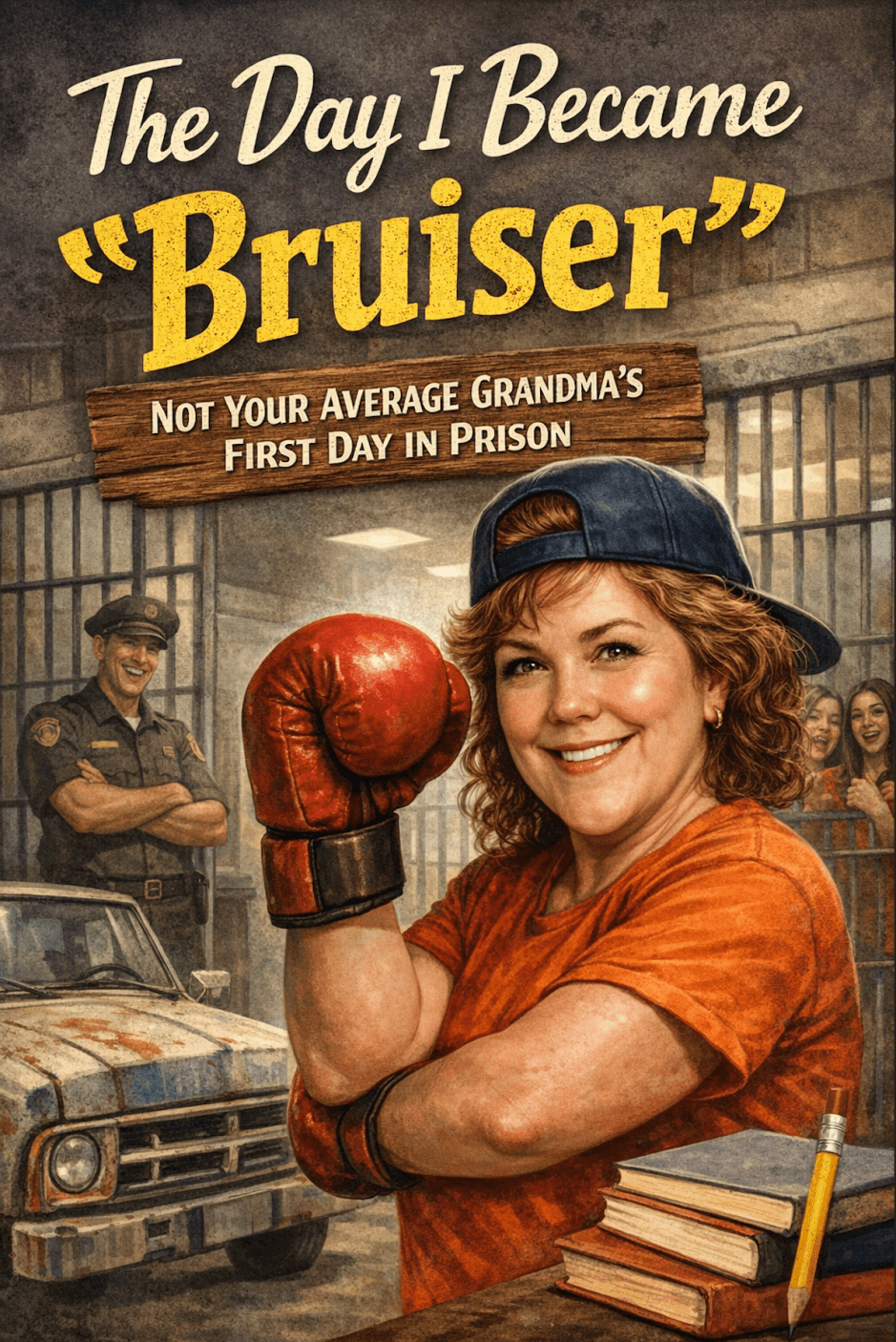
Never in a million years, as a grandmother, did I ever believe I would begin my teaching career in a women’s prison. It was not my first choice, but fresh out of college and separated from my spouse, my limited options and looming debt reminded me that I could not be picky. While I enjoyed living in a rural community, teaching opportunities did not come along often. And my old truck was on its last legs. Whenever I traveled outside the county, we rumbled along on a wing and a prayer. So, after subbing for three months, I jumped at the chance to work evenings at the women’s prison.
Before I could begin teaching, I had to spend time at the training academy. Days were spent in class, listening to lectures on law. Others were spent in the old dormitories of the former boy’s school, searching for contraband. When the day came to begin self-defense classes, I was more than a little nervous. The instructors paired the class with people of the same height, and my partner was a young kid half my age. I told him, “Be gentle with me; I’m a grandma.”
Nodding his head, he sweetly smiled and said, “Yes, ma’am,” before we began sparring.
Listening to our instructor, we threw punches and kicks until I just wanted to find a secluded corner somewhere to hide and rest before I collapsed from exhaustion. Although I lifted weights and worked out, this granny was no match for the young man.
To add to the commotion, the instructor began barking orders like a crazed drill sergeant. He marched right up to me and screamed in my face, “Hit him harder!”
Flabbergasted by his order and demeanor, I stepped back and replied, “I don’t want to hurt him.”
He loudly laughed, and the room grew quiet. Everyone stopped to watch the trainer as he criticized and mocked. In true military fashion, he began to berate his student, me. He cooed in a sickly, sweet little voice, “Oh, is that what you’re going to tell your little inmates? Huh? I don’t want to hurt you?”
Everyone laughed, and I fumed. I pushed all doubt from my mind, ready to prove my mettle. I ignored the aches and pains; at that moment, I was determined to show Ole Sarge that I was more than capable of defending myself.
The young man and I began exchanging jabs again as everyone watched. The trainer continued to shout instructions to block, jab, and kick. Although I did my best, Ole Sarge didn’t think I was up to par. With more conviction, he again started screaming in my face, “Hit him harder.”
At that moment, all I wanted to do was punch the instructor. He was relentless. I was tired and hot and sweaty, but he continued to scream at me. In frustration, I finally gave all I had and punched the kid square in the face.
To my absolute horror, he went down and didn’t move. And he did not respond to any commands. In shock, I realized I had knocked him out! Frozen, I stood motionless as people rushed to the young man’s side. Although he was not out for long, time had slowed to a crawl, and my heartbeat quickened, and I began to tremble when he finally responded, “I can’t see.”
At that moment, I wanted to disappear as all eyes turned to look at me. Tears welled. What had I done?
Within seconds that seemed like an eternity, his sight returned, and the angry young man jumped to his feet. He glared at me, and through clenched teeth, he growled, “A grandma, my ass!”
Relief washed over me. The young officer stormed off, refusing to work with me. The “drill sergeant” mumbled, “I should take a break.”
Before Ole Sarge could change his mind, I rushed from the auditorium, found a dark corner, and slumped to the floor. While I listened to echoes of grunts and Ole Sarge barking orders, I tried to relax as I again questioned my sanity. At least this round was over, and soon it would be forgotten, or so I thought until I showed up for my first day of teaching.
Walking along a path to the school building, a smiling officer approached. “Are you the new teacher?”
“I am,” I replied, returning his smile.
“Glad to have ya here, teach, or should I say Bruiser?”
He laughed as I groaned.
A group of inmates overheard our conversation, and one of the ladies asked, “Why do you call her Bruiser?”
Laughing, he told the woman, “You don’t want to mess with her. She knocked out a kid half her age…”
I sighed. Well, if nothing else, my teaching career was clearly not going to be dull. I had walked into the women’s prison as an uncertain, newly minted teacher, hoping simply to survive the job. Instead, I walked in as “Bruiser,” apparently capable of knocking out a man half my age before even taking attendance. Not exactly the reputation they cover in teacher prep courses. As I unlocked my classroom door that first day, I had to laugh because somewhere between student loans, a dying truck, and a wing-and-a-prayer attitude, I had managed to become the most unintentionally intimidating grammie in the building. And just like that, I knew one thing for certain: this was going to be one unforgettable ride.
“There are two lasting bequests we can give our children: One is roots, the other is wings.” Teaching children values and giving them the opportunity to excel is essential to good parenting. However, I feel I must also provide my children (and myself) insight into the ones who came before us: our ancestors whose lives and stories have shaped us into who we are. This is my journey; these are their stories…




 Tales of a Family