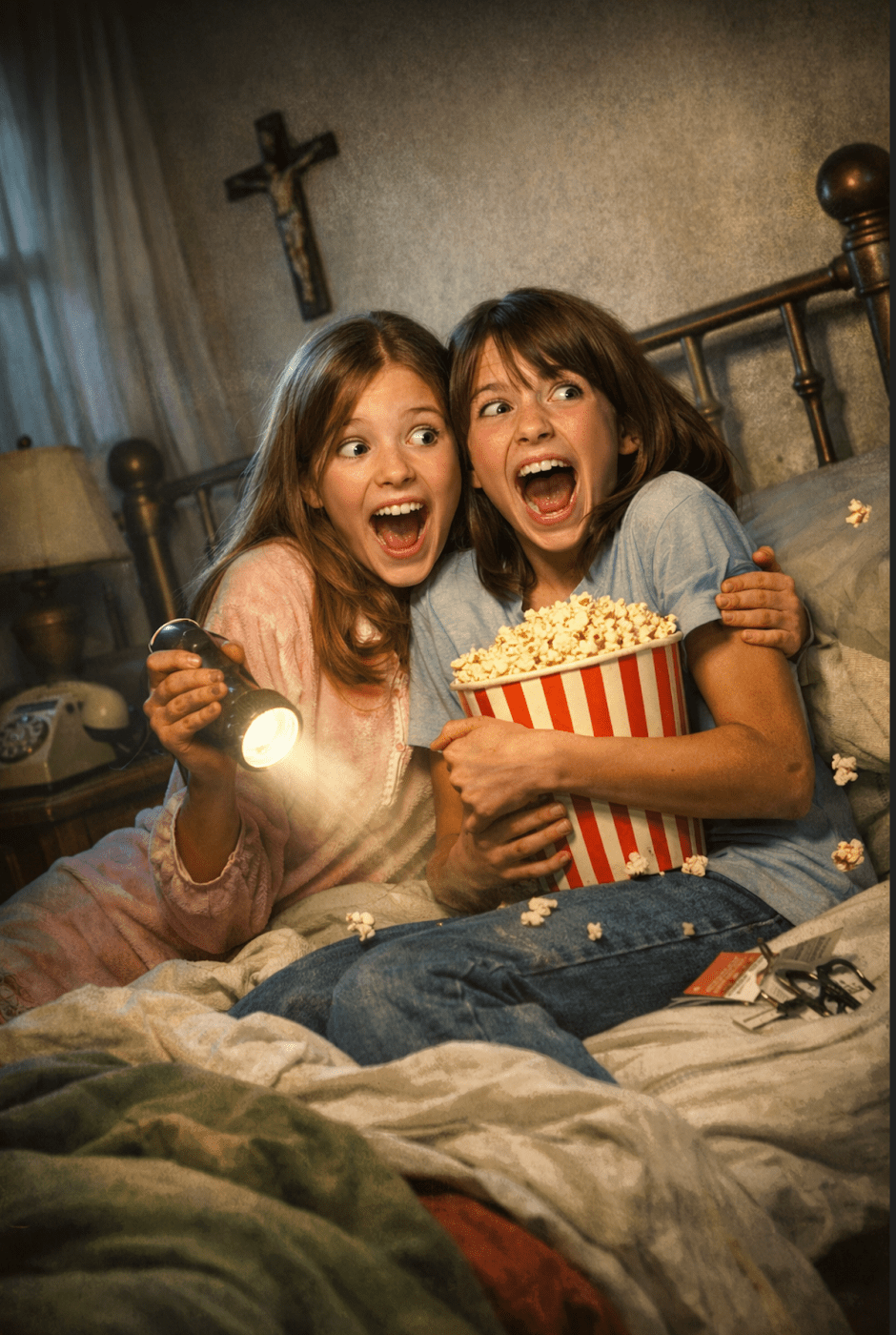
The Night We Thought We Were Possessed

In 1973, The Exorcist thundered across the screen, frightening people across the country. Moviegoers had never witnessed anything quite like it. They whispered about it in the aisles of grocery stores, on city buses, and at school, as if talking out loud about this film might just conjure unexpected and unwanted evil forces. Some believed the movie was cursed; others thought it was real. And naturally, as a reasonable twelve-year-old, I decided I needed to see it.

At school, the movie had taken on a life of its own.

“I didn’t even get scared,” one boy bragged, which was code for he was absolutely terrified by the fast-paced film.

Another leaned and whispered, “Her head spins all the way around.”

Now, I didn’t know anything about possession, but I was fairly certain that it defied anything humans were designed to do. Still, I was mesmerized by the school banter and the press.​

My friend Tammy and I listened to every dramatic rendering, eyes wide and, in turn, wonderfully horrified by each event. As our curiosity grew, so did a dogged determination. We were committed; we were going to see that movie. There was only one obstacle – my mother.

“Absolutely not! I will not allow you to see this film.”  

She used HER voice. The one who would never allow her middle-school daughter to watch the most dreaded movie of all time. She had also witnessed the publicity on TV.

Still, I pushed, “But, Mom.”

She turned around and gave me “the look,” which I was pretty sure was even scarier than the scene where Linda Blair’s head rotated around her shoulders. I remember thinking, whatever was in that movie, I was now facing something much stronger.

Still, the wanting did not go away.

The next day after school, Tammy and I sprawled across her twin beds, plotting like two girls who had watched zero spy movies but felt very qualified anyway.

“What if you spend the night?” Her voice was giddy with excitement. “I’ll just tell my mom you have permission, and she’ll take us.”

But I had questions that rapidly fired in my twelve-year-old brain.

“What if we got caught?”

“What if someone saw us?”

‘What if my mom’s uncanny ability, the one that always seemed to sense the exact moment one of her chicks was about to step out of line, suddenly shifted into overdrive?”

“What if she somehow pieced it all together, guided by that eerie intuition and those sharp, almost unsettling maternal instincts?”

All sensible concerns. But then Tammy smiled. And I made the decision that every middle schooler makes at least once. With my heart pounding, I recklessly ventured, “Let’s do it.”

Early Friday evening arrived, and it was official. I was now living a double life. My dad dropped me off at Tammy’s place, completely unaware that his only daughter was defying orders and going rogue.

“Have fun,” he said.

Oh, I planned to. I leaned into the car window, kissed him on the cheek, and felt just enough of a pang of guilt to know I should confess every sin, but not enough to rethink my questionable plans for the evening.

Later, that evening, we found a parking spot near the theater. The dimly lit streets provided the perfect cover for our covert operations. And the soft lighting inside aided in our deceit. I held my breath, worrying that at any moment, one of my mother’s friends would discover my deception. To be safe, I kept my head down as we walked into the auditorium. When we found our seats, I sighed with relief.

And then it started; we tried to act brave. Calm. Mature, even.

But then the bed started shaking, and we became extremely still, grasping the armrests with all of our might as if some evil force might tear us out of our seats at any moment. We didn’t talk; we held our breath. And we certainly did not eat the snacks purchased before we entered.

By the time the movie ended, I wasn’t sure what was more frightening: the movie or my questionable life choices.

The ride back to Tammy’s house was quiet–not a peaceful quiet either. More like we both witnessed something we weren’t quite prepared for-quiet. That moment when you realize you should have listened to your mother – quiet.

When we settled into her room, each of us tucked into the matching twin beds; we whispered like survivors.

“Were you scared?” Tammy asked.

“Yes. You?”

“Yes,” she slowly replied.

Without speaking again, we both knew we had made some questionable decisions, but eventually we fell asleep, with the lights on.

Sometime in the middle of the night, I woke up to the terrible realization that my bed was shaking. It was sliding across the floor like it had somewhere to be. And at that exact moment, every single scene from the movie flashed in front of me. I sat up, convinced I had crossed a line and was now facing the horrifying consequences.

Tammy woke up, too, and we both screamed as if the devil himself, along with his goon squad, were on the verge of attacking us. Horrified, we could see the terror on each other’s faces since the lamp, now shaking on the nightstand, was still turned on. We had refused to fall asleep in the dark.

Suddenly, the door flew open, and the overhead lights flashed as Tammy’s mom scrambled into the room. Her mother took one look at us and the errant twin bed and tried not to laugh.

“Girls, we just had an earthquake,” she explained.

Of course, an earthquake. Not possession. Not consequences. Not the beginning of a very terrifying tale. Just seismic activity.

Tammy and I looked at each other and started nervously laughing, a little shaky at first. Because honestly, when you’ve spent a moment believing hell had unleashed its fury, there’s really nowhere to go but laughter. That unhinged release of knowing that you are somehow still here and okay, well, for at least the moment.

The next day, I went home and told my mom everything. All of it. The deceit. The movie. The sleepover, and how the earthquake convinced me I needed to come clean.

She listened. She smiled, and then she began laughing uncontrollably.

I stared at her in utter disbelief. My mother was laughing at my harrowing confession. It was not just easy, carefree laughter, but a deep guttural belly laugh that made tears run from my mother’s eyes. It was the kind of laugh that held a moment of clarity. This would be one story I would hear about for years, even decades.

When she finally gained her composure, which took some time, I asked, “That’s it? You’re not mad, and I’m not grounded for life?”

On the verge of another fit of hysterics, she took a deep breath and smiled.

“Well,” she remarked, you did disobey.”

I waited.

“But, I think you were already punished.”

Then she added to make sure the lesson stayed with me, she raised an eyebrow and stated, “See what happens when you defy your Mother? God will get you.”

And with that, she started laughing again; tears and all.

That night I didn’t sleep well, not because of the movie, not even because of the earthquake. But because somewhere deep down, I wasn’t entirely convinced she was joking.

Even now, I can’t say what frightened me most, but I learned that night that some warnings are worth listening to… especially when they come from your mother.
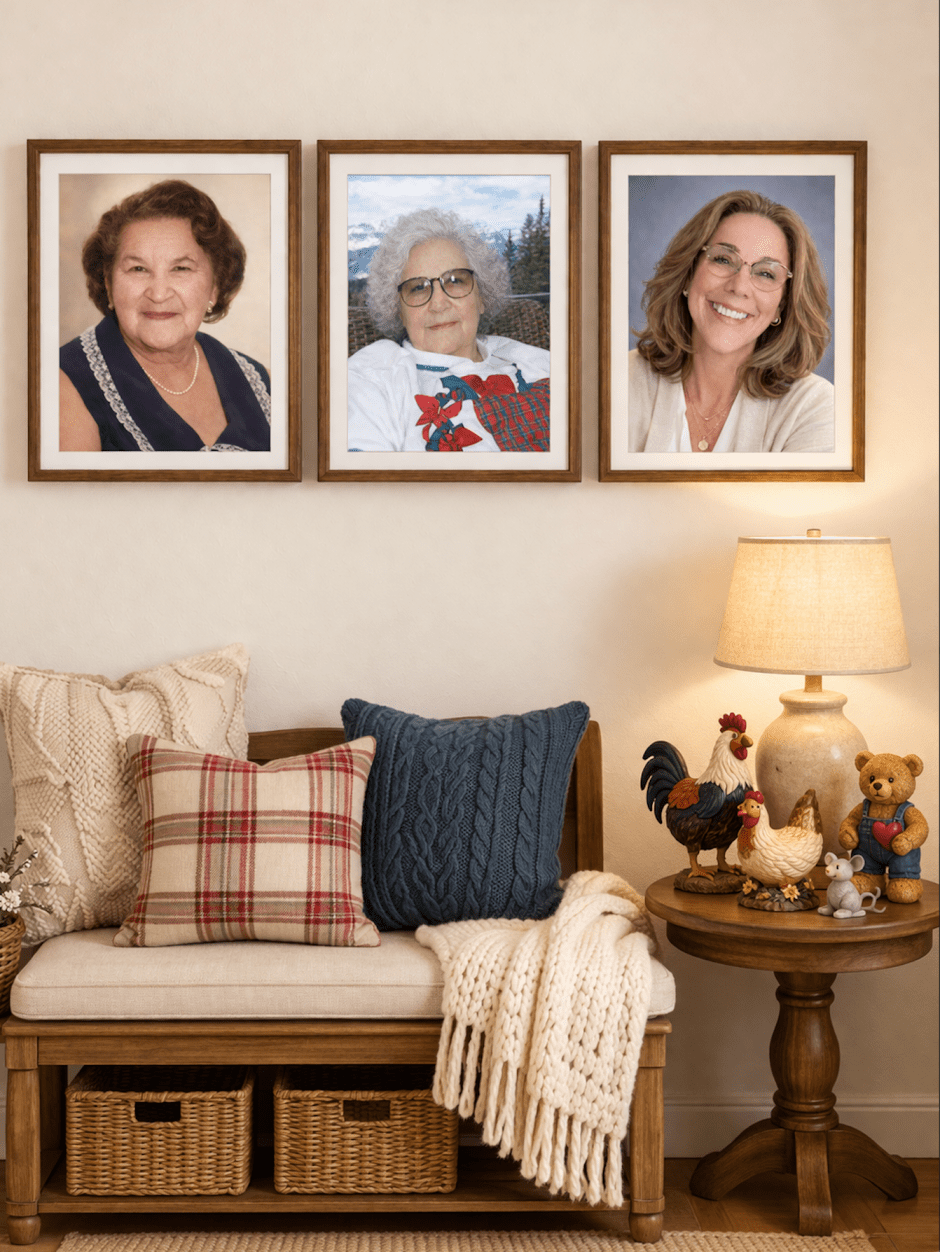
The Storytellers

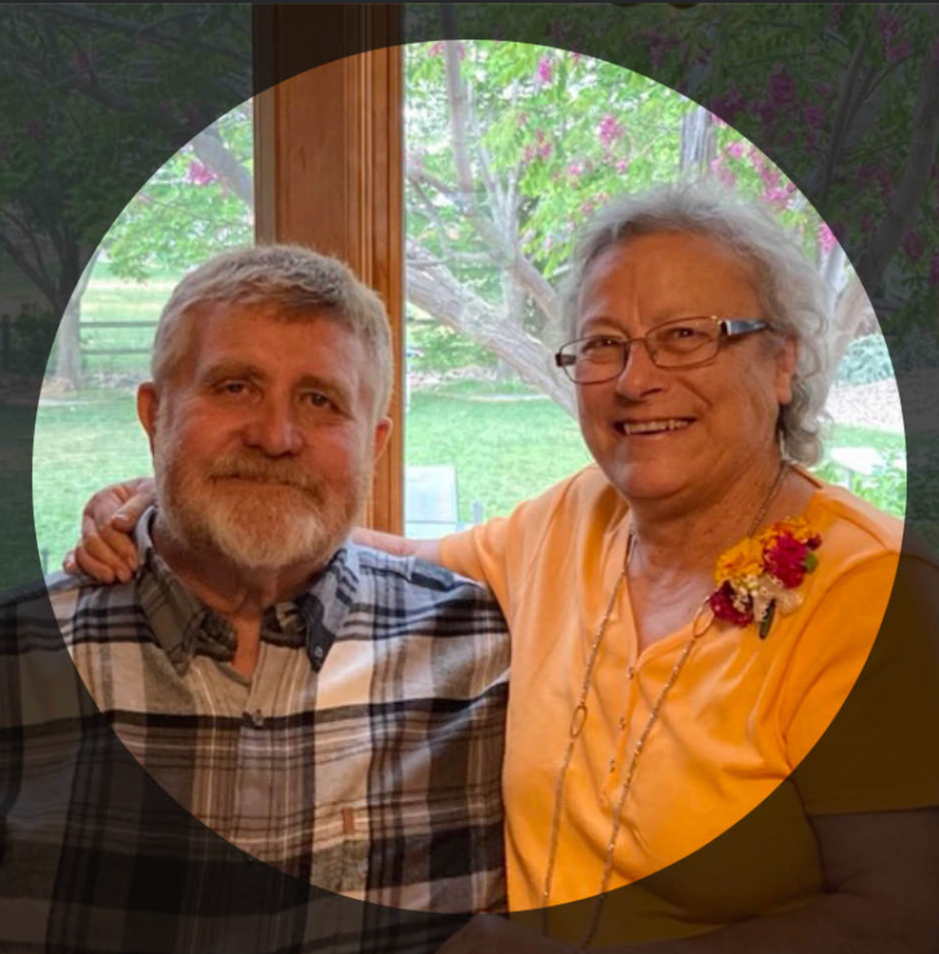
My two favorite storytellers began with with my grandmother, Elva Marie and and my mother, Dotty Marie. Their sweet voices carried the past into the present and held our family’s stories with love and grace.

Some of my earliest memories emerged in the shelter of your arms, with the softest hands wrapped around me, and the tender rise and fall of your voices as narratives unfolded. Those moments proved safe, wrapped in your warmth, as if the world began and ended with you.

As I grew, your stories were woven into the fabric of everyday moments, and they lingered in simple moments: coffee at the kitchen table, the gentle clatter of dishes being washed and dried, and long, lazy afternoons with nothing to do but share stories, memories, and favorite tales. Time slowed in those moments. Those occasions brought the past close, a gift waiting to be remembered.

And I loved those days.

Your voice and your stories were my gift; hours spent with my favorite storytellers, tales told again and again. You gave life to the families, names stitched together like the music and cheer from the past. Through you, I could hear the footsteps of boots on wooden floors, the laughter of families gathered together, music playing, and suppers shared. You offered a heartbeat to generations I never encountered but somehow knew.

You nurtured that rhythm of life built on steady hands and strong hearts, resilience rooted deeply in the land and the hearts of its people. Even as a child, I understood that something cherished stirred in those moments: a deep love, a quiet strength, and a gentle knowledge of belonging that reached far beyond generations.

You answered every question, even when asked dozens of times. You smiled at my wonder and laughed at my questions. You welcomed my curiosity. You made our history real, close enough to carry with me.

And I hope I can gather and tell our stories the way you did, lovingly and carefully, with the same warmth and joy. And more than anything, I hope someone will say, “Tell it again.”

My Ornery Cowboy Grandpa

When I think of my grandfather, I think of boots.

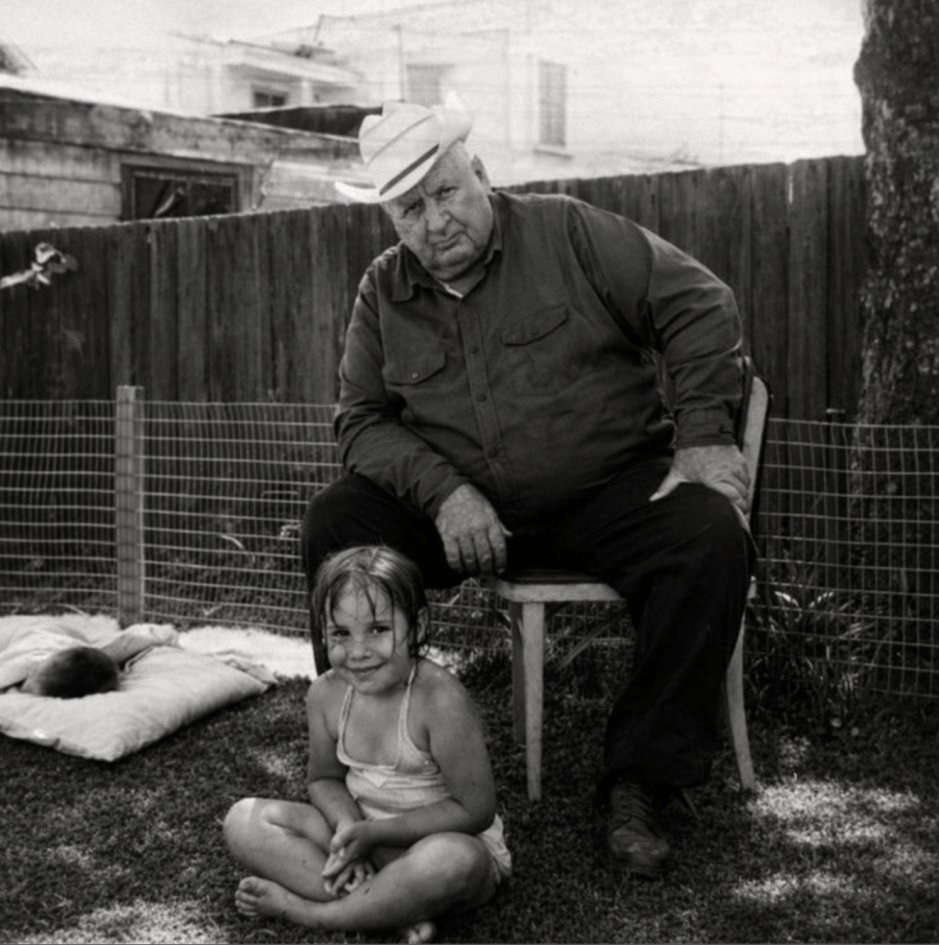
I hear them before I see him, that unmistakable, heavy rhythm of cowboy boots crossing a floor, steady and sure, followed by the deep rumble of his voice rolling through the house like distant thunder. Even now, all these years later, I can still summon him in an instant: the broad-brimmed straw hat, the crisp western shirt, and the worn boots that seemed as permanent a part of him as his hands or his laugh. Before I remember that he died when I was fourteen, I remember how fully he lived in a room.

By the time my grandfather passed away, our family and my grandparents were living in Alameda, California, a long way from Hotchkiss, Colorado, the place he thought of as home, no matter what address appeared on an envelope. California may have held him captive, but Colorado held his heart. He carried it all with him, his family, the ranch country, the sheep, the horses, the hard weather, the wide-open spaces, and the stories that rose from that land as naturally as dust from a dry road. Through him, Hotchkiss never felt far away. He brought it to life every time he spoke.

He was a large man in every way that mattered. As a child, I thought he was six feet or more in all directions—broad-shouldered, big-chested, thick-handed, the sort of man who seemed carved out of something sturdier than ordinary flesh. His hands looked capable of moving mountains or lifting fence posts or steadying a frightened child with equal ease. His voice was deep and booming, the kind that could command attention without ever asking for it. Even his silence had weight.

To me, he was the very definition of a cowboy. Not a polished, movie screen cowboy, but the real thing, rough around the edges, sunbaked, practical, and a little intimidating until he smiled. He dressed in cowboy clothes every single day because that was simply who he was. There was no costume to it, no performance. The hat, the Western shirt, and the boots, those things were as natural on him as skin. He did not put them on to become a cowboy. He wore them because he had never been anything else.

And oh, I adored him.

For all his size and gruffness, Grandpa had the softest heart for babies and grandkids. He was not sentimental in the syrupy sort of way. He did not fuss. He did not coo. But love lived plainly in him, tucked beneath all that bluster. When we were small, he sometimes watched us for my mother, Dotty. There was, however, one task he met with visible suspicion, diaper changes.

The dirty diaper itself was not the problem. He could remove that offensive thing with determination and only a measure of disgust. It was the clean diaper that brought him to a standstill. In those days, diapers were fastened with pins, and the very idea of jabbing a squirming baby with one was enough to unnerve him. So, rather than risk injury, he devised his own solution. He would layer two or three pairs of training pants on the baby and then pull plastic pants over the whole operation, as if engineering some kind of fortress against disaster.

Problem solved.

That was Grandpa’s way. He did not always do things the conventional way, but he nearly always found a way that made sense to him. Looking back, I think that was one of his gifts: he met the world on his own terms and expected the rest of us to keep up.

Visits to Grandma and Grandpa’s house followed their own sweet, dependable ritual. He greeted us with tight hugs, scratchy whisker kisses, and that great booming laugh that made you feel as though you had entered a place where joy was allowed to take up space. And there was always money. Somehow, before we left, he made sure there was change jingling in our pockets or a folded bill pressed into our hands. Love, according to Grandpa, ought to send a child home with a little spending money.

Then came the moment we both dreaded and loved.

In a raspy, exaggerated baby voice that was half teasing and half tender, he would grin and say, “You’re a damn cute kid.”

That was our warning.

Because right after those words came the cheek pinch.

Not a gentle tap. Not a fond little pat. A real pinch. The kind that made you squeal and twist away and laugh even while you protested. We learned to anticipate it. We ducked and dodged and tried to escape, but Grandpa was fast, faster than a man his size had any right to be. He almost always got us. To this day, I maintain that if any of us grew up with chipmunk cheeks, it was because Grandpa stretched them that way one affectionate pinch at a time.

Then there was the Jeep.

For a while, Grandpa owned an old green Jeep, and he drove it like a man who believed speed limits were merely suggestions made for lesser souls. My parents warned us repeatedly: never go anywhere with Grandpa if he were driving. Never, ever. The instruction was clear, serious, and often repeated, which of course only gave it the electric appeal that forbidden things have for children.

By then, we already understood one of the central truths of childhood: what happens at Grandma and Grandpa’s stays at Grandma and Grandpa’s.

So yes, we rode in the Jeep.

I can still imagine the jolt of it, the way my stomach leapt as he tore out of the driveway, the wild swing of a turn taken too fast, the thrilling terror of tearing through a parking lot as though it were part racetrack, part rodeo arena. Riding with Grandpa felt like trusting a storm with a steering wheel. It was reckless and hilarious and a little bit glorious. We held on and hollered and lived to tell the tale, though not, of course, to our parents.

My sweet grandmother worried over those escapades far more than we did. She feared my parents would find out and put an end to our sleepovers, as though those overnight visits were something fragile that might be snatched away. But nothing could have kept us from that house for long. It was one of the anchoring places of my childhood, full of stories and teasing and warmth, where love wore cowboy boots and laughed loudly and pinched your cheeks hard enough to leave a mark, on our hearts anyway.

What I miss most now are the ordinary wonders of him. I miss the booming way he told stories about the ranch, the family, the horses, the sheep. He could make a memory sound like legend. He could take the raw material of daily life and shape it into something worth leaning in to hear. In his telling, Hotchkiss was not just a town. It was a world. The ranch was not just land. It was inheritance, labor, identity, and love. Through his stories, he handed that world down to us.

As a child, I thought he would always be there, always filling a doorway, always laughing too loud, always wearing that hat, always ready with a coin, a story, or a pinch to the cheek. I did not yet understand how quickly the people who seem larger than life can become memory.

He died when I was fourteen, which now seems far too young an age to lose a grandfather like him. At fourteen, you still believe there will be more time. Another visit. Another story. Another chance to hear his boots coming across the floor. You do not yet know how suddenly a voice can vanish from the world and still echo inside you for the rest of your life.

I would give so much to hear him one more time. To hear that deep voice soften into that raspy little baby talk. To see the grin spread across his face before he said, “You’re a damn cute kid.” To brace myself for the pinch I once tried so hard to avoid.

Funny thing is, I think I understand now what I never understood then. The cheek pinch, the Jeep rides, the coins in our pockets, the stories, the laughter—those were his ways of loving us. Big, unruly, unforgettable ways.

And maybe that is why I have come to love my chipmunk cheeks after all.

They are not just mine.

They are where my grandfather left his fingerprints.

I Hated Ants!

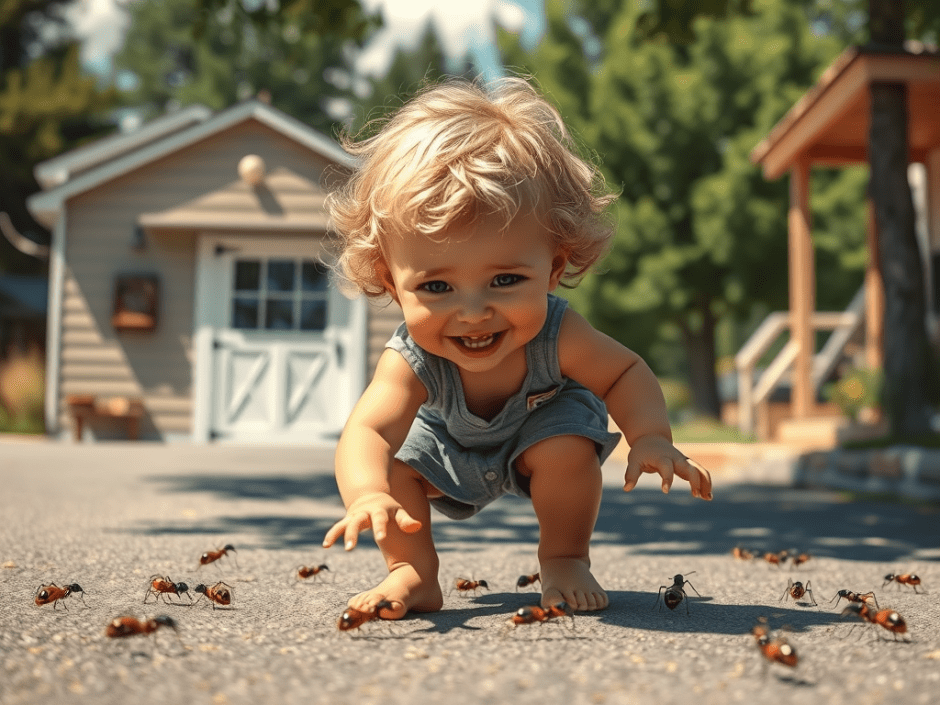
When I was a toddler, I lived in Hotchkiss, Colorado, my Momma’s hometown. It was a close-knit little town where everyone knew each other, and neighbors weren’t strangers; they were part of daily life.

During that time, we lived on Bridge Street, one of the town’s main thoroughfares, next door to a mechanic. Most weekends, he and his friends could be found in his garage, working on cars, swapping stories, and filling the air with the sounds of engines and laughter. But it also had a dark side. Soon,that garage became the unlikely ground zero for some of my earliest toddler mischief.

For reasons no one could quite explain, his garage attracted ants; legions of them. It was probably due to spilled soda, leftover lunches, or some mysterious automotive potion that lured the insects inside. Each day, the ants formed a formidable marching line, streaming up the driveway and straight into the open garage like a tiny invading army. Every day, the mechanic and his friends could be seen stomping on the relentless invasion, swatting and muttering their exasperated war cry: “Damn ants.”

According to Momma, it didn’t take long for me to follow suit.

My parents and grandparents often witnessed their curly-haired girl out on the sidewalk, stomping and jumping with fierce determination, pointing at the pavement, and screaming at the top of her lungs, “Damn ants!” My conviction and my performance caught the attention of passing neighbors and the men in the garage. My audience laughed, amused by my antics. The passing admiration only fueled my enthusiasm. My daily performances grew louder, more dramatic, and more frequent. While slightly amused, my parents didn’t want their oldest child loudly cursing in front of all the neighbors, so they tried to make light of the situation. Hoping against hope, my loud hijinks and daily productions would quickly disappear. I can’t really blame them; my first curse words weren’t exactly a milestone they wanted to celebrate.

As if that weren’t enough, I soon developed another “dirty” habit: I liked to eat soil.

The moment Momma turned her back, I would find a corner of ground, dig in with my little hands, and satisfy my strange new craving. She would scoop me up, carry me inside, wash my face, and carefully clean my mouth with a wet washcloth, an experience I did not enjoy. Still, as moms everywhere do, she found a simple and brilliant solution. Calmly, she told me that ants lived in the dirt.

Her story worked.

Momma said my reaction was instantaneous and theatrical. My face, she said, showed shock and total revulsion. Once I knew that ants lived in the dirt, my hankering for all things earth and loam disappeared. My deep-rooted disgust for ants crushed my cravings and cured my strange fondness for soil, and just like that, the dirt-munching phase ended.

Time passed, and as Christmas approached, a package arrived from my mom’s sister, Barb. She had wrapped a gift for her niece and topped it with an adorable tag featuring a rosy-cheeked Santa.

But there was a problem. She signed it: Love Aunt Barb.

To a toddler who hated ants with an absolute passion, “aunt” and “ant” sounded like the same repulsive critter.

Momma said that when she told me the present was from my aunt, I made a disgusted face, hurled the package across the room, and shouted with full conviction, “Damn ants!” It took a great deal of convincing to get me to finally open my Christmas present, and even more effort to explain the difference between an aunt and an ant, a concept that took time to fully understand.

Now, remembering those stories still makes me smile. I always loved the tales Momma shared about my early years, especially the ones filled with humor and just the right amount of shenanigans. She even saved that little Santa gift tag, now safely tucked away in a box of Christmas treasures. It’s a sweet keepsake and a reminder of family stories, childhood misunderstandings, and how the smallest moments often become the most beloved memories.

The House That Felt Like Home

Some houses welcome you before the door even opens.

That is how it always felt at Aunt Jan and Uncle Roger’s. Before I ever walked inside, before the door shut behind me, before I heard a single word, I could feel it, that clear warmth resting just beyond the threshold. Their home held a kind of ease that came over me the moment I walked through the threshold. It was as comforting and familiar as a favorite sweater pulled over my shoulders on a chilly day. It was rich in the things that matter most: laughter, conversation, affection, and the simple warmth of people who knew how to make others feel at home.

Inside, the house was humming with sound. Laughter came easily as it drifted from room to room. It combined with the clinking of coffee cups set down at tables. The television hummed in the background, likely tuned to the news if Uncle Roger had his way, or to a football game if one of his favorite teams was playing. There was always the sense that life was happening there in a full and happy way. Their home breathed with a life and a personality of its own.

Aunt Jan was at the center of much of that energy. She was funny in a way that could not be taught, sharp, quick, and perfectly timed. Her eyes beamed when she narrated a story, and she had a gift for delivering a remark so dry and so precise that laughter commonly came a beat later, after the brilliance of it had fully landed. She was a little ornery, too, though in the most endearing way. She liked to tease, liked to stir the pot just enough to keep things spirited, and she was never afraid to say exactly what she thought.

Still beneath all that humor was a tenderness that ran deep. Aunt Jan always understood her surroundings and watched. She knew when others fell silent, and their world had become unsettled. And she instantly knew how to respond with a knowing smile, an extra hug, or a gentle touch on the shoulder.  Sometimes it was a question asked so simply and sincerely that it opened the door for me to say what I had not realized I needed to say. Her love commonly arrived in those soft moments, so natural and unforced that they might almost have gone unnoticed, except that they made all the difference.

Uncle Roger matched her in his own way. Where Aunt Jan’s wit flashed bright and quick, Roger carried an unshakable sort of alliance filled with warmth and mischievousness all at once. He had a fun-loving spirit and a look that implied he might, at any moment, be on the verge of some innocent trouble. There was something unnerving about that grin, something that made you trust him immediately and suspect him just a little, too. His quick laugh held reassurance and comfort, and as he chuckled, it came from deep down, booming and contagious. It was impossible not to laugh with him.

His kindness equaled Aunt Jan’s, his gentle spirit filled his home like a warm summer breeze. He was the sort of man who made people feel comfortable without ever seeming to try. He showed up. He included you. He made room. His everyday actions showed his love for those around him. His servant’s heart revealed goodness in his speech and ordinary moments.  His warmth lived in action more than words.

Together, they were a pair in the truest sense of the word. Their teasing had its own music, a back-and-forth rhythm defined by years of affection, teasing, and common history. Watching them together was its own kind of lesson. They did not need to be polished or perfect to be deeply connected. Their love was lively, genuine, and strong enough to hold humor, difference, and tenderness all at once. They balanced one another beautifully, Aunt Jan’s sparkle and Roger’s steadiness, her lively wit and his easy warmth, her lively orneriness and his bold spirit.

There was a comfort in being around them that was hard to describe unless you have known it yourself. Visits were never hurried. No one seemed to be counting the minutes or rushing the conversation along. Time loosened its grip in their home. People sat a little longer at the table. Stories grew a little fuller. Laughter lasted a little longer than expected. Even silence came across as companionable there, not awkward or empty, but full in its own way—the sort of silence shared only among people who are at ease with one another.

That is one of the things I remember most: how full even the stillness felt.

Their home was more than a place I visited. It was a feeling I came into. A feeling of belonging. A place where I wasn’t merely received, but welcomed. Not simply noticed, but known.

Now, when I think of Aunt Jan and Uncle Roger, I do not first think of specific moments or exact conversations, though some surely remain tucked away in memory. What rises to the surface most strongly is how they made me feel. Loved. Seen. Happy. Safe in the easy joy of being with them. Their humor, kindness, and delight in life created a lasting influence on me, one that has remained long after the visits themselves slipped into memory.

They taught me things without ever sitting me down to explain them. They made me realize that laughter can be one of the purest forms of love. That kindness often comes wrapped in fun loving moments. Joy is often something we create for one another during ordinary days and sunny afternoons while sipping coffee on a quiet patio. They reminded me that the homes we remember best are often the ones where we were most fully ourselves, living life’s sweetest moments.

I have carried those visits with me all my life. They do not feel distant, not really. They remain warm and living in me, like embers that never quite go out. And when I think of all that made a childhood rich, connection, comfort, and affection. I often think of their house, the laughter, the television softly murmuring in the background, the coffee cups, the teasing, the welcome.

And I realize that what they gave me was never merely hospitality.

It was the unmistakable feeling of being at home in someone else’s love.

Love That Stayed

Daily writing prompt
What relationships have a positive impact on you?

Some lives touch yours so tenderly and without fanfare that you only recognize their power years later.

There is no trumpet sound, no grand announcement, no single dramatic moment that marks their arrival as an important event. They simply begin by showing up, week after week, year after year, with such steadiness, kindness, and grace that one day you look back and realize they helped shape the landscape of your life. That was how it was with Jan and Keith Lacy.

I was nine years old when I first met them in Alameda, California, in the early 1970s. They were our youth ministers then, young and full of faith, but what I remember most is not simply what they taught. It was who they were. Even as a child, I could sense the difference between people who talked about love and people who lived it. Jan and Keith lived it.

I can still picture those early years: church services, Keith singing hymns, church basements, youth gatherings, dinners, Christmas caroling, the way they moved among us, always loving, always present. They carried themselves with a warmth that invited trust. Their faith was not stiff or showy; it was sincere as it revealed itself in love and patience in the way they showed up for others and in the way they loved. They loved through kindness, provided sincerity in their attention, and provided comfort whenever they were near. As a child, I felt loved, safe, and valued. They touched my heart in so many ways. Their presence was a shelter and a comfort. They treated me as if I belonged, and I felt like I was part of their family.

So many meaningful acts of love and kindness accumulated into faithful ones; they prayed for family and me. They listened. They encouraged. Their love endured and remained for a lifetime. Even when life changed, and miles stretched between us, even after they moved to Colorado, they remained a constant source of support and encouragement.

That kind of love and stability is a rare and loving gift.

So much of life changes. People move away. Seasons shift. Churches change. Families go through trials. Children grow up. But some relationships do not disappear with distance. Instead, they deepen into something quieter and stronger, something less dependent on proximity and more rooted in love. That is what Jan and Keith became for me, a steady presence, even from afar.

Because of them, I became a better person. They helped strengthen my faith by living lives that showed me truth, hope, and a trust in Him. They simply lived a life and practiced what they believed.

During difficult times, it comforted me to know I had someone praying for me, people who believed in me, people who held me in their hearts even when they were not physically near. There is a peaceful understanding and contentment in knowing that you are loved simply for who you are. And because of them, I never feel alone, ever.

In this life, I have found the most powerful influences are the gentle ones. The people who do not try to control your story but help you steady it as you live it. The people whose goodness leaves an imprint on the soul. The people who model compassion so naturally that it changes the way you move through the world yourself.

Jan and Keith are those kinds of people.

Their impact and encouragement did not end with childhood. Their example still speaks to me; their love still matters. Their presence, encompassing decades, has remained a constant, steady blessing in my life.

When I think of them, I understand the gift of being encouraged. I wonder about God’s mystery of places and people and paths crossed at the right moments. And I am grateful for the love they shared with me over a lifetime.

Some people pass through our lives. And some, by the grace of God, become living proof of how He holds us steady through the love of others.

Witnessing the Miracle of Birth: My First Grandchild’s Arrival

Daily writing prompt
Tell us about your first day at something — school, work, as a parent, etc.

When the moment came to take my daughter up the winding road to Fort Carson—the Mountain Post—so she could finally deliver her baby, my heart lodged firmly in my throat. It was dark and bitterly cold that December night. Though worry shadowed every mile because she had endured a difficult pregnancy, my excitement grew with each turn of the road. I was about to become a grandmother, and I knew the birth of my first grandchild would be unlike anything I had ever experienced.

The miles rushed by as we pulled into the hospital parking area, searching for the closest space near the emergency room. Her pains were intense and coming fast.
“Do you want me to get you a wheelchair?” I asked, trying to keep my voice steady.

Through clenched teeth, she answered in a clipped, pain-filled tone, “No.”

But after only a few steps, she leaned her aching body against the wall and nodded. Her strength wavered, and so did mine. I hurried inside, asked for a wheelchair, and returned with the help of a nurse. Together, we eased her into the chair and rushed her through the doors.

Before long, she was settled in the maternity ward, enduring hours of exhausting labor. I sat beside her, helpless, fighting back tears as each contraction took its toll. My heart ached not only for her pain but for her fear—fear for her baby boy. With her husband deployed in Korea, I knew I had to be her anchor, even as I felt myself unraveling inside.

When it was time for the spinal block, I stepped out of the room, painfully aware of my role and my limits. I paced the hallway, listening to her voice as she spoke with the nurse, hearing the strain and discomfort she tried so hard to hide. Watching your child give birth is both a blessing and a curse. You are close enough to feel every moment, yet powerless to ease a single ounce of the pain.

After the block, she was finally able to rest and drifted into sleep. I watched the baby monitor, my eyes glued to the flickering lines, knowing something wasn’t right. Mathew was in distress. I have never prayed so hard or felt so utterly helpless in my life.

When it was time for Mathew’s birth, everything happened at once. The room filled with urgency—pushing, commands, hurried footsteps—and then crying. Not the cry I had hoped for. Fear followed swiftly behind. After cutting the cord and holding him for the briefest moment, the doctors rushed Leslie and Mathew from the room. Both were in distress. I stood there, desperate to be strong, yet feeling as fragile as glass. The waiting that followed was unbearable. Both of my babies were in danger, and love and fear intertwined in their rawest form.

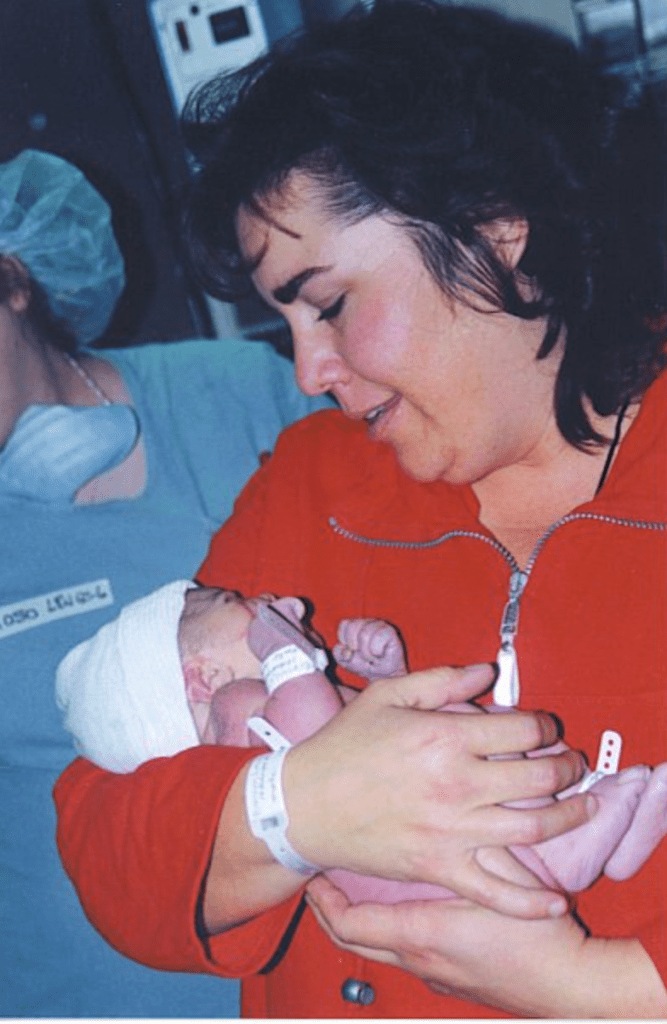
I paced the waiting room until the moment finally came when I learned they were both safe. Relief crashed over me in waves, leaving me weak with gratitude. I will never forget when Mathew’s nurse approached me and asked if I would feed him. They wanted Leslie to rest—she had lost a significant amount of blood during delivery.

As I held my grandson for the second time and fed him, warmth spread through me. His tiny body was cocooned in a soft blanket, a red-and-white Santa hat perched on his head. His eyes remained closed as he latched onto the bottle and drank. My heart swelled with wonder. From that moment on, my little man had me completely wrapped around his tiny finger.

Later, while Mathew rested in the Neonatal Intensive Care Unit and Leslie slept soundly, I slipped outside to the car. I turned on the engine, letting the heat warm my frozen hands, and the radio came to life. In that quiet space, my emotions finally collapsed. The crisis had passed—mostly—but we were not yet out of the woods. Gratitude tangled with lingering fear, and the weight of the past year came crashing down. It had been a long, hard road.

When my tears were spent, I lifted my eyes to the darkened sky and whispered another prayer of thanks—for my babies, my world. As I exhaled, Bryan White’s song “God Gave Me You” played on the radio. I had never heard it before, yet the lyrics felt as though they were written just for that moment. Comfort washed over me, and for the first time all night, I felt peace.

In that moment, I understood the fragile beauty of life and the immeasurable depth of love. Time seemed to stand still as fear and faith collided, and grace carried me through what my heart could barely hold. That night changed me forever. I became a grandmother not only through joy, but through fear, faith, and grace—and I have carried the weight and wonder of that miracle ever since. That night I learned something no one had ever told me about becoming a grandmother: your heart does not simply grow—it is reborn in the life of a child.

“God Gave Me You” – Bryan White

Up, Up… and Right Back Down

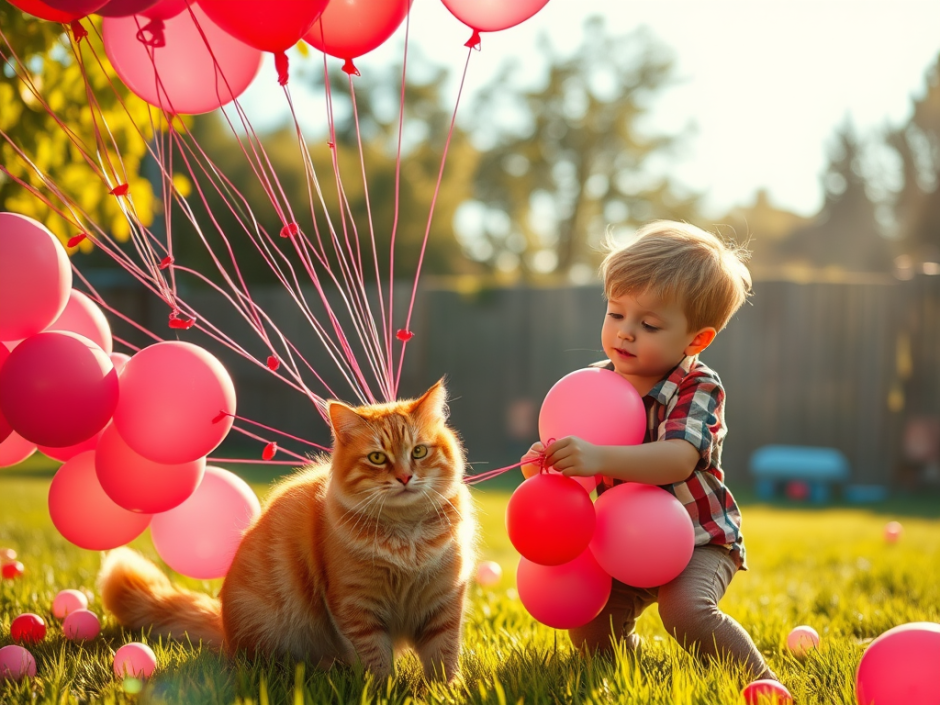
Henry eyed his mom’s balloons—all 250 of them—as they bobbed against the kitchen ceiling like a pink-and-red cloud. He listened to her conversation with Aunt Elizabeth. “Steven won’t take no for an answer,” she laughed. “He doesn’t care if I have a kid. Yes, he really sent 250 balloons with 250 messages. No, I haven’t read them all, but each note gives a reason to date him. What do you mean I should wait to introduce him to Henry?” His mom bristled. “What’s wrong with Henry?”

Annoyed, Henry’s mom ended the call with her sister, but not before Henry heard Aunt Elizabeth laughing hysterically on the other end. Henry’s mom knew Henry could be a handful, but basically, he was a good kid.  He was just inquisitive and challenging, and needed watching every minute of the day to avert any disaster known to mankind.

Sighing, she returned to work on her design for a new client. Her latest customer would call shortly, so she reviewed the papers one more time. She knew her video conference would start in about five minutes, so she ensured Henry had plenty of activities to keep him occupied. Making a mental list, she whispered, “Snacks, check. Crayons and coloring book, check. Books, check. Cartoon channel, check.”

She seated Henry at the kitchen table and warned him to behave during her video call. He smiled and nodded, and she prayed to all that was holy that he would be quiet during her meeting. Surely, what could go wrong? She sighed. Who was she kidding? Her six-year-old son had a wild imagination, was curious about the world around him, and had zero brakes when it came to crazy ideas.

Slowly, the worried mom turned to her office, grateful that it was off the kitchen. Henry began coloring, but quickly grew bored. He ate all his grapes and chunks of cheese and downed his glass of milk. Still bored, he picked up his book and set it on the table. The cartoon was one he had watched many times before. He looked around the room, trying to find something to do. The yellow tabby, Precious, lounged on the windowsill, soaking in the morning sun. He eyed the balloons and then the cat. A science experiment! He sat up suddenly, bounced out of his seat, and ran to his mom’s office.

“Mom, Mom,” Henry shouted. “Can I play in the backyard?”

His mother glanced at the clock on her desk. It had barely been fifteen minutes. How was she to keep him occupied for at least another half hour? She whispered, “Yes, yes, go outside, but stay in the backyard.”

“Yes!” Henry shouted, fist in the air.

At once, the young scientist began to formulate his latest project. He recalled watching a cartoon involving hot air balloons. He eyed his mom’s balloons and then Precious. Unfortunately, the feline was too polite to run and hide.

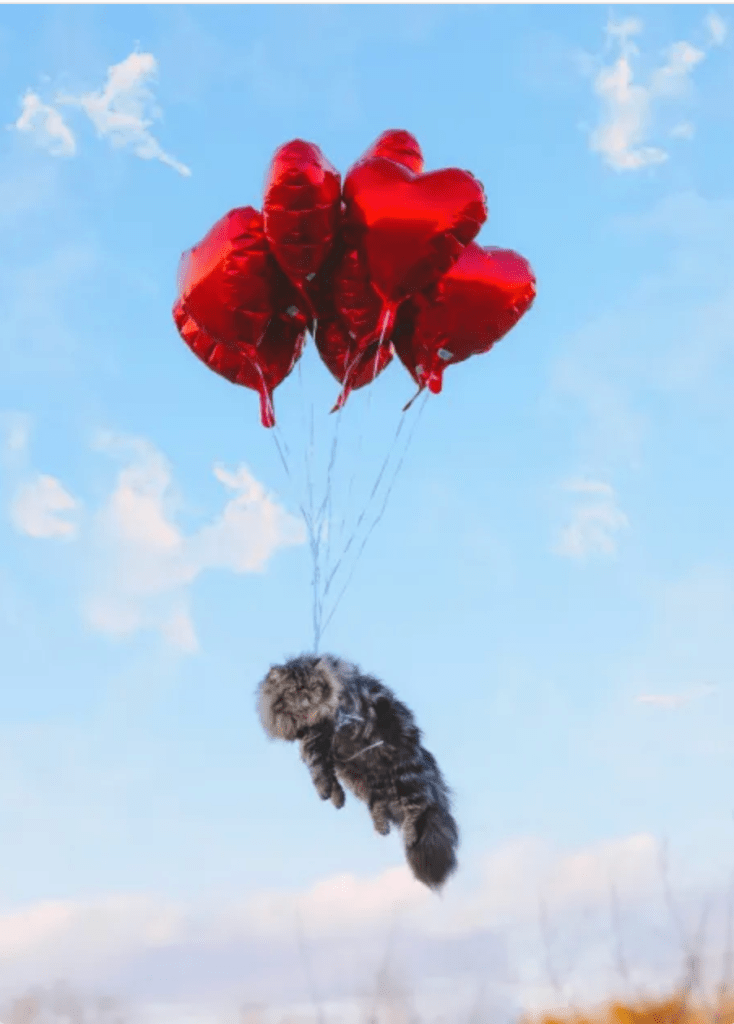
He carried Precious to the back porch and set her on his mom’s reading chair under the awning. Next, he hurried to gather all the balloons. He knew he had to hurry; Mom would check on him soon. Coming up with a plan, Henry braided the many strings together. He had learned to weave yarn into keychains in art class at school, but this was taking longer than he thought. Finally, he gathered the strings and securely tied them to Precious’s harness. The cat gave one uncertain mewl as she floated to the ceiling. Jumping up and down with excitement, Henry pulled his creation from the porch. A breeze caught the kitty bouquet, and Precious rose three feet… five… then drifted over the garden fence like a smug feline zeppelin.

Still on her business call, Mom heard Henry’s delighted shriek through the window. Alarmed and wondering what her child had gotten himself into this time, she excused herself with a frozen smile and raced outside. In disbelief, she watched, horrified, as her tabby drifted toward the neighbor’s oak tree like a Valentine parade gone rogue. She sprinted to the garage, grabbed a rake, while Henry cheered like a crazed aerospace engineer. Dashing out of their yard and into her neighbor’s garden, she finally snagged the balloon strings before Precious made her precarious ascent to parts unknown and used one of her nine lives in this crazy, madcap scheme.

Sighing with relief, Mom tucked Precious into one arm, thankful that her tabby was only mildly offended. Grabbing the balloons with the other hand, she pulled them into the house, setting Precious on the floor, she then stowed the confiscated balloons in the master bedroom. Taking a deep breath, she returned to her meeting somewhat disheveled, offering the understatement: “Sorry, I got momentarily tangled in a tiny bit of mischief.”


Later that afternoon, Henry was gently schooled on aerodynamics and consent, and he promised never to use Precious in any more science experiments. For the rest of the afternoon, Precious moved from room to room with Mom, careful to avoid Henry like the plague.

As evening approached, Mom began to prepare Henry’s favorite spaghetti dinner. Precious returned to her spot on the windowsill, and Mom sighed, relieved that everything had turned out okay.

Turning her attention back to Henry, she walked over to the kitchen table to see what he was coloring. Her eyes widened. He was drawing a picture titled “Precious Goes to Space,” complete with thrusters, stars, and a very alarmed tabby in a helmet. 

That was all she needed to see.

Terrified at the thought of a sequel to the morning’s escapade, without a word, Mom pivoted toward the drawer, grabbed the grilling fork like a warrior choosing her weapon, and marched into her bedroom. Moments later, behind the closed door, came the rapid-fire pop-pop-pop-pop that sounded suspiciously like a small artillery battle. The baolloons had met their necessary but dramatic end.

When she finally returned—hair mussed, dignity slightly punctured—Henry stared up at her with wide eyes.

“Are the balloons… gone?” he asked.

““They’ve ascended,” she said solemnly. “To a better place.”

Henry frowned, thinking this over. “So… no more experiments with Precious?”

“No,” Mom said. “Not unless Precious submits a written consent form and signs it with a paw print.”

Mom let out a breath that came from somewhere deep in her soul. As the house settled into its evening quiet, Mom caught sight of a single, limp balloon ribbon hanging from the trash can. She shook her head, part exhausted, part amused.

Today, she’d learned a valuable truth: in a house with a six-year-old scientist, anything with helium, fur, or legs was officially at risk.

And Henry? He learned something too—every great inventor needs two things: big ideas… and a mom with very fast reflexes.

Note:

If Henry’s balloon adventure made you smile, don’t float away just yet—tap the Follow Button, leave a comment, or share your own kid-powered chaos below!

Prompt:

Write a story about this image.


Cellphones and Dinosaurs

“I hate this stupid thing, and I’m sending it back!”

That pretty well summed up my feelings about my first “real” cell phone. From the beginning, that shiny little contraption felt more like a nuisance than a necessity. I hated the idea of being tethered to a device that buzzed, chimed, rang, and seemed to demand my attention at all hours.

Before that, I had managed just fine with inexpensive flip phones, the kind I used mostly for vacations or emergencies. I’d pay a modest monthly fee, keep the phone tucked away in my purse or glove compartment, and think very little about it. They were simple, practical, and wonderfully unintrusive. Eventually, I’d forget to refill the minutes, the service would expire, and that would be the end of that. Truthfully that arrangement suited me just fine.

And oh, the horror. At one point, some of my eighth graders discovered I carried what looked suspiciously like a burner phone. Naturally, they decided this was hilarious. One of them grinned and announced that I looked like a drug dealer. I just gave them the teacher look—the one that could stop nonsense in its tracks—and said, “You watch too much TV.” They laughed, and I did too, though I still had no intention of becoming one of those people with a phone permanently attached to their hand.

Back then, I liked life the old-fashioned way. Phones, in my opinion, belonged on the kitchen wall, right where they were easy to find, hard to lose, and simple to ignore when I didn’t feel like answering them. I never worried about leaving the house without one. In fact, I preferred it. There was something freeing about being unreachable.

But life has a way of changing our minds, whether we want it to or not. After a medical mishap that rattled all of us, my daughter decided enough was enough. She informed me that it was time for me to get a real phone. Otherwise, she threatened that she would simply buy me a Life Alert. I wasn’t exactly inspired by either option,

Still, I’ll admit, for a moment I found the idea of a Life Alert mildly entertaining. I imagined pressing the button and having a truckload of handsome firefighters come rushing to my rescue. But Leslie was quick to ruin that fantasy. She informed me that if I kept pushing it for no good reason, eventually they’d send the sheriff instead. That was a total buzz kill.

So, with all the enthusiasm of a child being marched into the principal’s office, I reluctantly accepted my fate. It was time for this dinosaur to step into the twenty-first century. I didn’t have to like it, though, and to make matters worse, my new smartphone immediately proved itself to be far smarter than I was.

In those early days, my family found my struggles highly amusing. So did my students. If I accidentally opened the wrong app, lost a text message, or couldn’t figure out why the screen had suddenly gone dark, there was always someone nearby ready to laugh first and help second. To be fair, they did help this Grammy learn her way around the mysterious little machine, even if they enjoyed the show along the way.

Little by little, I became less suspicious of the thing. What began as a forced relationship slowly softened into something like friendship. Against all odds, I grew to like my phone—and eventually, if I’m being honest, I grew to love it just a little.

After all, who wouldn’t appreciate having a camera always within reach, ready to capture a sweet moment, a mountain view, or a grandchild’s grin? I discovered the joy of listening to audiobooks whenever the mood struck. I abandoned my old alarm clock without a second thought, because the one on my phone was infinitely more convenient. On road trips, I no longer had to squint at paper maps or hope I had written directions down correctly. With a tap, I could find my way anywhere. My favorite music traveled with me too, turning an ordinary drive or workout into something a little more enjoyable.

And then there were the texts from my kids—those quick little messages that somehow made the miles between us feel smaller. Those may have been my favorite part of all.

So yes, much to my own surprise, that phone I once threatened to send back has become a trusted sidekick. It turns out this old dog could learn a few new tricks after all. And, I’ve decided that nobody puts Baby in the corner—or, in my case, back on the kitchen wall.

Oh, and this picture? Captured on my iPhone.