“As they shook hands, Conrad noticed Louis’ blue eyes and a powerful feeling struck him in the chest. He’d never seen those liquid blue eyes before…except behind his father’s spectacles…and in the mirror.
Conrad, The Last Lord of Paradise––Generation Five”
― Vivian LeMay
Do you have family photos? Which ancestor do you or your children resemble the most?
Week four – Find family members who maintain an uncanny resemblance!
In the summer of 1956, my mother stood at a bus stop in Delta, Colorado, trying not to cry.
Back then, the town was small—a quiet farming place surrounded by fields, orchards, and a wide sky that could make you feel safe and vulnerable at the same time. Dust swirled along the road. The sun felt warm on the platform. Other travelers stood nearby with their suitcases, each one thinking about where they were headed. But my mother, Dotty Allen, wasn’t focused on her destination. She was thinking about what she was leaving behind.
She had come home for a visit, back to her parents, her little sister, and the familiar routines of Western Colorado. Home meant the smell of warm earth, voices she knew by heart, her mother in the kitchen, and her father in his old cowboy shirt. It was a place where she felt understood, where love showed up in everyday things. But the visit ended too soon. Now she was going back to California, to Oakland, and to her job as a telephone operator—connecting other people’s voices while feeling the distance in her own life.
She tried to be brave. That’s what women did back then. They hid their feelings and kept going. Still, tears filled her eyes as she stood with her parents, holding onto those last moments before leaving, wishing she could make time slow down.
Then the bus came.
You could hear the bus before you saw it—a low rumble that grew louder, then the hiss of brakes and the heavy sound as it stopped at the curb. Dust rose around its wheels. The doors opened. It was time.
My grandmother, Elva, touched Dotty’s arm and pointed toward the line of passengers beginning to gather. Among them stood several young soldiers in dress greens, their uniforms pressed, their shoes polished, their faces still carrying that mixture of youth and duty.
“Oh, I would sit by that one,” she said, nodding toward a tall young soldier with dark hair and warm brown eyes.
My mother, in no mood for matchmaking and even less in the mood to be told where to sit, wrinkled her nose. “Umm… no, not that one. I think I’ll sit by that one,” she said, gesturing toward someone else entirely.
My grandfather chuckled softly. “Your mother’s right,” he told her. “I believe you ought to sit by that fella.”
This is one of those family stories we’ve told so often it’s almost become a legend—shaped by memory and retelling, but still holding its original spark. I can picture it clearly: my mother, stubborn and sad in the summer sun; my grandmother, quietly sure of herself; my grandfather, amused. All of them standing at the edge of a moment they didn’t yet understand.
Passengers started to board. Tickets were collected. Suitcases were lifted. My mother waited as long as she could, not wanting to leave just yet. She hugged her father and breathed in the clean, sun-warmed smell of his shirt. She looked at her mother, trying to remember her face. She glanced at her little sister, wanting to keep even that small, toothy grin in her memory. Then she picked up her bag and got on the bus.
The bus door closed behind her with a final sound that can break your heart a little.
Inside, she wiped her eyes and looked for a seat. Before she could lift her suitcase, one of the soldiers stood up and took it, placing it easily in the overhead rack.
“You can have the window seat,” he said.
His voice was gentle. Kind.
My mother sat down, still wiping her eyes. Once she was settled, she looked up and, to her surprise, saw she was sitting next to the very young man her mother had pointed out—the handsome one with dark hair and warm brown eyes.
Then, as if that wasn’t enough, he reached into his pocket, took out a handkerchief, and gave it to her so she could dry her tears.
Out on the platform, my grandparents saw it all. My grandfather smiled. My grandmother probably tried not to look too pleased with herself.
As the bus left, my mother turned for one last wave. Delta faded behind her, and her family grew smaller in the window until they disappeared. She sat quietly for a while, trying to pull herself together. The young soldier next to her waited patiently. He spoke softly, giving her space to talk if she wanted. After a while, she replied.
His name was Harold Reeder.
He was also going back to California, returning to his military base. Somewhere between Delta and Oakland, between sadness and small talk, between what was familiar and what was new, something started. It didn’t happen all at once or with any big moment—just a spark, a gentle shift, the quiet start of a story.
Later, the couple exchanged letters.
During the day, my mother worked at the telephone company, connecting calls, then came home to read my father’s words. My father was far away, busy with his military duties, but he still found time to write to the girl he’d met on a bus leaving Delta. With each letter, their feelings grew. Pictures exchanged with written messages, beginning with the word “Darling.” What started as a random seat choice turned into courtship, then a promise.
A year later, Harold asked her to marry him.
He couldn’t afford a diamond ring then, but love doesn’t need money to be real. Instead, he gave her something simple and unforgettable—a copper charm made from a flattened penny, shaped into an oval and stamped with the Lord’s Prayer. It looked plain, but to my mother, it was priceless. It held his proposal, his faith, his creativity, and his devotion. He gave it to her before leaving for Anchorage, Alaska, and she kept it close while she waited for him.
Four years after that summer bus ride, on May 27, 1960, my parents were married in Alameda, California.
Later, my father bought her the engagement ring he couldn’t afford before, along with a matching diamond band. She loved those rings, but the little copper charm was different. It carried the memories of those early years—the waiting, the letters, the promise, and the beginning.
Their life together was like many others—full of moves, distance, duty, sacrifice, and everyday joys. They lived in Alameda, then Fort Lewis near Seattle, then Colorado Springs and Hotchkiss, Colorado, before coming back to Alameda. Along the way, they started a family and made a home wherever they went. They always remembered that first meeting, as if our whole family grew from one bus ride and a mother’s hunch.
Of all the keepsakes in our family, two mean the most to me: the copper charm and my father’s dog tags. Time has darkened them and worn down their edges. They don’t shine like they used to, but maybe that’s how it should be. Love isn’t more valuable because it stays perfect. It’s the marks of living that give it meaning.
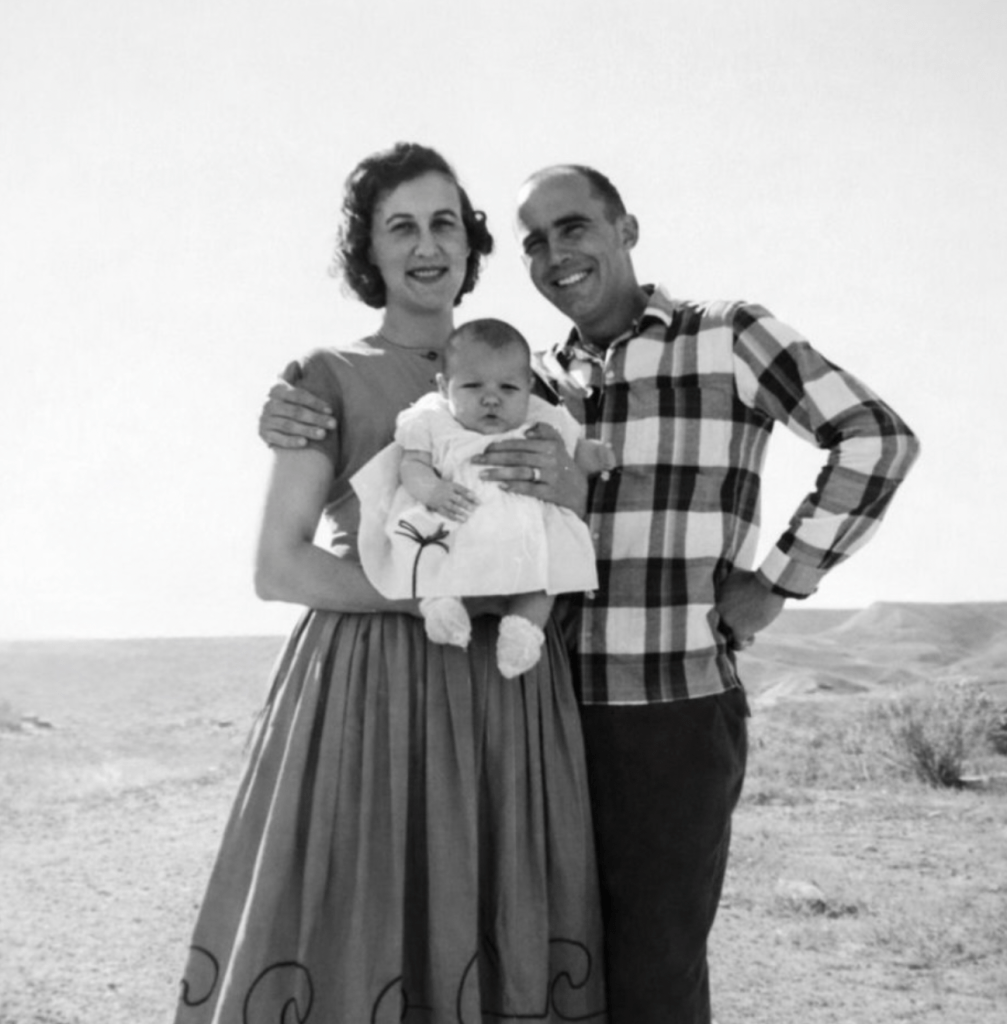
There’s a photo of my parents and me on Rogers Mesa at my grandparents’ ranch. I was just a baby. Two months after I was born, we moved to Colorado Springs when my father was sent to Fort Carson. In that picture, they’re already a family, already living the life that started with that summer meeting. When I look at it, I see more than my parents; I see the bus station, my grandmother pointing, my mother hesitating, and my father offering the window seat and a handkerchief.
And I think about how quickly a life can change.
A mother’s gentle push. A seat on a bus. A small kindness at just the right time.
And from that, everything else followed.
And I think how easily a life can turn.
A nudge from a mother. A seat on a bus. A kindness extended at just the right moment.
Earlier this week, I read a blog from a cherished fellow blogger, Jeanne Bryan Insalaco. On her site, Everyone Has a Story, she included a year end review of her writing experiences for 2017. She included the information from another genealogist that invited readers to write about their discoveries. Once I read the two blogs, I wanted to share my adventures too. I have provided the original link from Jill Ball.
Join in on the fun and start writing your family stories. Share with your family and friends and preserve those family memories. Do no forget to upload your stories in the comment section. Be the conveyor of your family tales. Continue reading “February Themes”→
When you dance, your purpose is not to get to a certain place on the floor. It’s to enjoy each step along the way.
–Wayne Dyer
As you begin your new year, write about a favorite achievement that inspired you or made a significant difference in your life. Continue reading “Achievements — Week 1”→
Crossing the stage with my diploma in hand was a very emotional milestone for me. It was the culmination of years of hard work that had finally ended. My mom and my daughter were in the stands which made the moment extra special for me. At times, I often wondered if my graduation day would ever arrive, for I put in many long hours while working part-time. During those years, I became a single mother too which added another level of stress. Looking back, I realized that keeping busy with school helped keep me sane as my marriage crumbled around me. It also gave me the extra push I needed to continue because, sink or swim, I was on my own. Continue reading “Reaching my Goal”→
Who wants to preserve family memories for those who follow in our footsteps?
As I reflect on this past year of my writing challenge, 52 Ancestors in 52 Weeks, I have a sense of pride and a sense of accomplishment. For once this challenge ends, I will have 52+ stories about my family. Through this writing adventure, I have discovered so much about my ancestors and even a little about myself, and I really hate to see it end! So I have created a new writing challenge for 2018, but this time, I believe writers should also include more personal narratives to add their family history. To keep me moving forward on this journey, I have started a new writing challenge called My Tales. It would be fun to have family bloggers join in with this writing adventure. Who is with me?
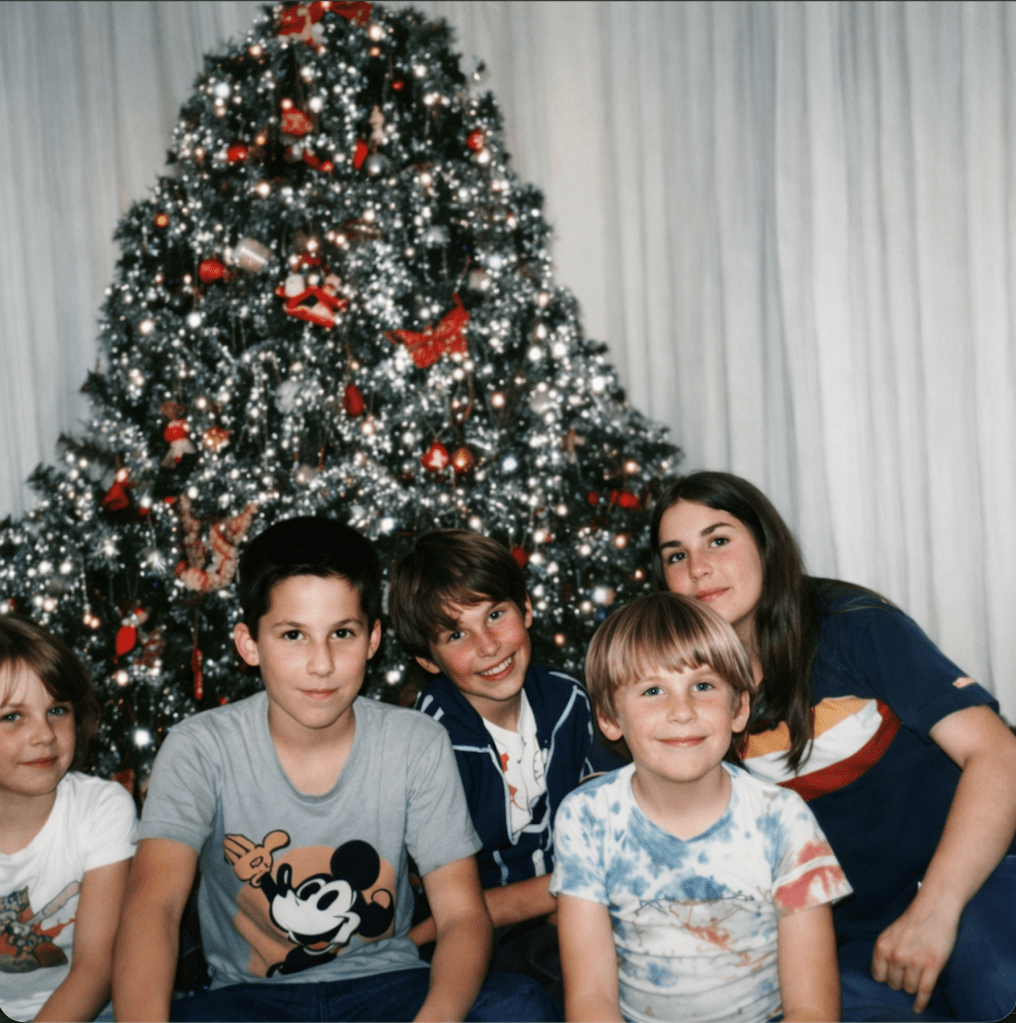
One Christmas, when my brother David was about ten years old, he and my brother Keith slipped out of bed before dawn and crept into the upstairs hallway, drawn by the irresistible pull of the tree downstairs, and the mystery waiting beneath it. Christmas morning in our house always seemed to begin first in silence, the kind of deep, velvety hush that comes before the rest of the world stirs. The air was cold against bare feet, the house still dark and hushed. Downstairs, the tree stood in the shadows, and everything felt suspended in that sweet moment before breakfast, before laughter, before the day fully began.
That year, Santa had done things a little differently. Instead of leaving gifts scattered beneath the branches, each of us had a small red Santa sack set neatly under the tree. The cloth bags were gathered at the top with bright ribbon, each one cinched tight and tagged with a name. With five children in the family, it was a clever solution, simple, tidy, and just mysterious enough to keep us all guessing. At least, that must have been the plan.
The night before, David and Keith had made their own plan.
In the dim light of early morning, they padded down the staircase one careful step at a time, trying not to wake anyone. When they reached the living room, they plugged in the tree lights, and suddenly the darkness gave way to soft color—red, green, gold, and blue shimmering across the room. The ornaments glimmered. Tinsel caught the light. Shadows moved gently across the walls. It must have felt, for a moment, as though they had stepped straight into the very heart of Christmas.
There, beneath the glowing branches, the two of them began examining the sacks, peeking inside to see what Santa had brought each child.
Our youngest brother, Danny, had made a last-minute request that year. After learning what David had asked for, Danny decided he wanted the very same Fisher-Price toy. But Christmas wishes, like so many things in childhood, seemed to depend on timing. Danny had asked too late, and Santa, bound, apparently, by deadlines even at the North Pole, had not left one for him.
David noticed right away.
He saw that Danny’s sack did not hold the treasure he had been hoping for. Then he looked inside his own and found the very toy Danny had wanted. There, in the glow of the Christmas tree, with Keith beside him and no grown-ups there to guide him, David made a choice that revealed exactly who he was. He reached into his own sack, took out the prized present, and slipped it into Danny’s bag.
Then he and Keith went quietly back upstairs and climbed into bed, carrying their secret with them, waiting like the rest of us for permission to begin Christmas morning.
A little later, the house awakened all at once in the familiar way of family holidays, feet on the stairs, excited voices, robes tied hastily, laughter, paper rustling, the smell of coffee drifting from the kitchen. My parents sat on the couch with their mugs in hand, watching us gather around the tree with the kind of sleepy joy that belongs to mothers and fathers on Christmas morning. We, children, tore into our Santa sacks with delight, pulling out one treasure after another.
That was when my mother noticed it.
Danny had one more gift than expected.
David had one less.
She said nothing at first. Instead, she watched for a moment, quietly taking it in. Then she motioned for David to come to her. In a low voice, so the rest of us wouldn’t hear, she said, “I think Santa made a mistake. Don’t worry; I’ll fix it.”
David looked up at her and smiled, not with disappointment, but with a calm, gentle certainty that must have undone her.
“Santa did make a mistake,” he whispered. “He forgot Danny wanted that present too. He’s little, and I didn’t want him to get his feelings hurt, so I gave him mine.”
My mother pulled him into her arms. Tears sprang to her eyes, sudden and bright, and because she did not want to cry in front of everyone, she slipped away to the kitchen. I followed her there, and I remember how she stood for a moment trying to compose herself, moved not by the gifts beneath the tree, but by the gift she had just witnessed in her son.
Together, we began making the orange rolls, our Christmas morning tradition. The scent of citrus and sugar rose warmly into the kitchen, and the icing melted into glossy swirls over the tops. Through the doorway we could still hear the happy noise of Christmas continuing in the living room, but in the kitchen there was a different kind of sweetness—a quiet understanding, a kind of wonder. My mother and I exchanged a glance that needed no words. We both understood we had just witnessed the true heart of Christmas in a little boy who had chosen giving over receiving.
And yes, that year David got the last orange roll, the one with all the extra frosting.
Even now, when I think of that Christmas, I do not remember most of what was under the tree. I remember instead the glow of the lights, the hush of that early morning, and the sight of love disguised as a child’s small, secret sacrifice. Long after the toys were forgotten, that moment remained—proof, that the truest gifts are not the ones we receive, but the ones we quietly choose to give.
“There are two lasting bequests we can give our children: One is roots, the other is wings.” Teaching children values and giving them the opportunity to excel is essential to good parenting. However, I feel I must also provide my children (and myself) insight into the ones who came before us: our ancestors whose lives and stories have shaped us into who we are. This is my journey; these are their stories…













 Tales of a Family