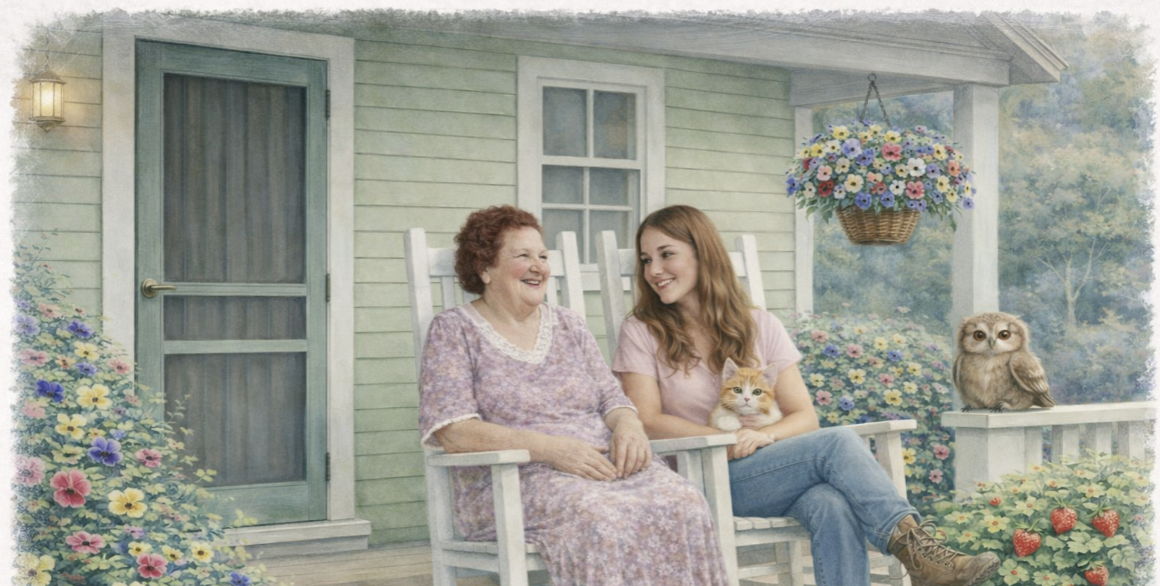
All for the King

This great grandmother, Marie Jeanne Toussaint, blazed a new trail in the New World, and her name survived throughout the generations as one of the founding mothers of North America.

The last known member of her family line, this King’s Daughter, came to New France alone. Her origins, her parents, and even her exact age vanished from history. Still, this great grandmother, Marie Jeanne Toussaint, blazed a new trail in the New World, and her name survived throughout the generations as one of the founding mothers of North America.

While little information on this 9th great grandmother existed, her impact on North America could not be forgotten. My grandmother, along with around 800 “sisters,” traveled to the French colonies to help balance gender inequality. To enhance the population in New France, King Louis XIV sent the King’s Daughters, the Filles du Roi, to the wilderness frontier between 1663 and 1773.

Once they arrived, most married the French immigrants and helped settle the king’s lands. The king also gave the women a dowry and a trousseau to help them establish their homes. Once they landed, they were provided with housing until they married. During their stay at their temporary quarters, the nuns taught them the necessary skills required to face the challenges of this strange new world. Most were not prepared or suited for the demanding lifestyle that awaited them. Yet, they stayed, and boldly met the challenges set before them.

Many of the women married within a few months after a suitable marriage was arranged. Fulfilling the king’s hopes, a decade later, the French colonies doubled in size. These women helped populate North America, for their descendants spread across this continent, and currently, most French Canadians have descended from at least one of the King’s Daughters.

Historically, these voyages often took as long as two to three months, and the young women faced hardships while traveling across the Atlantic Ocean. Some perished on their journey, and others suffered from malnutrition and disease. Although some records were lost, Jeanne arrived in Quebec in 1670, and historians believed she was about eighteen years old. That year eighty-seven women immigrated to the continent.

Unlike many of her contemporaries, Jeanne did not marry right away. Instead, she contracted for one year of service with a native of Quebec, Madeleine de Chavigny, at Cap-de-la-Madeleine.

Jeanne’s future husband, Noel Carpentier, arrived in 1665 and worked as a servant for a time. On 22 Jun 1669, Noel accepted about 35 acres of land from Nicholas Crevier dit Belleviue, and a few years later, he decided to settle down and start a family.

About 1672, Noel Carpentier and Jeanne Toussaint married in Cap-de-la-Madeleine. While her paper trail grew cold, Jeanne helped her family thrive in the new land. While living in this town, the couple had two children, Marie Madeleine (1673), and Marie Jeanne (25 Nov 1676). Around 1678, the family moved to Quebec. Their son, Etienne was born in 1678.

Sometime after the birth of their son, the family moved again to Champlain. The family settled in this town and remained in this settlement. The couple had seven more children, Medard (2 Aug 1681), Marie Marguerite (4 Mar 1684), Marie Antoinette (11 Jan 1686), Marie Therese (3 Jul 1689), Marie Celeste Anne (18 Jun 1691), Jacques (14 Apr 1694), and Noel (5 Nov 1703).

According to the 1681 Census, the family was listed twice, in Cap-de-la-Madeleine and Champlain. Most genealogists and historians believed the couple owned land in both places. The information stated the couple held nine head of cattle and about 30 acres of land.

Tragedy did strike the family, for the census did not list Jacques, and many believed he died as a child. Years later, on the 5 Nov 1703, Noel and Jeanne lost their oldest daughter, Marie Madeleine, in Champlain. 

Five years later, on 11 Dec 1708, Jeanne’s last will and testament were notarized by Normandin. Five days later, she died, and on the 17 Dec 1708, she was buried in Champlain. She was about fifty-two years old.

Noel lived until he was eighty-five years old. He died 26 Jan 1728, and he was buried next to Jeanne. Four of their children settled at Ile-Dupas; two children moved to Becancour, one daughter, Marie Jeanne, became a nun at Notre Dame in Montreal. She took the name Sister Sainte-Genevieve. The rest of their children stayed in their original parish.  

Life as a King’s Daughter required strength and courage to survive the rugged wilderness of the French Colonies. These women not only coped with frontier life but also raised children amidst all their duties. They conquered their surroundings and left a legacy for their children and grandchildren. What a revelation and an honor to know that the women in my family were resilient, valiant, and capable, even when faced with enormous obstacles and reservations.

Painting by The Arrival of the French Girls at Quebec, 1667. Watercolour by Charles William Jefferys.

The King’s Daughters

Sources

  • Gagné Peter J. King’s Daughters and Founding Mothers: the Filles Du Roi, 1663-1673. Quintin.
  • Gale Research. U.S. and Canada, Passenger and Immigration Lists Index, 1500s-1900s, Ancestry.com Operations Inc, 2010, search.ancestry.com/search/db.aspx?dbid=7486.
  • Genealogical Research Library, Ontario, Canada. U.S., Department of Veterans Affairs BIRLS Death File, 1850-2010, Ancestry.com Operations Inc, 2005, search.ancestry.com/search/db.aspx?dbid=7920.
  • Laforest, Thomas John., and Jeffrey M. LaRochelle. Our French-Canadian Ancestors. LISI Press, 1989.
  • PRDH, Drouin Institute, http://www.prdh-igd.com.
  • “Quebec, Genealogical Dictionary of Canadian Families (Tanguay Collection), 1608-1890.” 1920 Census | 1920 US Federal Census Records | Ancestry.com, Ancestry.com Operations Inc, 2011, search.ancestry.com/search/db.aspx?dbid=2177.
  • Quebec, Canada, Vital and Church Records (Drouin Collection), 1621-1968. Online Publication – Provo, UT, USA: Ancestry.com Operations Inc, 2008.Original Data – Gabriel Drouin, Comp. Drouin Collection. Montreal, Quebec, Canada: Institut Généalogique Drouin.Original Data: Gabriel Drouin, Comp. Drouin Collection. Montreal, Quebec, search.ancestry.com/search/db.aspx?dbid=1091.

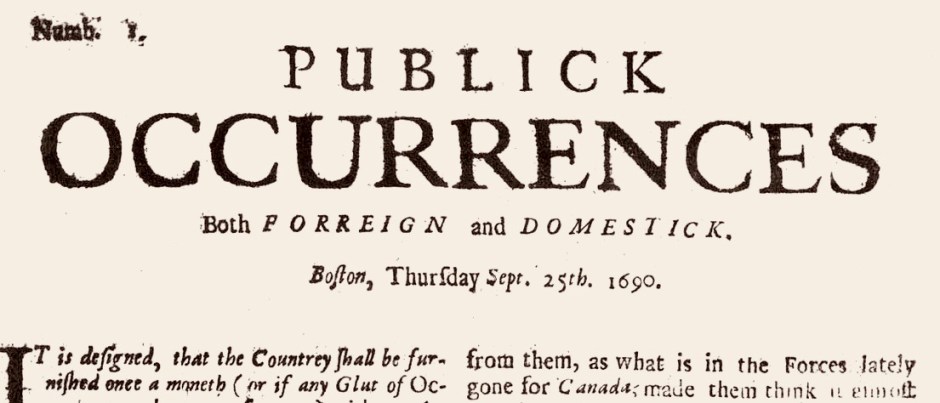
Stop the Press!

In order to hereunto, the Publisher will take what pains he can to obtain a Faithful Relation of all such things: and will particularly make himself beholden to such Persons in Boston whom he knows to have been for their own use the diligent Observers of such matters.

Benjamin Harris

Home

Home for me has several implications. It is doused in memories of the people and places that offer sweet memories of the past, joy in the moment, and all the promises for the future.  Life was not perfect, by any stretch of the imagination.  It was sometimes uneasy, and painful and raw; still, love found its way into my life and tangled my heart with many that I hold so dear.  Deep within, I know I have been blessed with the love and companionship of family and friends.  I have cherished them all.

Continue reading “Home”

The Piggy Bank

Screen Shot 2018-10-15 at 11.59.22 AMWhen I was a little girl, I lived in my mama’s hometown, Hotchkiss, Colorado.  On my first birthday, I celebrated the day at my grandparent’s house, a small cabin situated on Roger’s Mesa.  One of my gifts from my grandparents was a little piggy bank.  It was a pig in a barrel.  I still have that little bank, and it means the world to me.  According to my mom, my grandparents fussed over this gift before they decided on this little guy.  Sweet memories. Continue reading “The Piggy Bank”
The Gift of the Magpie

The early morning air still held the cool breath of night, but the rising sun promised another warm day on the dusty mesa. Across the meadow, sheep grazed quietly while playful lambs sprang into the air, kicking and butting heads, their high-pitched bleats breaking the stillness of the morning. Nearby, the cows, freshly milked, wandered toward the pasture, flicking their tails against the first determined flies of the day.

The golden light of sunrise spilled across the rugged peak of Mount Lamborn, bathing the North Fork Valley in a soft glow.

From the chimney of a small cabin perched on Rogers Mesa, a thin ribbon of smoke curled into the sky.

Inside, the warmth of a crackling wood stove filled the kitchen as breakfast came to an end. The man of the house had already left for town, leaving the mother and her daughters to finish the morning chores. Plates clinked, and water sloshed in the dishpan as Elva set a pot to boil on the stove.

At the table sat young Dotty, the youngest, of the girls, fidgeting in her chair. Her mind was busy with a very important idea.

“Mama,” she said suddenly, her eyes shining with excitement, “can I go catch a magpie today? I want to train it and take care of it. Please?”

The family had recently lost their last pet magpie when it flew away and never returned. Dotty had not quite gotten over the loss.

More than anything, she wanted to be the one to find the next one.

Her mother smiled at her youngest daughter’s determination.

“Well,” Elva said thoughtfully, “you can go look for a bird, but only after you finish your morning chores.”

That was all Dotty needed to hear.

She shot out of her chair and raced out the door toward the chicken coop. The hens scattered and clucked indignantly as she hurried inside to gather the eggs. Only then did she realize something important.

She had forgotten the egg basket.

Dotty dashed back toward the house, but just before opening the door she stopped.

Voices drifted from inside.

Curious, she pressed her ear against the wooden frame.

It was her sister Barb.

“But Mama,” Barb protested, “I’m the oldest. I should be the one to catch the bird!”

Their mother’s voice was calm but matter-of-fact.

“Now, Barb,” she replied gently, “your sister won’t be able to catch a magpie. She’s just too little.”

Dotty’s stomach dropped.

Too little?

A hot wave of determination rushed through her.

She clenched her fists and stomped her foot silently in the dust.

I’ll show them.

Without another word, she marched back to the chicken coop.

She would finish her chores.

And she would catch a magpie.

After gathering the eggs, Dotty carefully lifted the hem of her dress, cradling the fragile shells in the folds of fabric so they wouldn’t break. Step by careful step, she carried them back to the house.

But while she walked, her mind was busy making plans.

What do I need?

A sack to carry the bird.

Food for the magpie.

And lunch… for me.

Once inside, she gently placed the eggs in a woven basket and pumped fresh water into a bowl, scrubbing the shells clean with careful hands.

When she finished, she turned toward her mother, practically bouncing.

“All done! Can I take a gunny sack and some hamburger for my magpie? And maybe a sandwich for me?”

Elva chuckled softly at her daughter’s excitement.

“Well, I suppose that sounds reasonable.”

Dotty wrapped the hamburger in a clean rag and tied the corners together before racing to the barn for a gunny sack. When she returned, her mother handed her a small brown sack containing two peach-preserve sandwiches, a shiny red apple, and a mason jar of water.

Dotty kissed her mother on the cheek and dashed out the door.

Then she skidded to a sudden stop.

Now what?

She had been so eager to start that she hadn’t actually decided where to find a magpie.

She couldn’t go back and ask now. That might make her mother change her mind about the whole adventure.

So Dotty did the only thing she could think of.

She followed the lamb.

She headed toward Mount Lamborn, where a rock formation high on the mountain resembled a standing lamb. The local sheep ranchers considered it a sign of good luck.

Today, Dotty figured she could use all the luck she could get.

Once she reached the open flatland, she spotted a small cluster of tall pine trees in the distance.

Birds live in trees, she reasoned.

The bigger the tree, the better the bird.

The sun climbed higher as she trudged across the dusty field. Heat shimmered off the ground, and the warm air wrapped around her like a heavy blanket. When thirst finally caught up with her, she unscrewed the mason jar and took a long drink.

The water was already warm. It didn’t help much.

At last, she reached the shade of the pines and dropped to the ground with a sigh, resting her back against the rough bark. She scanned the branches above her, searching for nests, but saw nothing.

Her stomach growled. She pulled out one of the peach preserve sandwiches and took a bite. The sweet sticky jam, tasted like home.

Before long, the heat, the shade, and a full belly made her eyelids heavy. Dotty drifted off to sleep beneath the trees.

When she woke, the sun had climbed even higher in the sky, and the air felt hotter than ever. Her throat was dry, and her legs were tired.

For a moment, she considered going home.

Then—

Squawk!

Dotty froze. Another sharp squawk echoed through the trees. Her heart leapt.

She followed the sound until she reached a grove of cottonwoods. There, tucked into the crook of a thick branch, sat a messy nest made of sticks and mud. Inside it squirmed a cluster of baby magpies, barely peeking over mud-covered sticks.

She had found them. Determined, Dotty tucked the gunny sack beneath her arm and began climbing. Halfway up the tree, her dress snagged on a sharp limb.

Rip.

She looked down at the torn fabric and sighed.

“Momma won’t be happy about that.”

Then—

WHOOSH!

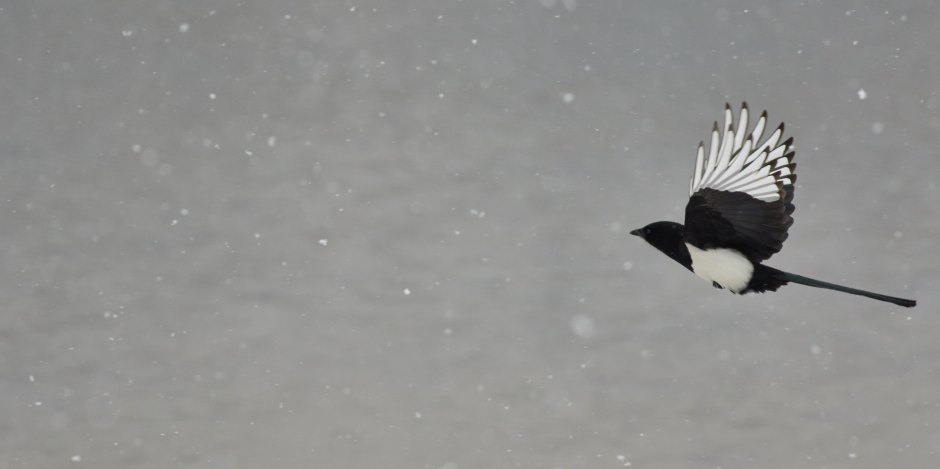
A full-grown magpie dive-bombed her.

Dotty shrieked and clung to the tree trunk as the furious parent swooped and squawked overhead. Again and again it flew at her, wings beating the air in protest. But Dotty held her ground.

I didn’t come all this way for nothing.

Finally, the bird retreated, scolding loudly from a nearby branch, and Dotty climbed the rest of the way to the nest. Seven tiny birds stretched their necks upward, squawking hungrily. She carefully unwrapped the hamburger and offered them a small piece. They gobbled it eagerly.

After studying the little flock, she chose a plump baby bird whose dark wings shimmered blue in the sunlight. “Come here, Maggie,” she whispered.

She gently placed the bird into the gunny sack and tucked the bundle safely beneath her dress. Mission accomplished. The walk home felt like victory.

When she finally reached the ranch, her mother spotted her from across the yard and waved. But as Dotty got closer, Elva’s smile faded. Her daughter was covered in dust and scratches, and her dress hung in tatters.

“Dotty,” she said, hurrying forward. “Are you alright?”

Instead of answering, Dotty thrust the sack toward her.

“I did it!”

Elva peeked inside. Her eyebrows lifted in surprise.

“Well, I’ll be… you really did catch one.”

Dotty grinned from ear to ear.

“What are you going to name it?” Her mother asked.

“Maggie.”

Elva chuckled.

“And what if it turns out to be a boy?”

Dotty didn’t miss a beat.

“Then it’s short for Magpie.”

Her mother laughed and pulled the dusty, determined girl into a hug.

As they walked toward the barn together, Dotty chattered about the long hike, the tree, and the angry bird that tried to chase her away.

She had proven something that day.

She wasn’t too little after all.

And as Elva listened to her daughter’s breathless story, she realized something else.

Dotty may have come home with a magpie in a sack, but the real gift that day was discovering her daughter’s fearless spirit beginning to spread its wings.