All favorite family recipes begin with a pinch of joy, a heaping spoonful of love, and generous amounts of laughter. That’s how our family’s Chocolate Oatmeal Cookie recipe came together. The warm scent of cocoa wafted through Grandma’s home, and we all knew she had made our favorite treat. Our Chocolate Oatmeal Cookie recipe is more than just a dessert; it is a cherished tradition that connects generations through love, laughter, and shared memories.
As a child, I remember Grandma creating these treats for her grandchildren. Her cozy cottage kitchen was warm and cheerful, the perfect gathering place for lively conversations, games of Chinese Checkers, and sweet indulgences. The air was filled with laughter and music, as she adored the Grand Ole Opry and country tunes. Mom also made these cookies after inheriting the recipe. It’s amusing how these treats still remind me of the two women I cherished most, of happy childhood memories, of the love we shared, and of the special moments we embraced as a family.
Of course, my younger brother, David, had a particular fondness for these cookies; they were his favorite. As soon as he came home from school, he recognized the scent the moment he walked through the back door. Sometimes, before the cookies had a chance to cool and harden, David would sneak a spoon and carefully scoop a cookie from the tinfoil lining the kitchen table. Mom always chuckled; it was their special thing. David and Chocolate Oatmeal Cookies became part of his identity, a shared joke, and a source of joy. Even in his older years, his Christmas list always included his beloved Chocolate Oatmeal Cookies.
Mama also made these cookies for special occasions, but she often prepared them for after-school surprises. Many rainy afternoons, I would come home to Mama’s cozy yellow kitchen, the air rich with warm chocolate and sweet vanilla. We would sit on the couch, curl up under a blanket, and enjoy our treat. Those sweet mother-and-daughter moments were filled with conversations about school days and friends. Basking in her warmth, they became precious reminders of her love and care—memories that grow dearer with time.
As time passes, those cookies have become more than just a treat; they are a link to my family and the memories of my grandma, Mama, and my brother David. Although we’ve grown up, the smell of those cookies makes us feel like kids again, transporting us back to a time when a mother took time from her busy schedule to create a sweet treat she knew her children would enjoy. Hopefully, this family recipe will continue to be passed down from generation to generation, for after all, every family requires a little magic and sweetness.
No-Bake Chocolate Oatmeal Cookies
Ingredients:
1/2 cup butter or margarine, cut into 1-tablespoon pieces so it melts faster
1/2 cup unsweetened cocoa powder
2 cups sugar
1/2 cup milk
3 cups quick-cooking oats
1/2 cup creamy peanut butter
1 1/2 teaspoons vanilla extract
Instructions :
In a large saucepan, combine the butter or margarine, cocoa powder, sugar, and milk,
Stir well and bring to a boil over medium heat. Boil for 90 seconds, stirring occasionally.
Remove from the heat and stir in the oats, peanut butter, and vanilla.
Drop by heaping tablespoonfuls onto baking sheets lined with wax paper or parchment paper. Let cool to set.
Set a timer and be sure to boil the chocolate mixture for precisely 90 seconds. If you don’t boil long enough, the cookies may not harden. If you boil them too long, they will be dry.
What’s your favorite twist on the no bake cookies? And if you make this recipe, be sure to let me know how they turned out.
As a child, my mother read to me every day, and before long, books became as essential to my life as sunshine and fresh air. From the very beginning, Mama laid the groundwork for my lifelong love of reading. Some of my earliest memories are of sitting next to her, my head resting against her arm, listening as she turned the pages and brought stories to life with the gentle warmth of her voice.
She never simply read the words. She acted out each page. The characters came to life with different voices, and more often than not, she would have a fit of the gigles, laughing until she cried. In those moments, she would stop reading until she gained control. I am not sure what I enjoyed more, her laughter or the stories!
When I was about three years old, my mother began teaching me the alphabet. She would sit with me at the kitchen table and patiently point to each letter, repeating its name and sound until I could recognize each one.
Soon, I was copying the letters onto paper with a chunky pencil, gripping it tightly in my small hand, while she gently guided my fingers. I carefully practiced forming each letter as she showed me. By the time I was four, I could proudly read simple books by myself.
However, Mama did not simply teach me to read; she made learning come across like a game.
One of my favorite activities was the treasure hunt.
Mama hid small treasures around the house and left clues written on little slips of paper. These clues helped me learn some of my first sight words—go, to, and the. Sometimes, she would draw simple pictures of objects around the house with the word written underneath.
Lamp.
Couch.
Mailbox.
Each clue guided me to the next location until I finally found the hidden treasure, usually a small treat, a colorful barrette, or a new ribbon for my hair. I remember the thrill of sounding out the words and realizing that the message on the paper was meant for me to solve.
These small games turned reading into an adventure.
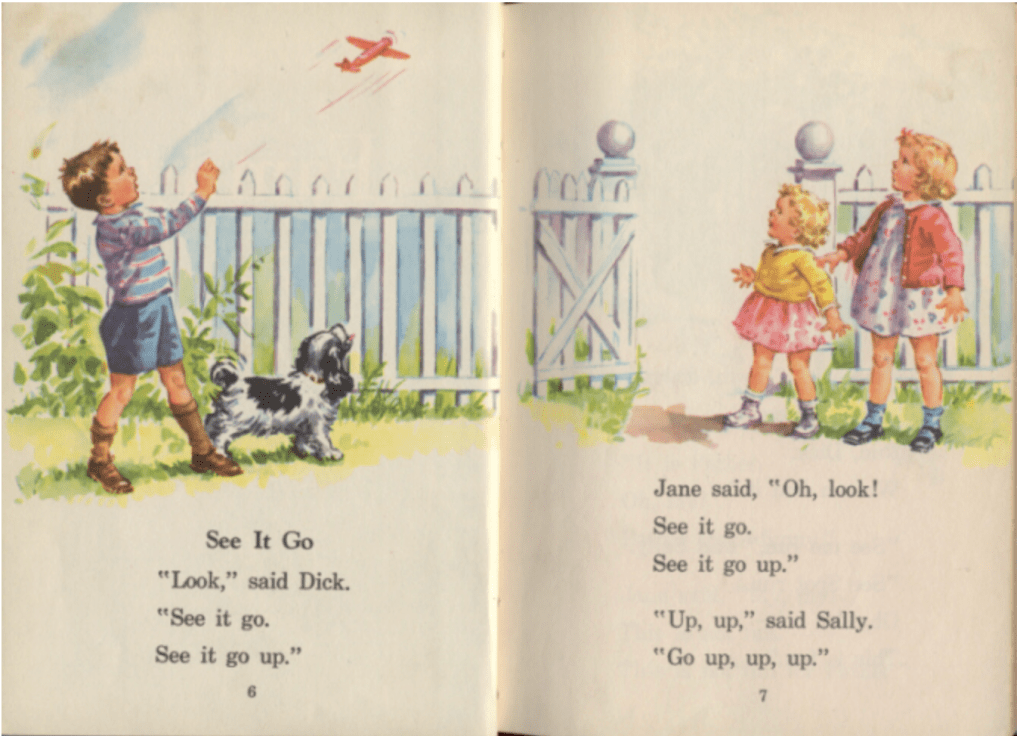
As my vocabulary grew, my mother began instructing me to read using the Dick and Jane Primer series. I can still remember the excitement I felt when I finally read Fun with Dick and Jane all by myself. I couldn’t wait to show my dad.
With all the pride a four year old could muster, I climbed into his lap and read the pages aloud. I still remember the look on his face as he listened, half surprised, half delighted, as the words on the page suddenly made sense to me.
From that moment on, my world expanded with each new book.
As I grew older, so did my small library. Mama always ensured that I had something new to read. Some of my favorite childhood books included James and the Giant Peach, Where the Red Fern Grows, Charlotte’s Web, Little Women, and From the Mixed-Up Files of Mrs. Basil E. Frankweiler. I also devoured book series like Dr. Seuss, Mrs. Piggle-Wiggle, Little House on the Prairie, Nancy Drew, and The Hardy Boys.
Each book opened a door to a new world—one rich in adventure, mystery, courage, and imagination.
Looking back, I realize how busy my mother must have been raising us, running the household, and caring for our family. Yet, somehow, she always found time to sit beside me with a book in her hands.
She never rushed through these moments.
Instead, she supported my curiosity and made learning feel joyful and exciting. Long before I stepped into a classroom, my mother had already given me the greatest educational gift I would ever receive.
She taught me that books are more than just stories.
They were the keys that could unlock entire worlds.
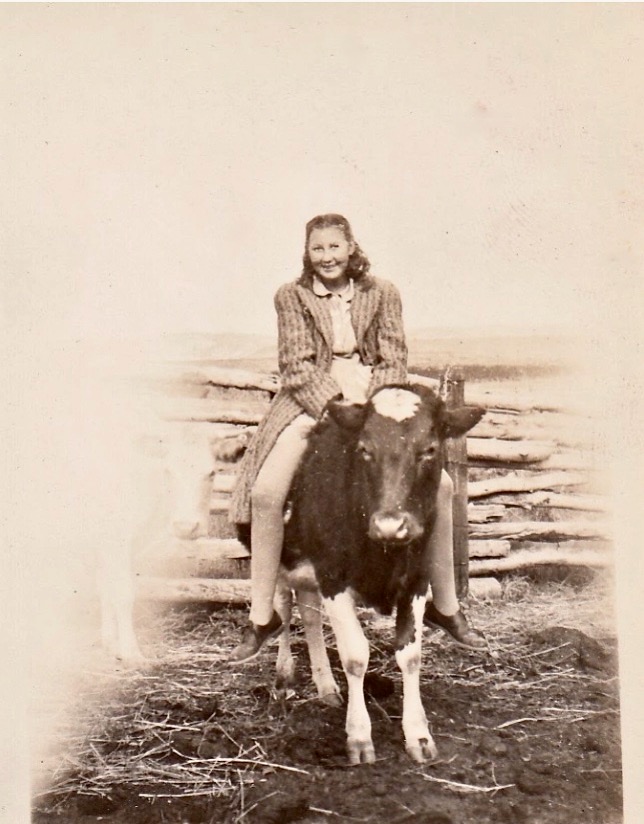
The young girl poses on a rocky ridge. She wears light-colored slacks and a button-up shirt. Her long brown hair is pulled back into braids. Sitting on the ledge with her dog, she holds onto Midge’s reins. She looks into the distance and smiles.
This picture is one of my favorite photos of my mother, Dotty Allen. I received this photo after she died, and I wish I could ask her questions. Where was the photo taken? On the family ranch? How old was she? My guess is around 12 or 13, so the year it was taken was about 1946 0r 1947. I wish I could ask her what her pup’s name was. And I wanted to know what she was looking at in the distance.
Although my mom and I often talked about her life, I still have so many questions. I wish she were still here to answer my queries and spin more yarns and tales about her life on the ranch.
Jean Talon, Bishop François de Laval and several settlers welcome the King’s Daughters upon their arrival. Painting by Eleanor Fortescue-Brickdale.
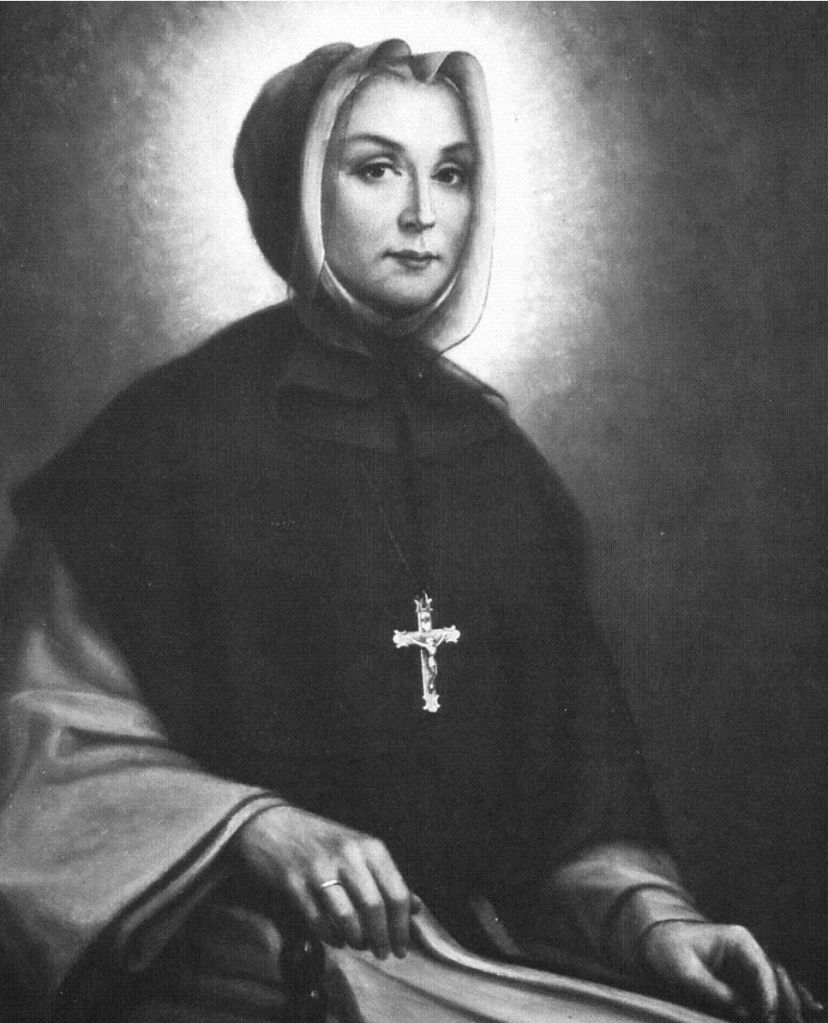
On July 3, 1668, when she was about sixteen, Marie sailed to New France on the ship, La Nouvelle France.
As the colonies grew in New France during the seventeenth century, the men outnumbered the women. As male settlers and soldiers moved to these new lands, they wanted to settle down, marry, and have children. To help alleviate this problem, the French monarch King Louis XIV sent about 800 women to New France between 1663 and 1673. Over the years, the women became known as the king’s daughters. He provided a dowry of money and items the women would require when setting up their new homes. As soon as the couples married, they often received livestock and chickens. In addition, they were given an annual pension after the pair began having children.
When the king’s daughters arrived in the colonies, they were given room and board until they found a suitable marriage partner. A formal education was often neglected since life’s demands kept even the children busy. When children turned twelve, they took classes at Sunday school to prepare for their First Communion. In the colonies, young women were also trained to become wives and mothers. They took classes on keeping a house, and they learned to cook, preserve food, sew, mend clothes, plan, save and keep accounts. They were also taught good manners. Although life in the colonies was not an easy life, the women flourished. They tended to outlive their female contemporaries that remained in the old country.
About 1652, Marie Deshayes was born in Rouen, Normandy, to Anne Fortin and Alexandre Deshayes. On July 3, 1668, when she was about sixteen, Marie sailed to New France on the ship, La Nouvelle France. On May 20, 1668, she was confirmed at Chambly. About 1668 or 1669, she married a former soldier, Adrien Betourne dit Laviolette in Sorrel, Quebec. The couple settled in Repentigny and had two children, Pierre (about 1669) and Marie-Anne (about 1684). Two years after she arrived in Canada, her sister Marguerite came to Canada. She married Pierre Menard dit Saintonge at Sorel. They moved to Saint-Ours. The sisters lived about 50 miles away from one another.
Confirmation – 20 May 1668 – Marie des Hayes of Rouen
On August 30, 1695, a formal separation of property was ordered between Marie and Adrien. On December 18, 1707, Marie died. She was buried at the Notre Dame Ancient Cemetery in Montreal, Quebec.
18 Decembre 1707 – Marie Deshays, age 58 years, wife of Adrien Betourne dit Laviolette, died at I’Hotel-Dieu at this village after receiving the sacraments of the church. Testimony – Mr. Antoine di Valens et Henry Meriel, priests.
“Programme De Recherche En Démographie Historique. Généalogie Canadienne-Française Du Québec.” PRDH, Drouin Genealogical Institute, 2022, http://www.prdh-igd.com/.
Herman, Paul and Jean de Limbourg, October (detail with Louvre), from Les Très Riches Heures du Duc de Berry, 1413-16, ink on vellum (Musée Condé, Chantilly)
During the sixteenth century, the Renassaince arrived throughout the nations of Europe, and France celebrated in all of its glorious splendor. The French monarchs returned to the city, and Paris began to flourish. Henry IV ended the religious wars and his people enjoyed their new spiritual freedoms. New monarchies supported the arts and sciences, which influenced all the nations of Europe. Architectural wonders, monuments, and city parks abounded, and Parisians took pride in their lovely homeland.
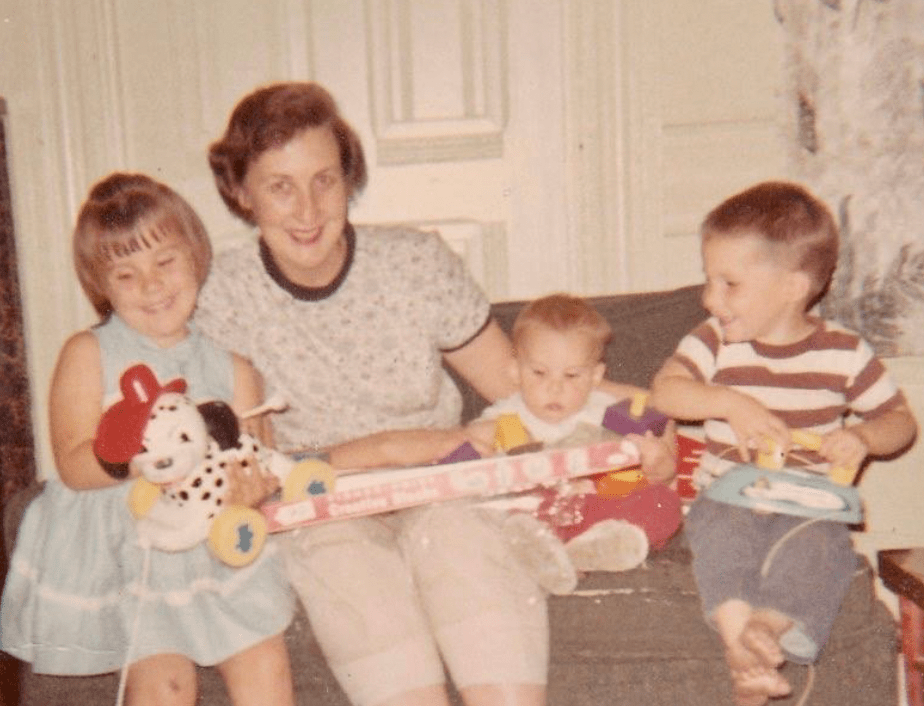
Summer 1965 – Ann Marie, mother, Dotty, David and Tommy, Alameda, California
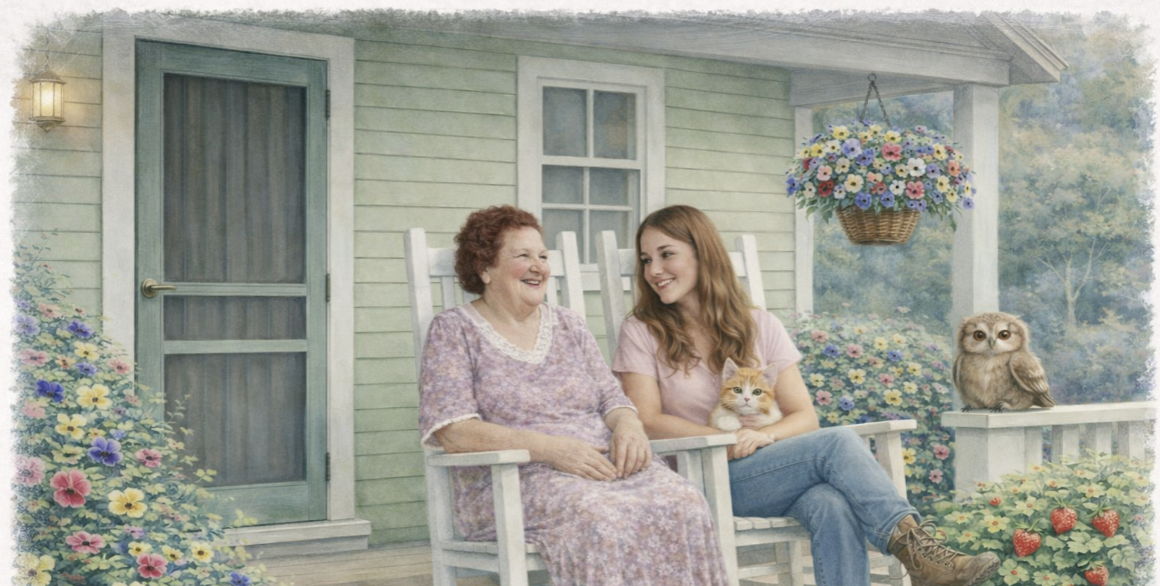
Often, recollections from days gone by take up residence in my thoughts as I remember my childhood. Days of warmth and fun-loving doings flow full circle. Yet, each innocent recollection eventually comes to rest on the woman that rendered care for her family, the loving matriarch of my family, my mother, Dotty Allen Reeder.
This woman gave me so much strength, hope, and courage. She taught me to laugh and rejoice at each extraordinary occurrence that took place in our lives. It was the simple things that found a home in my heart, words of encouragement, cuddles on the couch on rainy days or endless board games at the kitchen table. Or, it was summer tournaments of baseball and kickball with brothers and neighbors with mom in the middle of it all.
Always my closest confidant, we shared stories and laughter and silly gossip while doing kitchen chores or sharing a Dr. Pepper, her favorite soda, and now mine. She was the hub of our home, the very foundation that provided prudence and understanding on how to live in a world that was not always kind. She reminded everyone to find joy in each incredible moment and take nothing for granted. As my biggest cheerleader, the world sometimes feels so strange without her. Still, I find her in the shared stories with her granddaughter. I see her smile in my granddaughter, her kindness in my grandson, her ornery humor in another. Her legacy has continued and found residence in each generation that has followed; the cornerstone of our family still stands.
“If The Exorcist doesn’t knock you out of your seat, it’s only because you are too stunned to move.”
Stanley Eichelbaum ~ The San Francisco Examiner ~ 26 Dec 1973
“Everybody in the movie experienced some kind of horror. On the day Max von Sydow arrived for his first scene, his brother died, and the film was again delayed while Von Sydow returned to Sweden for the funeral. The little girl’s grandfather died the first week of the picture. One of the carpenters cut his thumb off. Irish actor Jack MacGowan who is murdered by the demon possessing the child, dropped dead one week after his death scene.”
Billy Friedkin ~ The Los Angeles Times ~ 18 Nov 1973
“If The Exorcist doesn’t knock you out of your seat, it’s only because you are too stunned to move.”
Stanley Eichelbaum ~ The San Francisco Examiner ~ 26 Dec 1973
“Everybody in the movie experienced some kind of horror. On the day Max von Sydow arrived for his first scene, his brother died, and the film was again delayed while Von Sydow returned to Sweden for the funeral. The little girl’s grandfather died the first week of the picture. One of the carpenters cut his thumb off. Irish actor Jack MacGowan who is murdered by the demon possessing the child, dropped dead one week after his death scene.”
Billy Friedkin ~ The Los Angeles Times ~ 18 Nov 1973
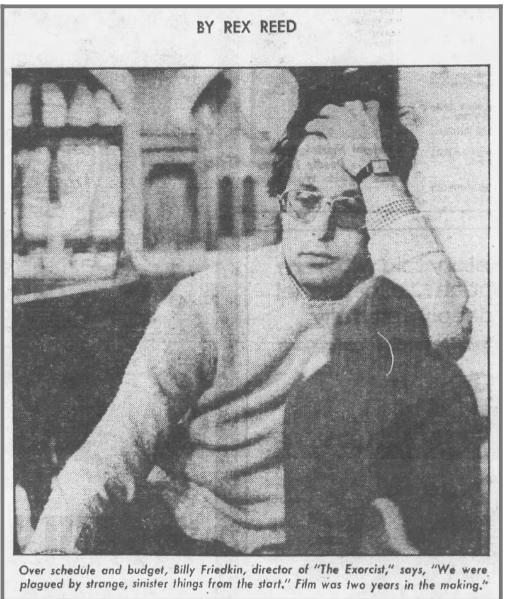
In 1973, The Exorcist thundered onto the screen, frightening people across the country. It was about a twelve-year-old girl that was possessed by the devil. Although the book by William Blatty topped the charts, the movie director, William Friedkin, had trouble finding actors. Some were unwilling to portray characters in this frightening horror film that mimicked demon possession. Stars from the era turned down his offers, and the director finally relied on filling some lead roles with unknown artists. Unfortunately, Friedkin’s woes did not stop there. Mysterious accidents and trouble seemed to follow those involved in the film. Even some that attended its openings had problems of their own. And many began to believe the movie was cursed. Audiences had never witnessed anything quite like it.
According to the author, the storyline was based on an actual event about a young boy. He first heard about the incident as a Georgetown University student and wrote a paper about the unsettling event. Twenty years later, he wrote the book. According to the author, the once-possessed boy did not remember his exorcism. As an adult, he went on to work at NASA.
“I’m not a convert to the occult,” he says cautiously, as though the devil might be listening, “but after all I’ve witnessed on this film I definitely believe in demonic possession.” The Los Angeles Times 18 Nov 1973
As production problems transpired, delays in filming occurred. A pigeon flew into a circuit box that set the place on fire. This event delayed filming for six months. Strangely, the only room left untouched was the room of the possessed child. With all the strange occurrences, a Jesuit priest was called and asked to bless the set.
Actress Ellen Burstyn, the mother of Reagan in the thriller, was injured during a scene when the young starlet Linda Blair throws her on the floor. Burstyn’s piercing scream, caught on tape, was genuine. According to Burstyn, the pain has continued to plague her to this day.
Others were injured too. During one possession scene, the rigging broke, and Blair was thrown from the bed, injuring her back. A carpenter cut off his thumb, and a technician lost his toe. Some scenes were filmed in Iraq during the hot summer months of July. Some crew members could not work as the temps blazed to 130 degrees. Workers faced heat stroke and even dysentery.
During one scene, with the green projectile vomiting, the tubing malfunctioned. It was supposed to hit the priest in the chest. Instead, it hit him in the face. His actual shocked response was used in the movie.
After the film was produced, two actors died. Jack MacGowran and Vasiliki Maliaros died; their characters also died in the movie. In addition, Linda Blair’s grandfather died during production, and Max Von Sydow lost his brother on the first day of filming. In total, nine deaths centered around this film.
The movie was so unsettling for many, and the star, Linda Blair, received numerous death threats. As a result, the studio hired bodyguards to protect her.
People believed the film was cursed; some thought it invited possession to those who watched it. Even Billy Graham stated, “There is a power of evil in the film, in the fabric of the film itself.”
Some countries banned the film. Audience members reported they felt ill while viewing the show, and some theaters handed out barf bags. In Italy, a storm raged, and some insisted that lightning hit a nearby 400-year-old church. One woman became so frightened she fainted and broke her jaw when she fell. She sued Warner Brothers, and the company settled for an unknown amount.
All the hype about the movie fueled an unnatural curiosity. People flocked to the theaters to watch this film. This film grossed millions at the box office and became the first horror film nominated for an Oscar.
And then there was me, just another twelve-year-old girl that had heard about the hysteria and had to see the movie. Many kids at my school had watched the movie and bragged about its horrors. One friend, Tammy, wanted to watch the show, but one problem stood in my way: my mother.
“Absolutely not! I will not allow you to see this film.”
She used HER voice. The one that would never allow her middle school daughter to watch the most dreaded movie of all time. She had witnessed the publicity on TV too.
Still, I pushed, “But, Mom.”
She turned around and gave me “the look,” which I was pretty sure was even scarier than the scene where Linda Blair’s head rotated around her shoulders. But I guess I would never honestly know. Sigh.
The next day after school, in Tammy’s bedroom, we sat on the twin beds in her room. “Are you sure she won’t change her mind?” Tammy questioned.
Throwing myself backward onto one of the beds, “No. My mother thinks I’m a baby and wouldn’t be able to handle it.”
The two of us quietly thought about our current predicament. I mean we had to see the movie. Tammy’s mom said she could go as long as she was chaperoned. Then, suddenly, Tammy squealed, “I have an idea!”
Sitting on the opposite bed, I looked at my friend’s excited face as she rambled. “Ask your mom if you can spend the night this weekend. I will tell my mom you have permission to go, and she will take us to the movies.”
Questions ran through my head. What if we ran into someone that knew my mother? How long would I be grounded if caught? How disappointed would she be if she knew? I didn’t like the idea of lying to my mother. But still, I caved. “Let’s do it.”
Squealing together, we put our plans in motion, and although I did feel guilty, I had to admit our covert plans were exciting. Friday night could not arrive soon enough.
My dad dropped me off Friday evening at Tammy’s apartment complex after dinner. “Have fun, and give me a call tomorrow afternoon when you are ready to come home.”
After grabbing my overnight bag, I leaned into the open window, kissed my dad on the cheek, and thanked him for dropping me off. “Love you,” I told my father. At once, I started feeling guilty and worried about what my dad would think once he discovered his sneaky daughter had lied to her parents.
As Tammy raced out her front door, I quickly pushed those thoughts aside. “Are you excited?” She asked. Shaking my head yes, we both began to laugh.
In no time, we were on our way to the theater on the opposite end of the island. It was cool that evening, and I was glad that Tammy’s mom had insisted we bring our bulky sweaters. After we parked, I was pleased it was dark, so no one could see me entering the building.
The lobby had dimmed lights, so I kept my head down and didn’t worry too much about being spotted. We quickly took our seats.
Anticipation built as we watched preview after preview. As soon as the movie started, we nervously looked at each other, not knowing what to expect—scene after scene, the tension mounted. Finally, when Reagan’s bed began to shake, and she pleaded, “Make it stop,” we were on the edge of our seats.
From beginning to end, we sat, riveted in our chairs. We were shocked, frightened, and all-around scared out of our wits. But, to be truthful, I was glad when it ended.
We were both quiet on the way back to Tammy’s place. I thanked her mom for taking us to the show but remained silent for the rest of the ride. Once at her house, her mom told us it was time to go to bed. So we changed into our PJs and crawled into bed. “Were you scared?” I whispered.
“Yes. You?”
“Yeah,” I replied.
It took some time, but eventually, we fell asleep. Later that evening, I woke up in a panic. My bed was shaking! As my sleepy brain tried to focus, the bed slid across the hardwood floor. I screamed and envisioned Reagan in her bed, pleading for it to stop moving. Then, as quickly as it started, it ended. Suddenly, Tammy’s mom opened the door and turned on the lights. She laughed when she saw my twin bed had moved away from the wall and the terror on our faces.
“Girls, girls, we had an earthquake. You’re okay.”
The two of us glanced at one another and started to giggle. “It will make a great story to tell our friends on Monday,” Tammy stated.
“I know,” I told my friend, but my heart still raced.
After dropping my bag off in my room the next day, my mom asked how my weekend went. Suddenly, I knew I had to come clean. So, without breathing, I rattled non-stop about our Friday night escapade. My mother burst into laughter when I got to the part about the earthquake and how the bed traveled across the floor.
“That’s it? I questioned. “You’re not mad at me, and I’m not grounded?”
“Well, you did disobey, but I think you were already punished. See what happens when you defy your mother? God will get you.” Then my mother started laughing again.
Later that night, her words lingered with me. Sleep would not come easily—not that night, nor for several nights after. As I lay awake, I found myself thinking about my mother and the quiet wisdom she carried. I realized I didn’t need God to use frightening moments to get my attention; I had already been listening. Still, the experience held its own kind of meaning. In the end, it became a lesson I would not forget.
Felthousen-Post, Cyn. “The ‘Exorcist’ Curse: Behind The Scenes Of The Scariest Movie Ever.” Groovy History, Entertainment, 12 Oct. 2019, groovyhistory.com/exorcist-curse-true-stories.
Fiduccia, Christopher, and About The Author Christopher is a news writer at Screen Rant. “30 Crazy Details Behind The Making Of The Exorcist.” ScreenRant, Screenrant, 21 Oct. 2018, screenrant.com/the-exorcist-making-of-behind-scenes-hidden-trivia/.
“There are two lasting bequests we can give our children: One is roots, the other is wings.” Teaching children values and giving them the opportunity to excel is essential to good parenting. However, I feel I must also provide my children (and myself) insight into the ones who came before us: our ancestors whose lives and stories have shaped us into who we are. This is my journey; these are their stories…








 Tales of a Family
