August always brings with it the feeling of new beginnings with fresh notebooks, sharpened pencils, school bells, nervous first days, and memories of the people who helped shape us along the way. This month’s writing prompts invite you to look back on your school days, the teachers and friends who left a mark on your heart, and the lessons that helped you grow. Whether your memories are sweet, funny, difficult, or bittersweet, they are part of your story. Please share your stories and link them here so I can help preserve and celebrate the memories that made us who we are.
Home can change in ways we never expect. Sometimes it changes because of a move, a loss, a goodbye, a family shift, or a moment when the place we once knew no longer feels the same. Even when the walls, roads, or rooms remain, our hearts may remember a clear before and after. This week, I invite you to write about a time when home changed for you. What happened? What did you miss? What did you learn about the meaning of home? Please share your story through the link, and I would be honored to feature it on my blog as part of our growing collection of family memories and life stories.
Some views become part of who we are. They may be seen from a kitchen window, a front porch, a mountain overlook, a quiet field, an ocean shoreline, a city street, or a backyard where childhood seemed to last forever. Sometimes the view itself was beautiful, and sometimes it mattered because of the people beside us.
This week, write about a view that shaped your memories. What did you see from there? Who was with you? Did the view bring comfort, adventure, peace, longing, or a sense of belonging? Describe the place as if you are standing there again, looking out over a moment that still lives in your heart.
Some places never really leave us. They stay tucked inside our hearts, waiting for a memory, a scent, a photograph, or a quiet moment to bring them back. It may be a childhood home, a grandparent’s porch, a mountain town, a favorite beach, a country road, or a place where life once felt simple and full of wonder.
This week, write about a place that still calls to you even after many years. What made it special? Who was there with you? What do you remember most—the sounds, the smells, the view, the feeling? Tell the story of the place you long to return to, even if you can only visit it now through memory.
Some roads stay with us long after we have traveled them. They may be country roads lined with fence posts, gravel driveways leading to a childhood home, mountain trails that carried us into quiet places, or familiar streets we could still walk in our memory. This week, write about a road, driveway, street, trail, or journey that reminds you of home. Where did it lead? Who traveled it with you? What feelings come back when you remember it?
Here is a blog post I wrote years ago about the road home. It is one of those pieces that still tugs at my heart, because home is more than a place. It is the people, the memories, the roads we traveled, and the stories we carry with us.
I would love for you to share links to your own stories here, too, so I can share them with my readers. Family memories make the very best stories, and sometimes, one person’s memory helps another person find their way back home.
The end of June 1961 came without so much as one labor pain, and the expectant mother sighed, anxious to meet the stubborn child who refused to make her entrance.
In a small Seattle apartment, my mother sat at a kitchen table. The due date had come and gone. Glancing out the open window, she felt the morning breeze graze her face; it carried the damp, earthy scent of the Pacific Northwest, part rain, part salty sea breeze, and part conifers. Resting her hands on her growing belly, she listened as her mother and her husband carried on a lively conversation about the upcoming birth.
“The baby’s comfortable,” my father teased, glancing at the calendar on the wall. “Maybe the little one is waiting for July 8th. A good day to be born.”
My father was not shy about staking his claim; he decided the baby should be born on his birthday as if I were a pre-ordered gift he had personally ordered and was simply waiting to unwrap.
My grandma, on the other hand, was not to be outdone and decided her birthday would be the perfect day for her grandchild to make an entrance. Sitting next to my mother, she smiled, lifted an eyebrow, and declared, “Oh no. If that baby is born in July, it should be born on July 10th. Everybody knows that’s the best birthday in the family.”
And without warning, my arrival became a family feud in the making as my grandmother and my dad turned it into a lighthearted debate.
My Momma shook her head as her mother and husband laughed and continued their playful banter.
My poor mother, hot, tired, long overdue, and carrying the human prize in this birthday tug of war, pushed herself up from the kitchen table. The exhausted mother-to-be simply told the pair, “If you two are going to argue about it, I will just have my baby on the Fourth of July.” Her delivery was firm and matter-of-fact.
They laughed.
But four days later, that is exactly what she did. Her prediction would become a family legend, repeated for years as the family sat around kitchen tables. But at that moment, it was the exasperated promise of a woman who was tired of being pregnant.
On a busy afternoon, I was born on July 4, 1961, at Fort Lewis’s Madigan General Hospital, bustling with holiday babies. More than twenty babies were born that day, my mother said, as if even the maternity ward had surrendered to the patriotic spirit of the date.
“Must have been a cold October or the men were heading downrange,” one nurse muttered with a knowing smile.
Honestly, the nurse was probably not wrong.
Outside the post would have been alive with Independence Day celebrations. Flags would have lifted in the breeze. Firecrackers would have snapped in the distance, and a marching band may have been warming up for a parade. Inside the hospital, the mood would have been quieter, with mothers cradling their babies as they celebrated the arrival of their precious cargo.
Inside the maternity ward, the army hospital still ran with military precision: polished floors, the smell of antiseptic, nurses moving briskly through the halls, and starched sheets tucked with perfectly squared corners.
My mother liked to tell the tale with a combination of pride and wonderment.
“You cost $7.50,” she liked to say.
As a child, I was offended and thought it was outrageous. “That’s all I was worth?”
She would laugh and correct me. “That was for my meals. I had to pay for my food.”
I guess I came cheap, but lunch was extra.
Afterward came the detail that fascinated me most. “Every morning,” she lowered her voice as if she were whispering something scandalous, “I had to make my own bed.”
“In the hospital?” I asked.
“In the hospital,” she stated. “Army corners and all,” she said. “And then the women had to stand next to their beds as the head nurse came through to see if it passed inspection.”
That was one detail that remained with me as vividly as if I had witnessed it myself. My mother, exhausted and sore after delivering her first child, was pulling stiff white sheets across a hospital bed and tucking each corner with care. The Army life did not loosen its grip for labor pains or newborn cries. Even motherhood in that world came with precise rules. Discipline lived alongside tenderness; duty held at the bedside.
I was an Army brat from the beginning, and my father’s service affected the family as a whole. I was born into that rhythm. Born on Independence Day, surrounded by uniforms and regulation corners.
At family gatherings, Dad would chuckle and say, “Well, she almost had the good sense to be born on her dad’s birthday.”
And Grandma would counter, “Or her grandmothers.”
And my Momma would simply say, “She chose her own day.”
And maybe I did claim my own day; I kept them waiting, ignored the family vote, except my mama’s, of course, and showed up when I was good and ready.
Outside, fireworks split the darkened sky with flashes of gold and red, their brilliance blooming and fading against the darkness. And somewhere between the sizzle of sparklers in little hands, I realized the Fourth of July suited this independent and stubborn gal, and I’ve been doing things on my own ever since that day.
This week’s writing prompt invites us to remember the tools, objects, and everyday items that tell the story of the people who came before us. Maybe it was a hammer worn smooth from years of work, a sewing machine that stitched clothes and quilts, a recipe box filled with handwritten cards, a fishing pole, a tractor, a Bible, a camera, or a simple pocketknife carried with pride. These tools were more than objects; they were part of someone’s daily life, their work, their love, and the legacy they left behind.
Prompt:The Tools They Used Write about a tool, object, or keepsake connected to someone you loved. What did they use it for, and what does it help you remember?
Please join in the writing and share your stories in the comments or link them here. Your memory may help preserve a piece of family history that deserves to be remembered.
This week’s writing prompt invites us to remember the quiet heroes in our lives—the people who may not have asked for attention, but whose love, strength, kindness, or steady example made a lasting difference. Sometimes a hero is not the loudest person in the room, but the one who shows up, works hard, loves faithfully, and leaves behind a legacy that continues to guide us. Think about someone in your family or community whose life deserves to be remembered.
Prompt:A Quiet Hero Write about someone in your family who may not have received much attention but made a difference.
Please share your stories in the comments and link them here. Your memory may help honor a quiet hero whose story still deserves to be told.
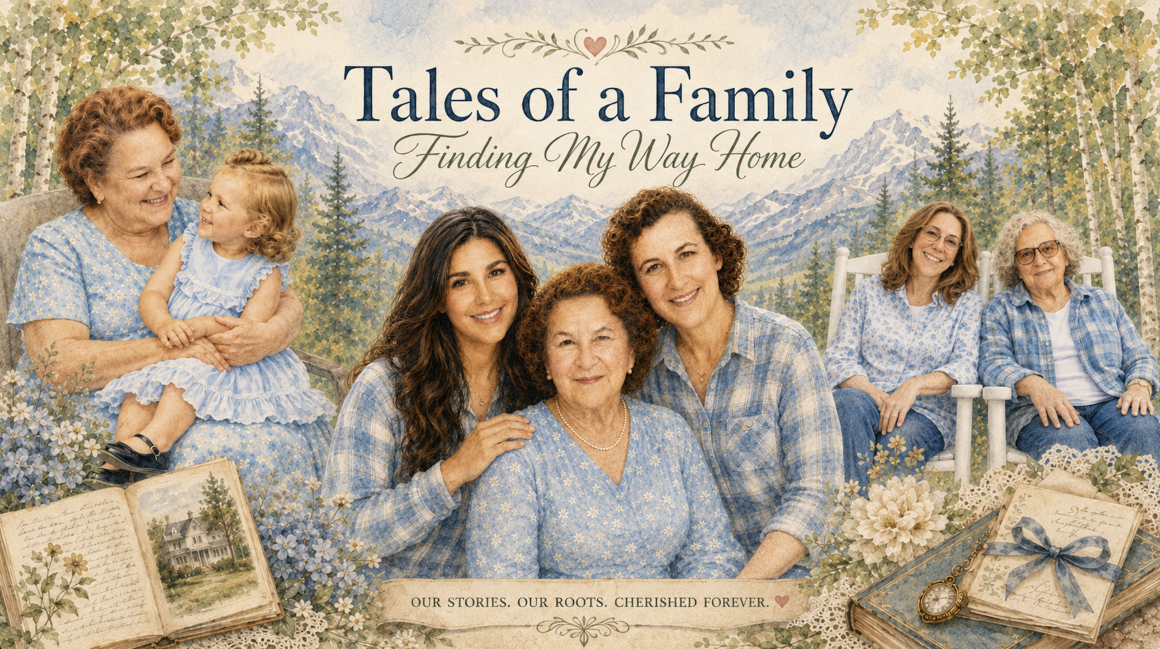
Book Two of Tales of a Family continues the journey through memory, family history, and the stories that shape who we are. This collection gathers more treasured moments, old photographs, family voices, and reflections from the past, weaving them together with love, humor, heartache, and gratitude. From the people who came before us to the memories we carry forward, this book is a celebration of roots, resilience, and the quiet beauty of finding our way home through story.
My goal is to have it complete by the end of the summer…